













TL;DR
AI customer service chatbots help businesses automate support, resolve queries faster, and manage customer conversations across chat, email, WhatsApp, apps, and social media channels.
In this guide, we review 15 of the best customer service chatbots in 2026 for enterprise support, automation, multilingual conversations, ecommerce, and scalable customer service operations.
There was a time when customers tolerated poor service. Now, it’s just a reason to leave.
Let’s go back a decade. Even if your reply took 15 minutes and solved nothing, customers would still thank you. But today, reply in minutes instead of seconds, and they disappear. Forever.
We’re backed by data here. According to reports, 32% of customers ditch a brand after just one bad experience. And more often than not, 70% of them turn to one of your competitors. This isn’t just like someone rubbing salt in your wound. In business, it also leads to massive loss.
But well, it’s not a problem without a solution. In fact, just by applying proper strategies and choosing the right tool, you can transform how your business interacts with its customers. This list takes care of the latter for you. Read on as we enlist 15 of the top customer service chatbots in 2026, tried and tested.
What Are Customer Service Chatbots (And How They’ve Changed in 2026)?
A customer service chatbot is software that attends to your customers on your behalf. It answers questions, handles complaints, and processes requests without human intervention.
They first became popular in the early 2000s, when mainstream companies like Expedia made them a part of their customer service team. But they’ve largely evolved since.
Older chatbots matched keywords and delivered scripted replies. Anything off-script instantly triggered a handoff to a human. But today, chatbots understand context. So, they can also resolve issues without any human handoff at all.
Benefits of Using AI Customer Service Chatbots
AI customer service chatbots aren’t just more advanced. They’re also way more helpful for customer service teams. Here’s how:
- Faster response time: Human agents can’t be available round the clock. But AI customer support chatbots don’t have that limitation. So, their responses are almost instant. This expedites the response time of the business.
- Reduced workload: A large part of customer queries is repetitive and predictable. AI chatbots can easily automate them without compromising quality.
- Multichannel support: Customers can reach out to your business via your website, app, social handles, etc. AI chatbots have the potential to handle all of them simultaneously.
Common Use Cases of Customer Service Chatbots
Companies like Sephora and Amazon are bringing in AI customer service chatbots for daily tasks. Common examples include:
Use case #1: Handling common customer queries
Suppose a new customer comes to your website. Once they scroll through your products, they want to know more: which cities do you ship to, what’s your return policy, whether you offer discounts to first-time customers, etc. AI chatbots can easily and instantly resolve such common queries while following your brand policies.
Use case #2: Order tracking and status updates
AI chatbots for customer support efficiently resolve customer queries about package locations. They swiftly gather details and provide real-time updates on order status, delivery, and shipping information.
Use case #3: Automating returns and refunds
AI chatbots may also be used to assist in the process of returning a product or obtaining a refund. Chatbots can be used to gather information and process requests for returns and refunds without the need for any human intervention.
Best Customer Service Chatbots at a Glance
Before we deep dive into the detailed breakdowns of all customer service chatbots on our list, here’s a quick summary of some of their key details:
| Tool | Best for |
|---|---|
| Kapture CX | AI-first customer support at scale with multilingual and compliance-ready infrastructure |
| Zendesk AI Agents | Large teams managing high support volumes |
| Intercom Fin AI | Conversational, real-time customer support |
| Freshdesk Freddy AI | Growing support teams needing easy automation |
| Salesforce Einstein (Agentforce AI) | Enterprises with complex customer data systems |
| HubSpot Breeze | Teams combining support with sales and marketing |
| Ada | Scaling automated support without coding |
| Fini | AI-first self-service support |
| Yellow.ai | Global, omnichannel customer support |
| Gupshup | Messaging-based customer support |
| Tidio | Small businesses and startups |
| Gorgias | Ecommerce customer support |
| Zowie | Ecommerce automation with AI |
| Zoho SalesIQ | Real-time engagement and support |
| Netomi | High-level AI automation for support |
Top Customer Service Chatbots: In-Depth Review
Now, let’s dig into each customer service chatbot for 2026 and see what they offer:
1. Kapture CX
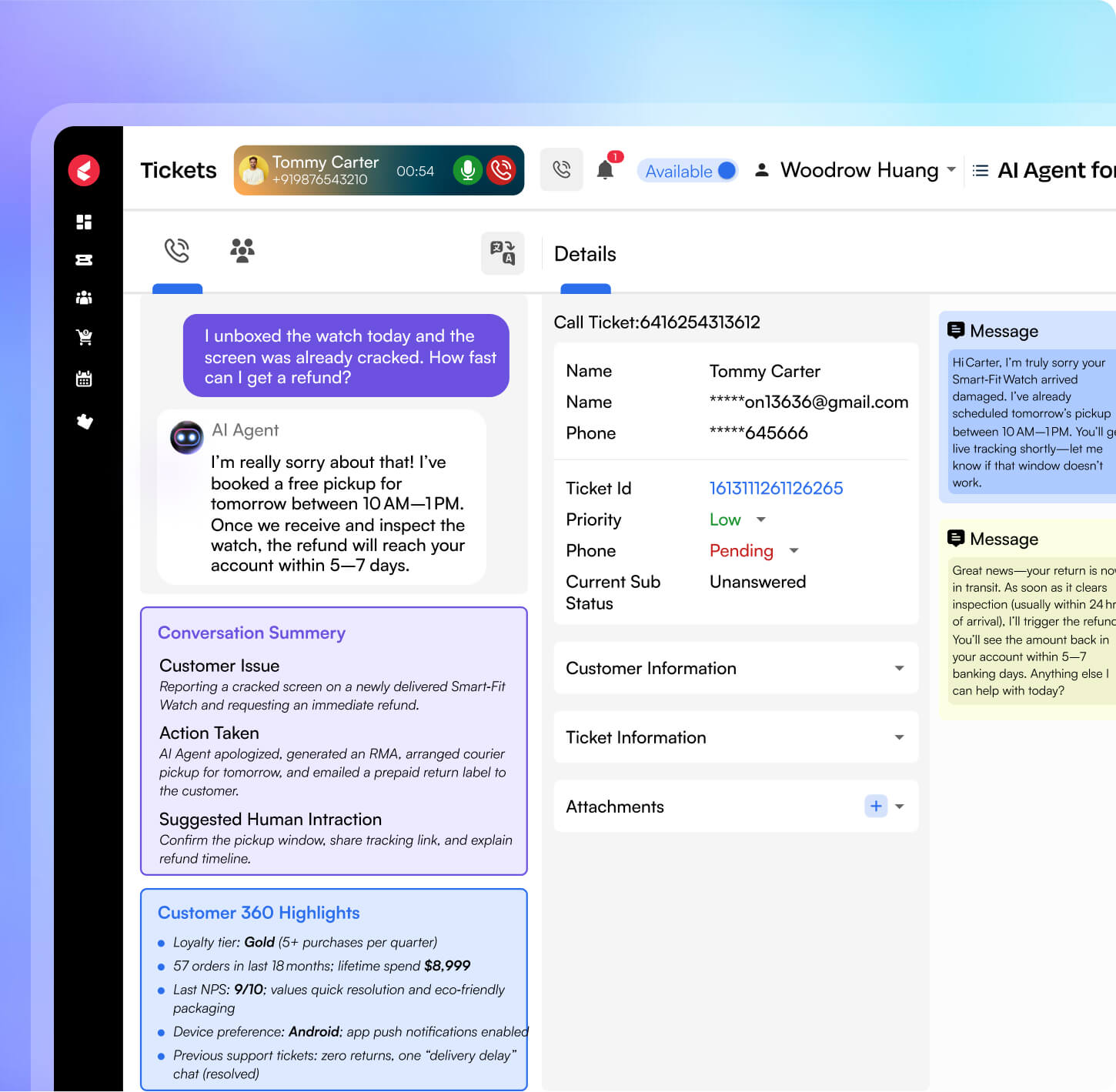
Kapture CX is for businesses that want to move beyond just basic automation and really build out a more structured, AI-powered customer support system.
It blends conversational AI with a really tight support framework. This lets teams handle customer interactions smoothly, tackle repetitive questions automatically, and keep things consistent across all their channels.
While a lot of tools just stick to chat, Kapture actually bundles automation, ticketing, and workflow management all into one place. That way, you can scale up your support without everything getting messy.
One big thing Kapture really shines with is its multilingual support. It covers over 40 languages, including all the big ones like English, Spanish, French, German, Hindi, Arabic, and Indonesian.
What this means is companies can offer consistent help everywhere, without needing to lean so much on manual translations or specific teams for each region. Plus, it really boosts the customer experience when you can talk to users in their own language right from the start.
Kapture also pays close attention to data security and staying compliant. They’ve built their infrastructure to be GDPR-ready and stick to standard enterprise security practices, like SOC 2-aligned controls and ISO 27001-based information security processes.
Key features:
- Supports over 40 languages, including English, Spanish, French, German, Hindi, and Arabic.
- Offers omnichannel customer support through web, mobile application, email, and various messengers.
- Solves queries using artificial intelligence based on integration with the knowledge base.
- Makes easy transitions from AI to human agents, transferring the complete conversation history.
- Provides detailed statistics on performance and resolution speed.
Pros:
- Puts chatbot, ticketing, and workflows all together in one spot
- Designed for handling lots of support requests and scaling up easily
- Really emphasizes compliance and handling data securely
Cons:
- Might need some initial setup work
2. Zendesk
Via: Zendesk
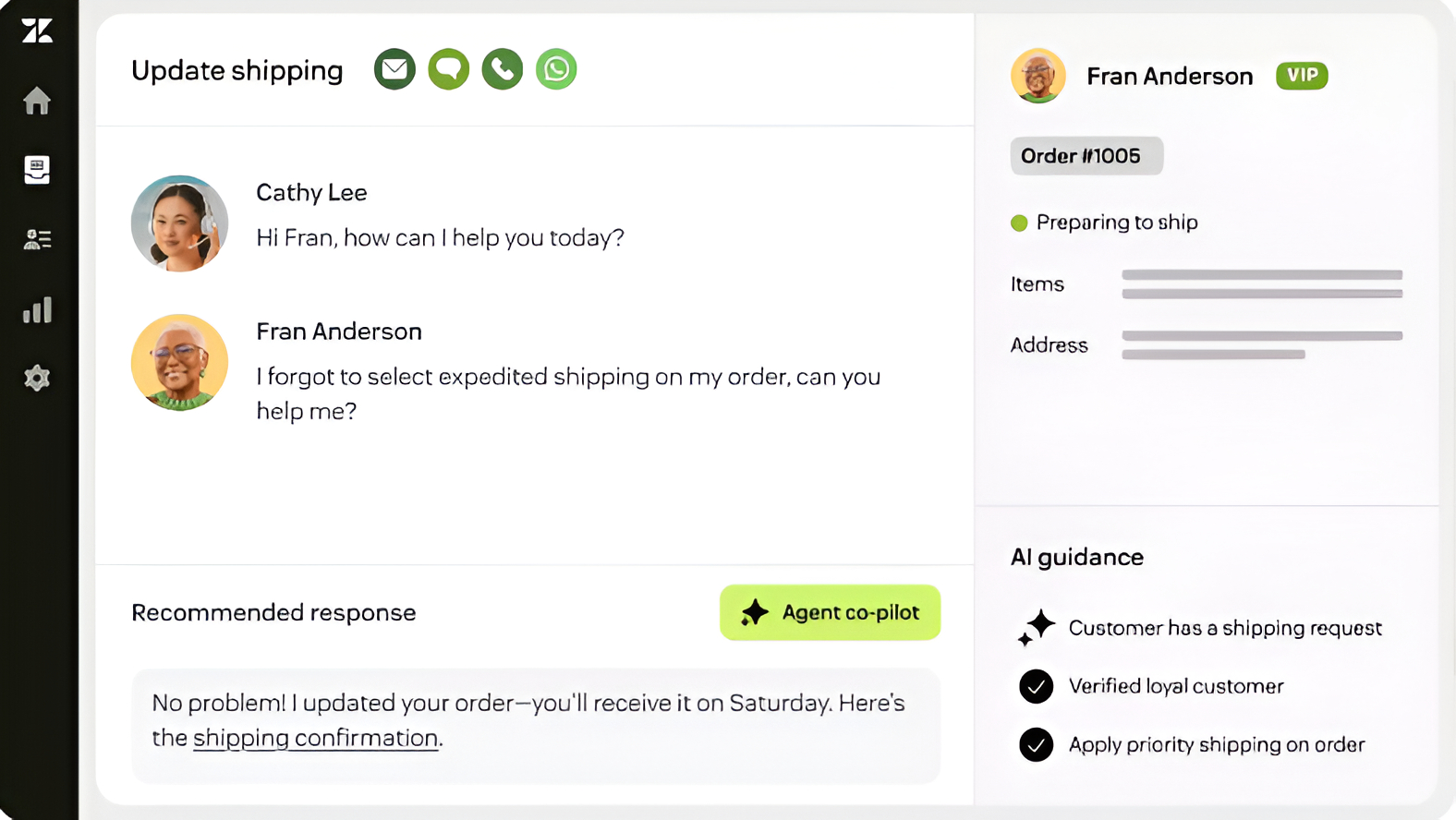
Zendesk AI Agents are designed perfectly for organizations managing high volumes of customer service chats daily. They strike a perfect balance between the two, ensuring consistency in handling customer queries. For those companies using Zendesk, this is one great choice.
Key features:
- Seamless integration with Zendesk’s ticket management system.
- Smart transition from bot to agent with complete context.
- Comes with advanced reporting capabilities.
Pros:
- Reliable for large support teams
- Smooth agent handoff
- Scales well with growing volume
Cons:
- Setup can take time
- Limited flexibility outside Zendesk
3. Intercom Fin AI
Via: Intercom
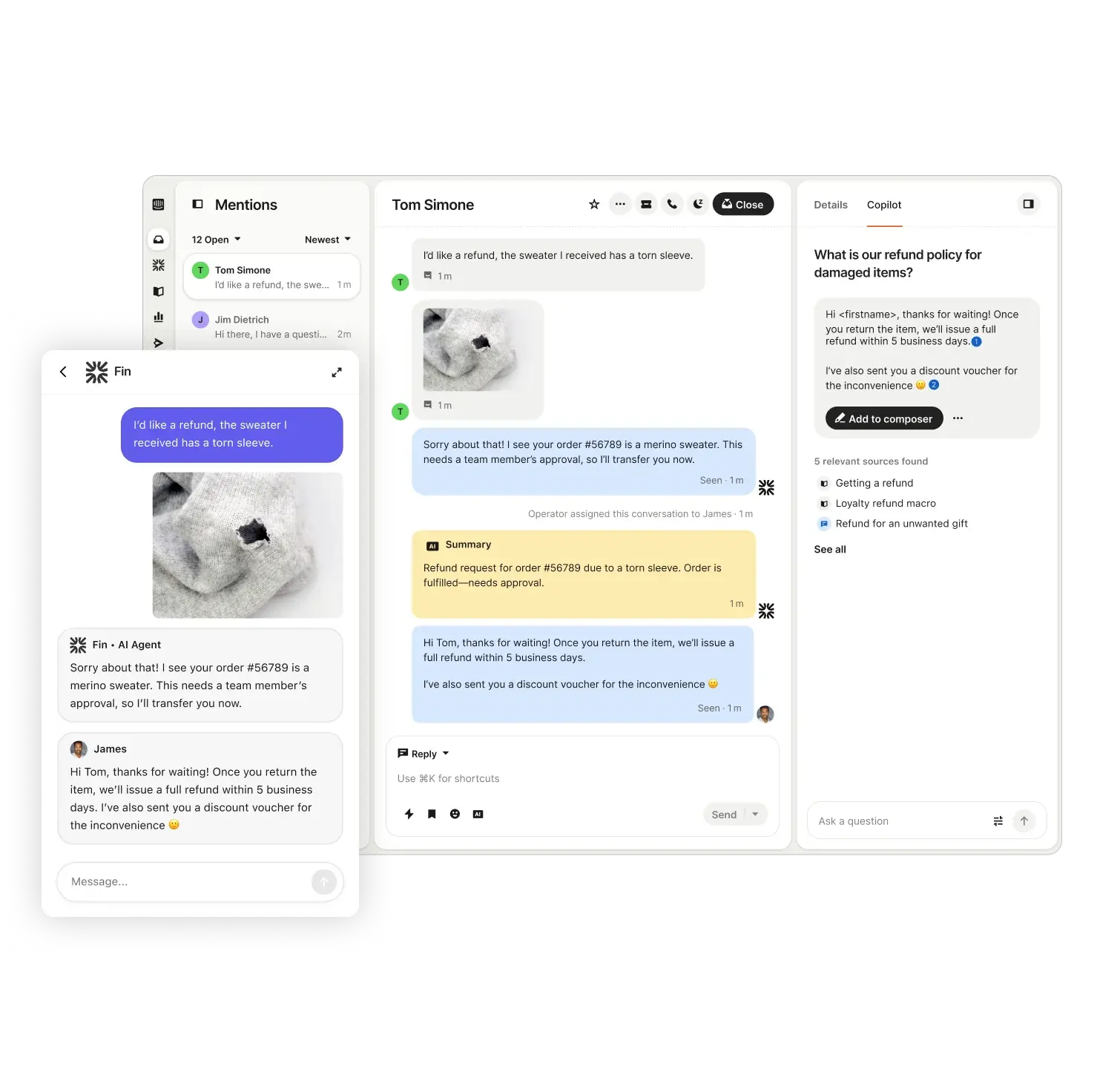
Intercom Fin AI focuses on delivering fast, natural conversations that feel closer to real human support. It works especially well for businesses that want real-time customer service on websites and apps. The platform is designed to improve response quality while keeping interactions quick and conversational.
Key features:
- Allows businesses to build structured workflows for more complex query resolution.
- Works across multiple channels to keep communication consistent.
- Includes tools to monitor and improve conversation performance over time.
Pros:
- Natural and conversational responses
- Easy-to-use interface
- Strong automation capabilities
Cons:
- Requires strong help content to perform well
- Not ideal for complex workflows outside Intercom
4. Freshdesk Freddy AI
Via: Freshdesk
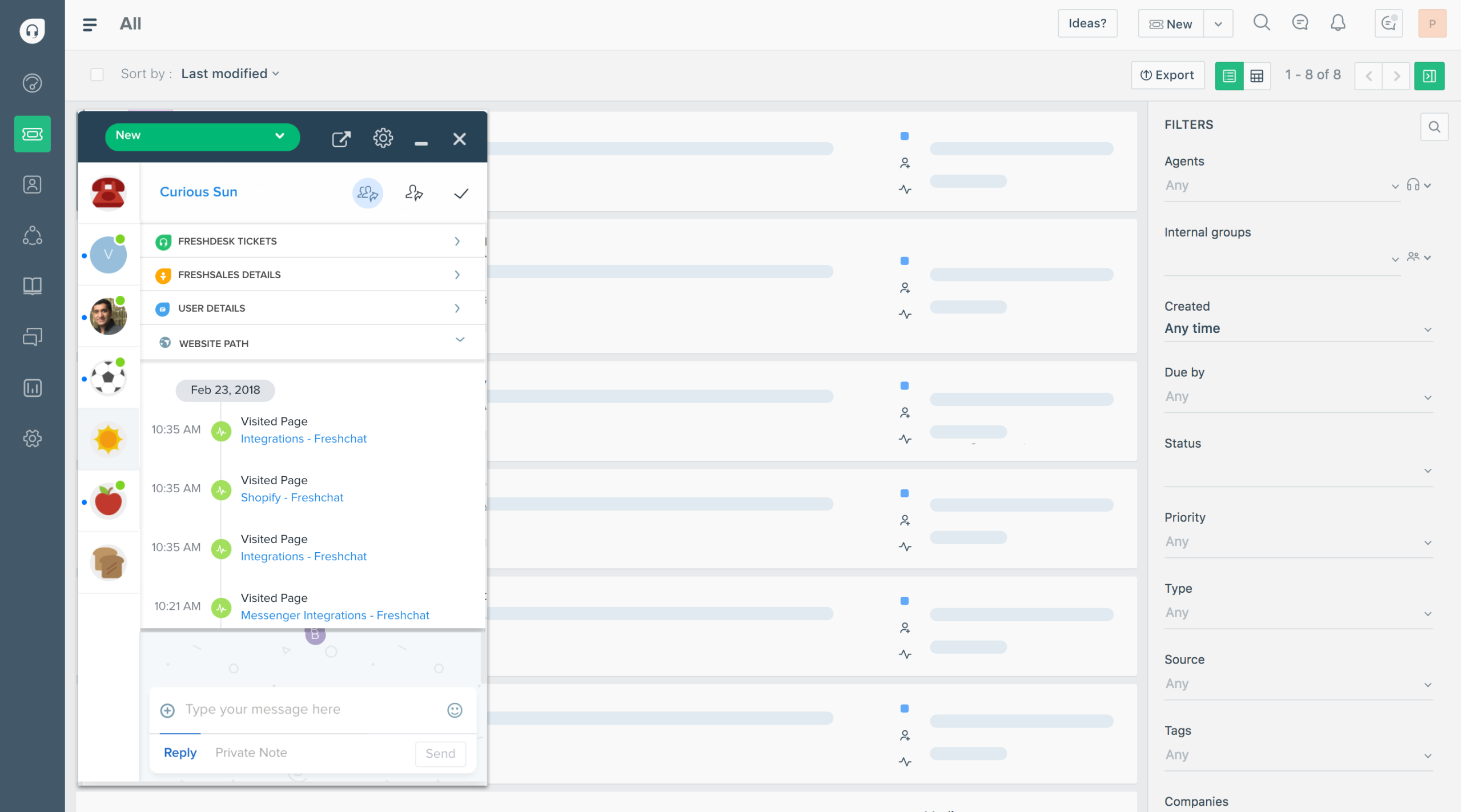
Freshdesk Freddy AI helps businesses improve support efficiency without adding unnecessary complexity. It supports both customers and agents, making everyday support tasks easier to manage. The platform is a practical choice for growing teams that want simple and reliable automation.
Key features:
- Assists support agents by recommending replies and next actions.
- Integrates with Freshdesk workflows to automate repetitive tasks.
- Helps identify customer intent to improve response quality.
Pros:
- Easy to use for Freshdesk users
- Quick setup
- Reliable for common queries
Cons:
- Not as advanced as some competitors
- Can struggle with complex queries
5. Salesforce Einstein
Via: Salesforce
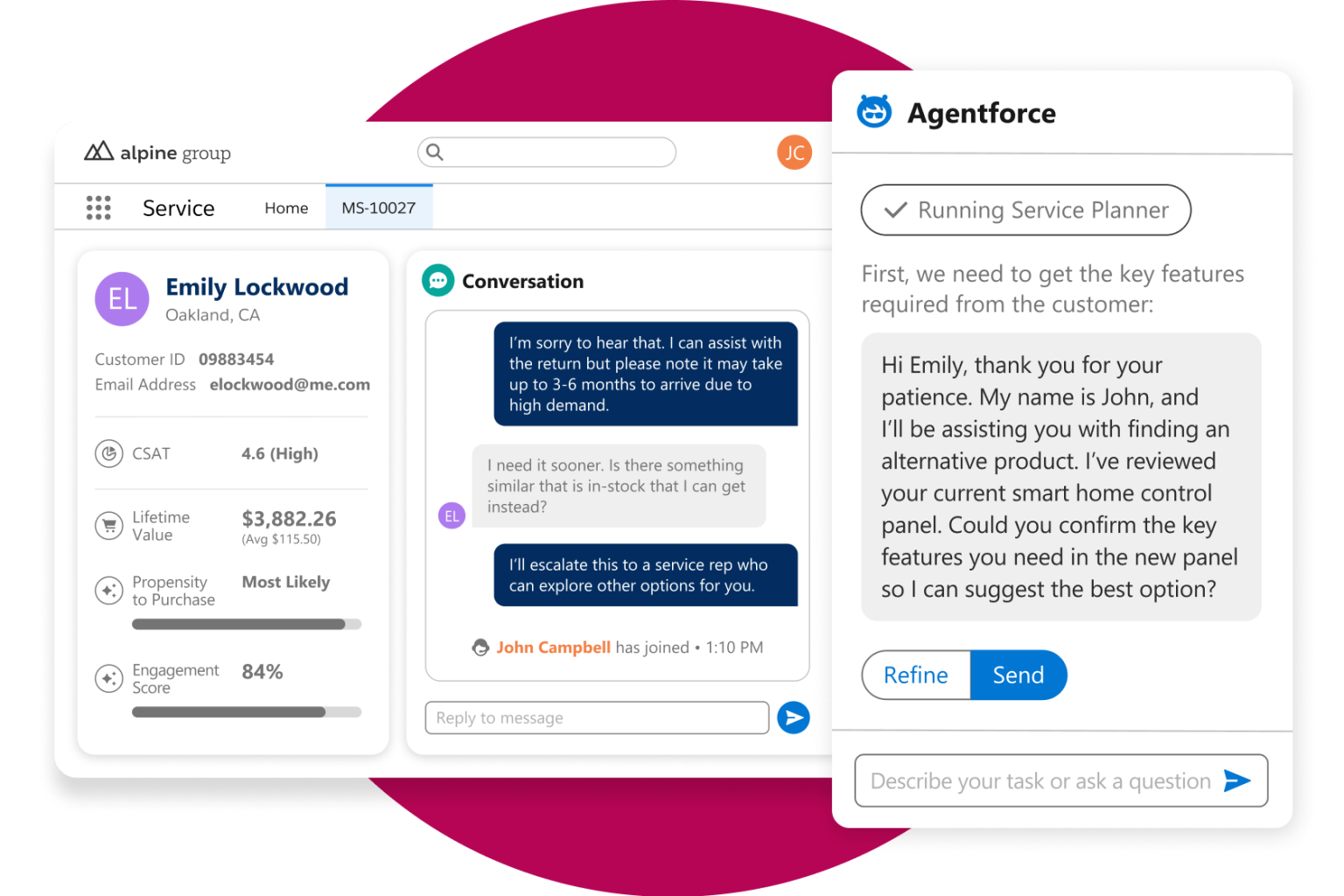
Also known as Agentforce AI, Salesforce Einstein is designed for enterprises that need customer support closely connected with business data. It helps teams deliver more informed and personalized customer interactions at scale. The platform works best for companies already using Salesforce products across their operations.
Key features:
- Integrates well with Salesforce CRM to implement customer data in conversations.
- Gives predictive customer insights to help teams make better support choices.
- Offers detailed analytics to track performance and customer trends.
Pros:
- Deep integration with Salesforce
- Scales for enterprise use
- Supports complex workflows
Cons:
- High cost
- Complex setup
- Requires Salesforce expertise
6. HubSpot Breeze
Via: HubSpot
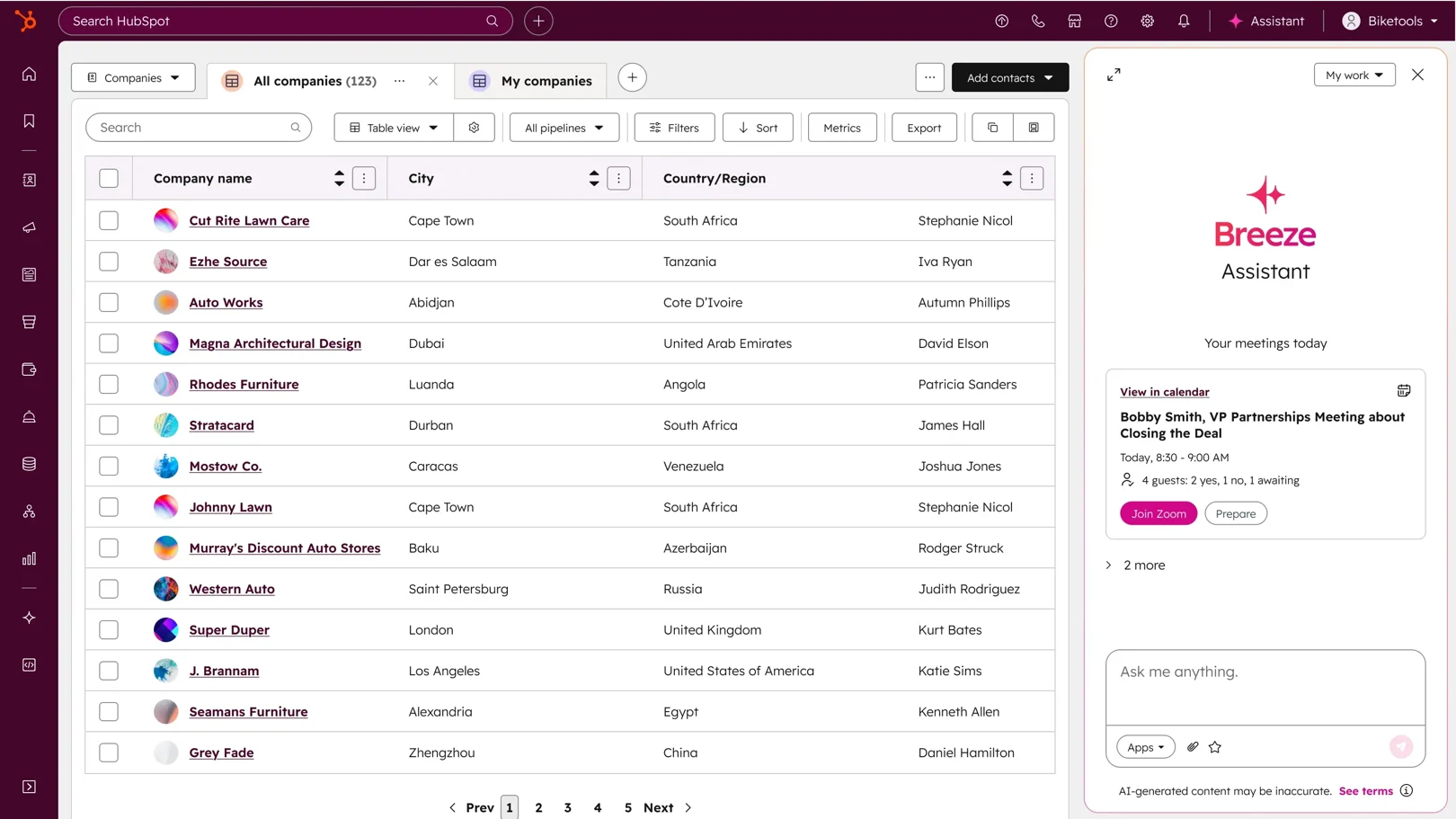
HubSpot Breeze blends customer assistance with sales and marketing in one place. It is helpful for teams wanting to manage both customer interactions and business growth together. For this very reason, the platform proves especially suitable for small to mid-sized businesses.
Key features:
- Integrates directly with HubSpot CRM to store and use customer data.
- Supports lead qualification and customer query handling in one place.
- Connects chat conversations with email and other communication channels.
Pros:
- Combines sales and support
- Easy to set up
- Clean interface
Cons:
- Limited advanced features
- Depends on the HubSpot ecosystem
7. Ada
Via: Ada
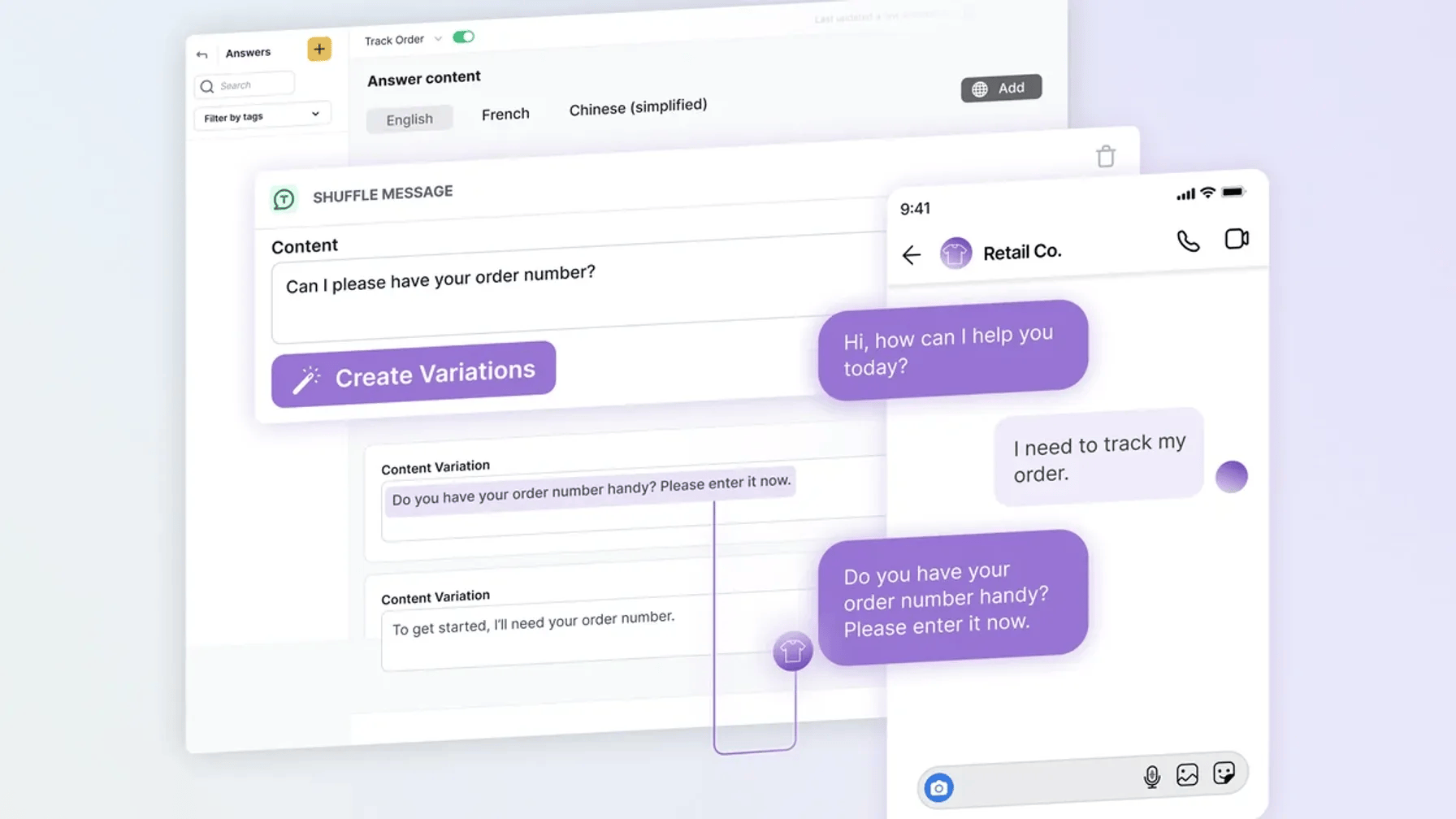
Ada is made for businesses wanting to scale customer support without entirely relying on developers. The platform specializes in helping teams reduce tickets through customer self-service. It also gives them more control over chatbot management without any deep technical work.
Key features:
- Makes it possible for teams to create and control chatbot flows using a no-code platform.
- Provides integration capabilities to maintain consistency within the support workflow.
- Provides performance insights to help teams improve chatbot interactions over time.
Pros:
- Easy to build and manage
- Strong automation capabilities
- Good for scaling support
Cons:
- Learning curve for advanced use
- Limited customization in some areas
8. Fini
Via: Fini
Fini focuses on AI-first self-service support powered by your existing knowledge base content. It is designed for businesses that want to automate a large share of customer queries efficiently. The platform is a good fit for teams with well-structured support documentation already in place.
Key features:
- Uses AI trained on company knowledge bases to answer customer queries.
- Connects with existing documentation to ensure accurate responses.
- Improves response quality over time through continuous learning.
Pros:
- Quick setup
- Good for self-service
- Modern interface
Cons:
- Limited track record
- Not ideal for complex workflows
- Fewer integrations
9. Yellow.ai
Via: Yellow.ai
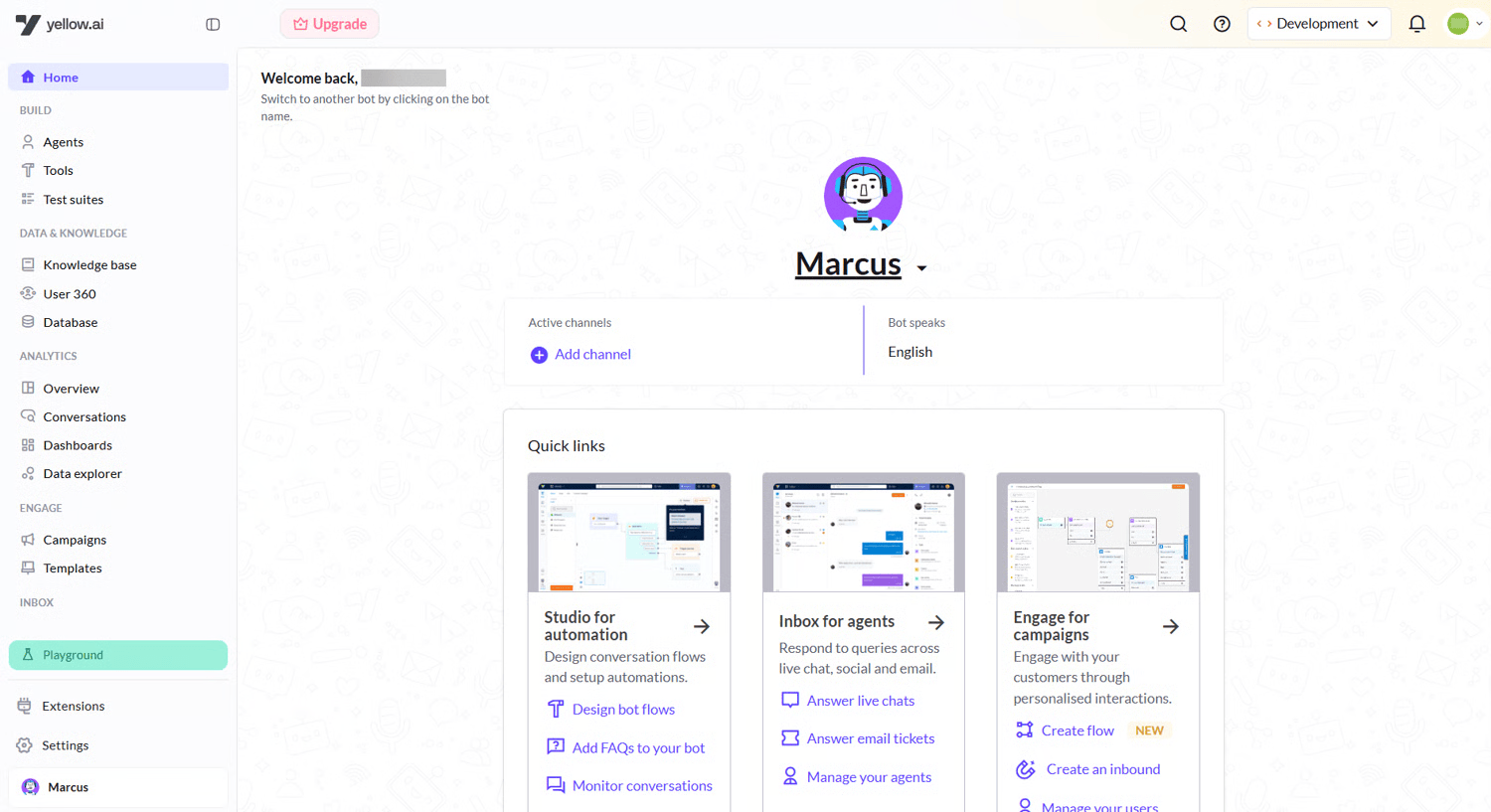
Yellow.ai suits organizations that provide support to customers in different geographical locations, different communication mediums, and in different languages. This technology combines automation and human-powered assistance for providing uniform support experiences. Organizations that serve a huge audience find this platform extremely useful.
Key features:
- Supports customer communication via chat and voice mediums.
- Promotes effective communication through websites, mobile applications, and other mediums.
- Provides analytics for performance measurement and optimization of support operations.
Pros:
- Scalable for large teams
- Supports voice interactions
- Enterprise-level features
Cons:
- Setup can be complex
- Requires training to use effectively
10. Gupshup
Via: Gupshup
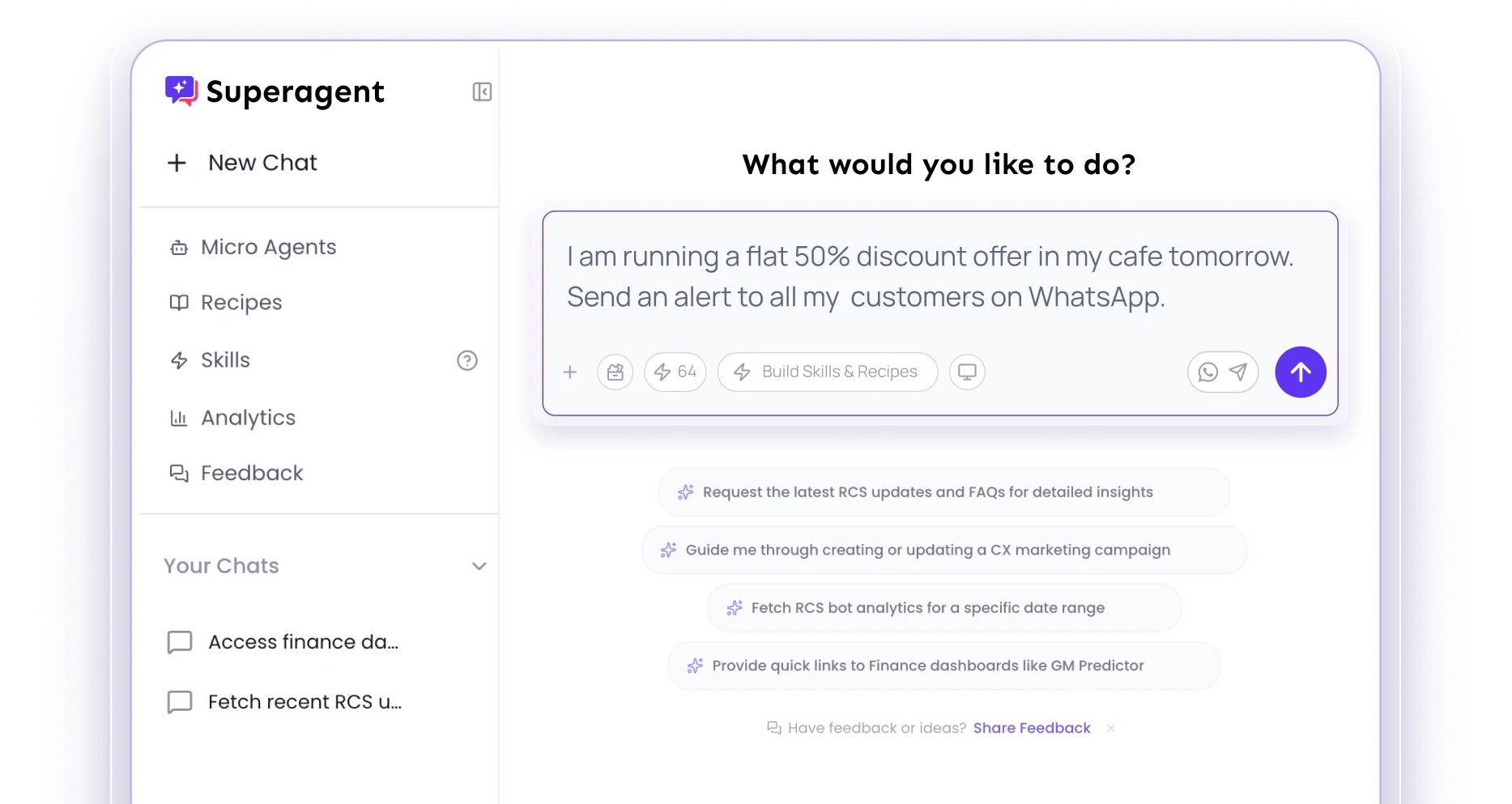
Gupshup focuses on messaging-based customer support across channels customers already use daily. It is widely used by businesses that want conversational support experiences through messaging apps. The platform is best suited for teams comfortable working with more customizable setups.
Key features:
- Supports chatbot deployment on messaging platforms like WhatsApp and SMS.
- Allows building chatbots using APIs.
- Supports campaign messaging alongside customer service interactions.
Pros:
- Ideal for conversational support
- Wide channel support
- Flexible APIs
Cons:
- Requires technical setup
- Not beginner-friendly
11. Tidio
Via: Tidio
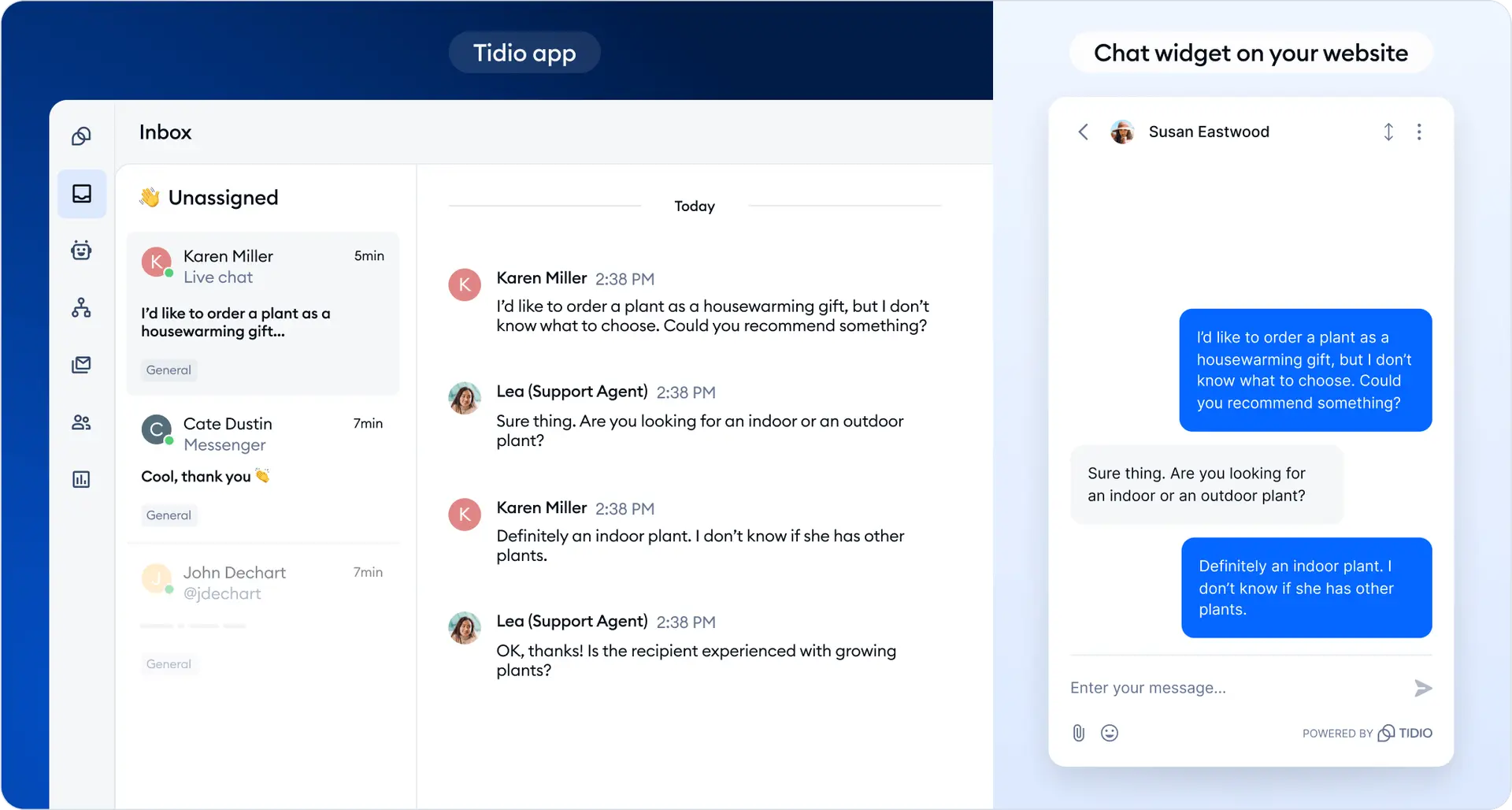
Tidio can be a solid option if you’re a startup and looking for a customer service chatbot. It integrates both automation and live assistance to make query handling a seamless process. Besides, its interface is very intuitive and adaptable. Overall, it provides a good starting point for any company considering automation for customer support purposes.
Key features:
- Combines automation and live chat functionalities within one platform.
- Offers built-in templates that enable quick implementation by teams.
- Monitors website traffic to increase customer interaction.
Pros:
- Easy to use
- Quick setup
- Clean interface
Cons:
- Limited advanced features
- Not ideal for large teams
- Fewer integrations
12. Gorgias
Via: Gorgias
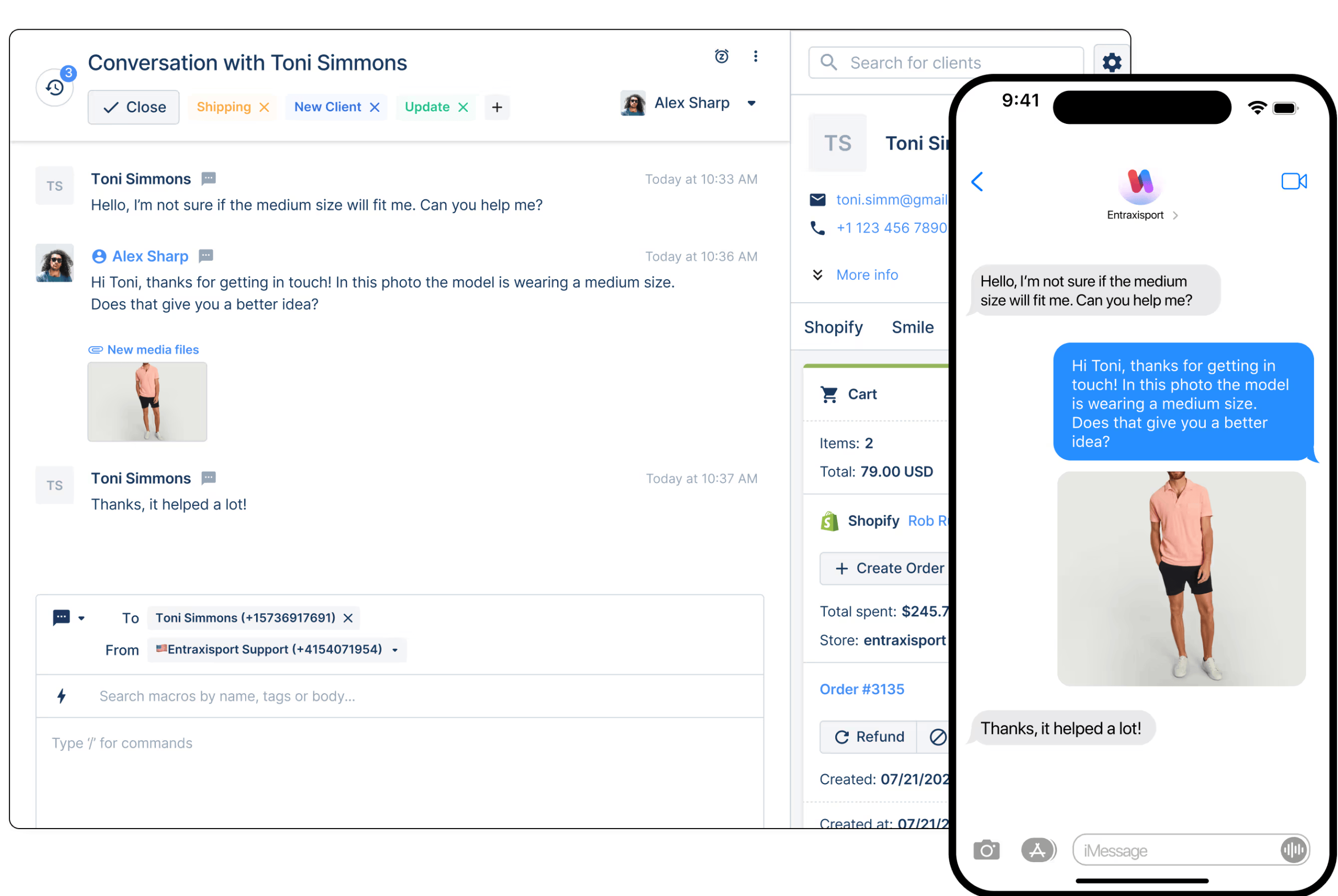
Gorgias is built specifically for ecommerce businesses managing high volumes of customer queries. It helps support teams centralize conversations and customer information in one place. The platform is especially useful for handling ecommerce-related support more efficiently.
Key features:
- Connects to the company’s ecommerce platform to pull in order and client information.
- Has features that deal with returning orders, providing refunds, and updating clients on their orders.
- Offers reporting features to track support performance.
Pros:
- Tailored for ecommerce
- Strong Shopify integration
Cons:
- Limited outside ecommerce
- Involves a learning curve
13. Zowie
Via: Zowie
Zowie focuses on automating ecommerce customer support for fast-growing online stores. It helps businesses reduce repetitive support work while maintaining a smooth customer experience. The platform is best suited for brands dealing with frequent order-related queries.
Key features:
- Deals with queries relating to shipping, returns, and tracking orders.
- Provides ways to track and improve chatbot efficiency.
- Allows automation of repetitive support tasks.
Pros:
- Good for ecommerce scale
- Easy integration
- Focused use case
Cons:
- Limited beyond ecommerce
- Requires setup effort
- Not very flexible
14. Zoho SalesIQ
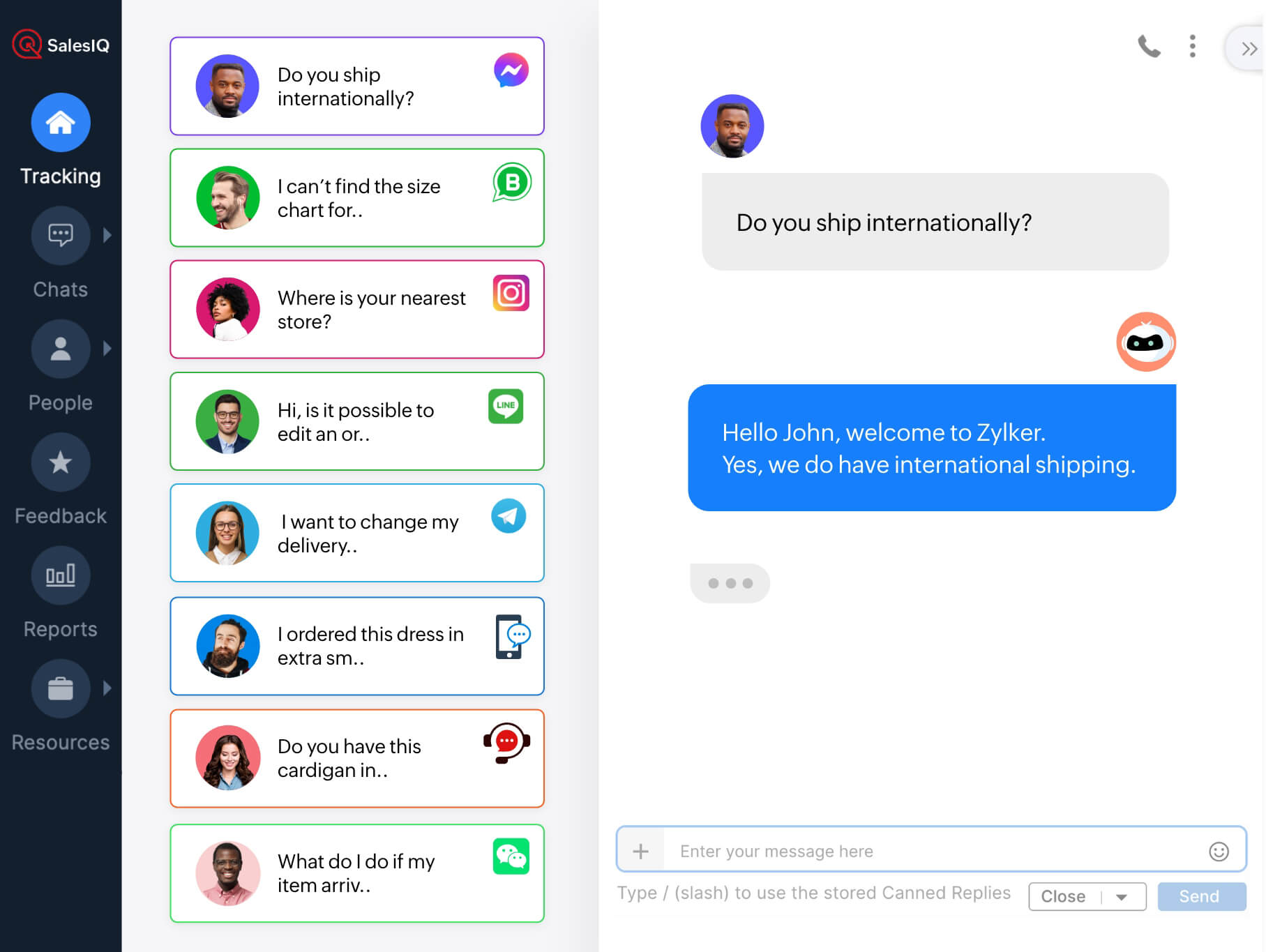
Via: Zoho
Zoho SalesIQ is a combination of customer service and live engagement of visitors at a website that allows companies to engage with customers based on their actions and performance during a visit to the website. It is especially useful for those who are familiar with the Zoho ecosystem.
Key features:
- Combines chatbot functionality with live visitor tracking.
- Allows real-time interaction with users based on their actions
- Integrates with Zoho CRM to store information about customers
Pros:
- Real-time engagement
- Easy to use
- Flexible features
Cons:
- Basic automation
- UI can feel outdated
- Depends on the Zoho ecosystem
15. Netomi
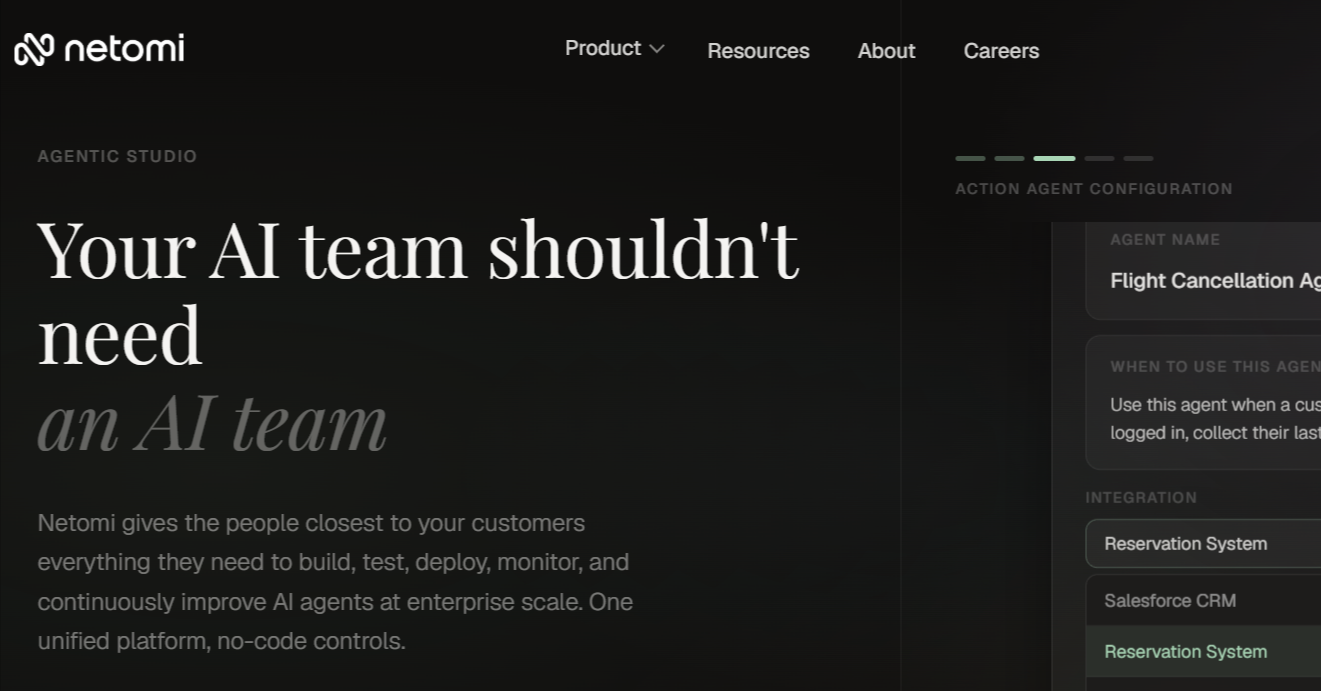
Via: Netomi
Netomi is aimed at those enterprises that wish to automate the majority of their support operations. This solution focuses on assisting companies scale up their support operations without any problems through several communication channels.
Key features:
- Integrates with CRM and support systems to access customer data.
- Supports multiple communication channels for consistent support.
- Performance tracking through analytics.
Pros:
- High automation capability
- Ideal for scaling support
Cons:
- Requires setup time
- Not beginner-friendly
- Needs ongoing optimization
- Limited flexibility for small teams
How We Tested These Customer Service Chatbots
We didn’t only look at the websites’ homepages. In order to compile this list, we evaluated each solution using a standardized approach in three core criteria:
Use case fit: Last but not least, we analyzed what kinds of businesses would best be able to leverage a specific chatbot’s capabilities.
Functionality: We tested how each customer service bot deals with support interactions in practice: frequently asked questions, unscripted queries, and complex processes.
Setup and ease of use: We evaluated how quickly it can go live, its technical sophistication, and whether non-developers can control it on a daily basis.
3 Tips for Choosing the Right AI Chatbot for Customer Service
Finally, here are a few tips to help you choose the right AI customer service chatbot in 2026:
Integration: A chatbot could be excellent, but if it cannot integrate well into your system, then no matter how good it is, it won’t work. So look for one that blends with your current workflows.
Choose the right type: Some chatbots only answer questions. But some can do other things as well, like process refunds, update orders, and even change account details. Choose according to the requirements of your customers.
Check for compliance: In case you operate in a regulated industry, then compliance would be your priority. For instance, a banking chatbot should be certified to meet the PCI-DSS and SOC 2 standards, whereas an insurance chatbot should be GDPR-compliant.
Final Verdict
The right customer service chatbot depends on your business needs. Some teams need a simple tool to get started, while others need advanced support for high volumes, multiple languages, and compliance requirements. That’s why the best chatbot for one business may not work for another.
But Kapture CX is different. It doesn’t just handle support needs; it scales with your business.
With features like AI-powered query resolution, omnichannel support, and workflow management, it ensures teams of all sizes efficiently manage customer support in one place. It also offers flexible custom plans, allowing businesses to pay for what they actually need while still getting enterprise-level customer service chatbot capabilities.
If you want a smarter, more scalable way to handle customer support, Kapture CX is a strong place to start. Request a demo today!
FAQs
Yes, chatbots can personalize customer interactions. They can recognize returning users, pull past conversations, and use purchase history to give more relevant responses.
Yes, chatbots can handle conversations across multiple channels at once. They can work on websites, apps, messaging platforms, and social media without any drop in speed.
Yes, most customer service chatbots use encryption and follow standard data protection practices to keep customer information safe.
When choosing a chatbot, look for elements like ease of setup, integration with your existing tools, multi-channel support, response accuracy, and scalability.
No, chatbots aren’t meant to replace human agents completely. They’re best used to handle simple, repetitive queries so that agents can focus on more complex issues.
AI looks for signals like repeated questions, unclear intent, or customer frustration. If it can’t confidently resolve the issue, it triggers a handoff to a human agent.



 +1833-386-0222 (USA)
 enquiries@kapture.cx