














TL;DR
AI chatbot platforms are no longer limited to answering basic support queries. Businesses now use them to automate customer conversations, qualify leads, streamline workflows, and improve support across multiple channels.
In this guide, we review the 9 best AI chatbot platforms based on real-world usability, automation capabilities, integrations, scalability, and customer support performance.
AI chatbots are no longer limited to answering simple support questions. Businesses now use them to manage customer conversations, qualify leads, automate bookings, recover abandoned carts, resolve issues, and handle customer interactions across multiple channels.
The markets reflect this shift. The global chatbot market is expected to grow from $5.4 billion in 2023 to $15.5 billion by 2028. That’s 3x expansion! Adoption is accelerating just as quickly. Studies show that 91% of businesses with 50+ employees now use chatbots at some point in the customer journey.
But growth creates noise. Every platform claims smarter automation, better AI, and faster deployment. In reality, the differences become obvious only after implementation. Some tools work best for enterprise support. Others shine in e-commerce. While some take the lead in marketing automation or no-code bot building.
Now with that said, we have tested multiple platforms and have come up with a list to help you make the best descision. Let’s dive right in!
What is an AI Chatbot Platform?
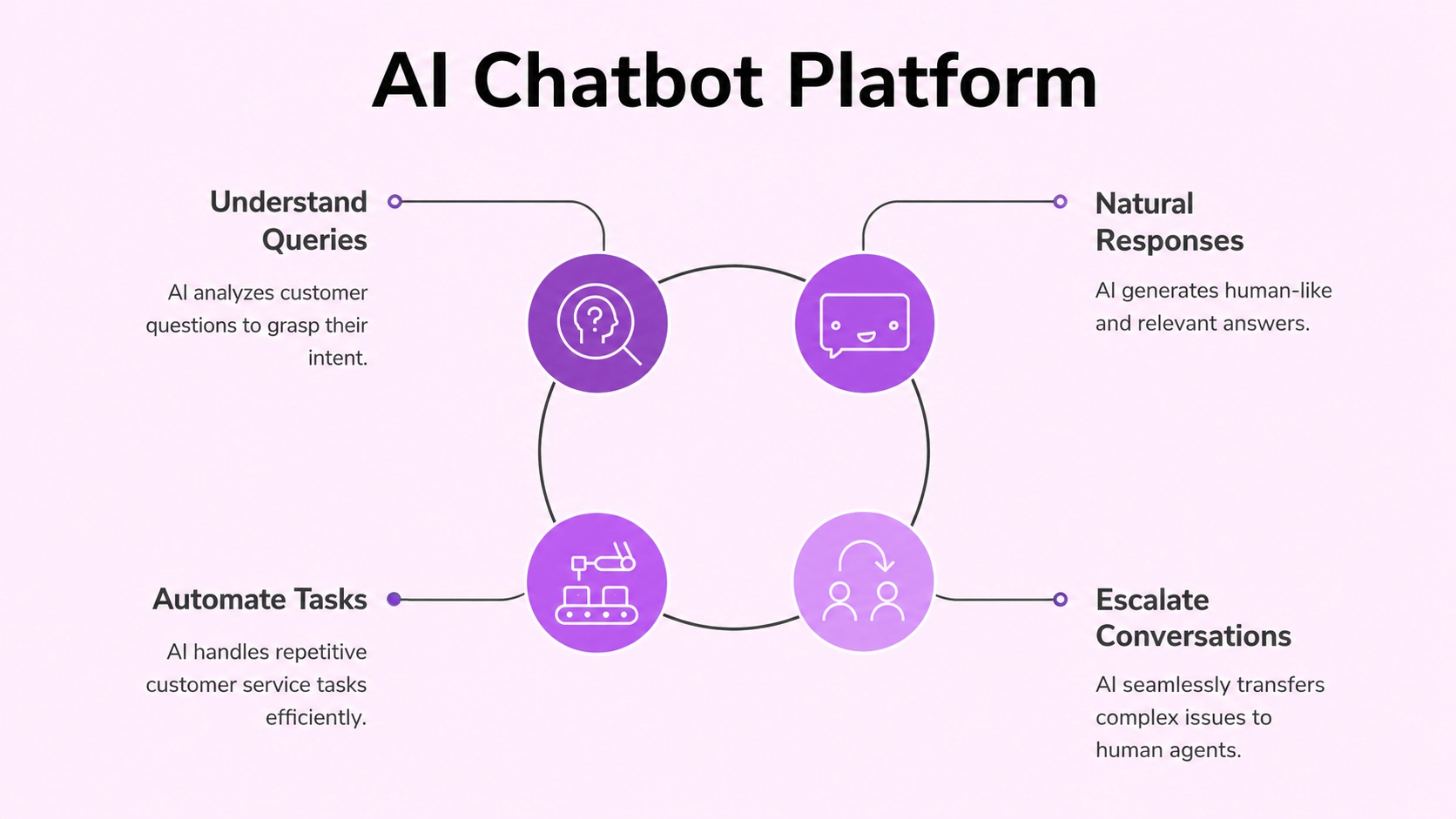
An AI chatbot platform creates, deploys, and manages automated conversations. For this, they use artificial intelligence to:
- Understand customer queries
- Give smart and natural responses
- Automate repetitive tasks
- Escalate conversations to human agents
At the same time, they understand context, pull information from knowledge bases, integrate with business systems, and improve over time. This quality makes them a self-sustaining and self-learning Conversational AI ecosystem.
Best AI Chatbot Platforms at a Glance
Every chatbot platform on this list solves a slightly different problem. The matrix below gives a quick snapshot of where each platform stands out.
| Platform | Standout Feature | Ideal Use Case |
|---|---|---|
| Kapture CX | Enterprise-grade omnichannel support automation | Large customer support operations |
| Intercom | AI-first conversational customer messaging | SaaS and digital-first businesses |
| Zendesk AI | AI deeply integrated into support operations | Enterprise service teams |
| Freshchat | Smooth transition from live chat to AI support | Growing support teams |
| Botpress | Advanced workflow customization | Developer-led chatbot deployments |
| Chatbase | Fast GPT-powered chatbot deployment | Startups and lean support teams |
| Tidio | Lightweight AI support for SMBs | Ecommerce and small businesses |
| ManyChat | Social and WhatsApp automation | Marketing and social engagement |
| Voiceflow | Conversational design and prototyping | Product and conversation design teams |
How We Shortlisted the AI Chatbot Platforms for Our List
The AI chatbot market is crowded. To keep this list useful, we evaluated each chatbot platform based on real operational value. Here’s what we looked at while reviewing the platforms:
- Deployment speed: How quickly businesses can build, train, and launch chatbots without long implementation cycles.
- AI response quality: How well the chatbot understands customer intent, maintains context, and delivers natural responses.
- Learning and optimization: Whether the platform improves over time using conversations, feedback loops, and knowledge updates.
- Integration flexibility: How easily the chatbot connects with CRMs, help desks, ecommerce tools, and enterprise systems.
- Human handoff experience: How smoothly conversations move from AI chatbots to live agents without losing context.
- Testing and control: The ability to test workflows, prompts, automations, fallback scenarios, and conversation logic safely.
- Channel coverage: Consistency across websites, apps, email, WhatsApp, social media, and messaging platforms.
A Review of the 9 Top AI Chatbot Platforms
The best AI chatbot software helps businesses handle support faster, improve response quality, and stay available across channels. Here are some of the best chatbot platforms that deliver to this expectation.
1. Kapture CX
Best For Enterprise Customer Support Automation
Mid sized and large enterprises looking for AI powered customer support with omnichannel automation, multilingual conversations, and industry specific workflows.
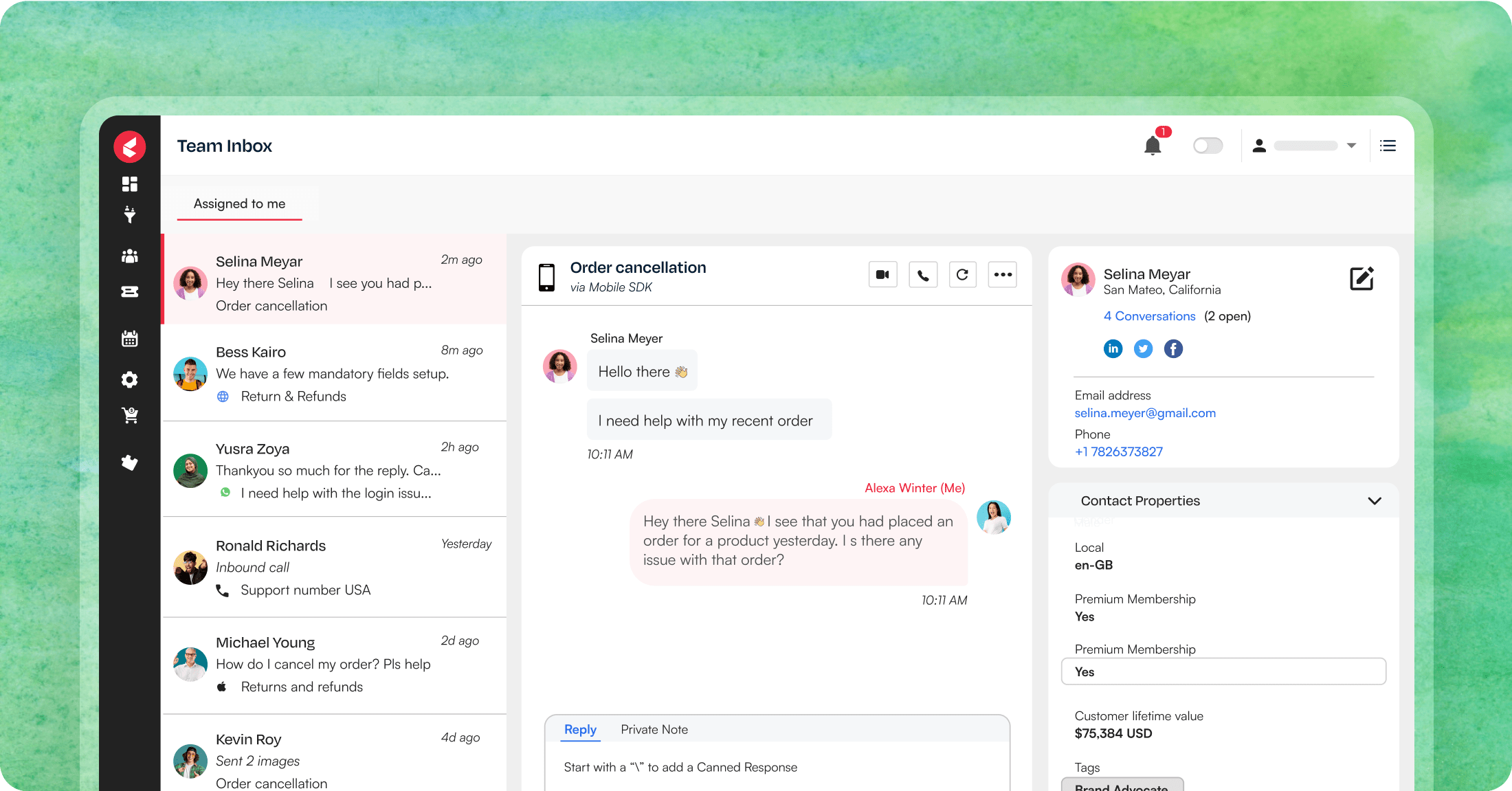
Kapture CX is one of the best AI chatbot platforms for enterprises managing large scale customer support operations. This AI powered customer support platform combines AI automation, ticketing, omnichannel support, and workflow management inside one platform, making it easier for support teams to handle customer conversations efficiently across channels.
Unlike many chatbot tools that mainly focus on basic conversations, Kapture CX is built around complete customer support operations. This makes it a strong fit for industries like retail, BFSI, travel, and consumer services that deal with high support volumes and complex workflows.
Features
- Automates customer conversations across chat, email, voice, WhatsApp, Instagram, Facebook Messenger, and other digital channels.
- Uses AI based intent detection to route tickets, prioritize urgent queries, and assign conversations automatically.
- Supports multilingual AI chatbots with support for 40+ languages for global customer interactions.
- Enables smooth AI to human handoff orchestration without losing conversation context or customer history.
- Helps agents with AI powered reply suggestions, conversation summaries, and workflow automation.
- Offers real time analytics, chatbot performance tracking, and customer interaction insights.
- Includes compliance ready infrastructure with GDPR aligned data handling and enterprise security standards. Allows businesses to customize chatbot workflows, escalation rules, and automation logic based on operational needs.
Pros
- Combines AI chatbots, ticketing, workflows, and omnichannel support inside one platform.
- Built as a vertical focused customer experience platform for industries like retail, ecommerce, BFSI, travel, and consumer services.
- Handles large scale customer support operations efficiently across multiple channels and regions.
- Supports multilingual AI conversations in 40+ languages for global customer service teams.
- Offers smooth AI to human handoff with full conversation context for faster issue resolution.
Cons
- Not suitable for small businesses
- Advanced workflow customization may require onboarding support
- Interface can feel feature-heavy for first-time users
2. Intercom
Best For Customer Messaging
SaaS, fintech, and digital-first businesses that prioritize a “messenger-first” experience and rapid AI deployment.
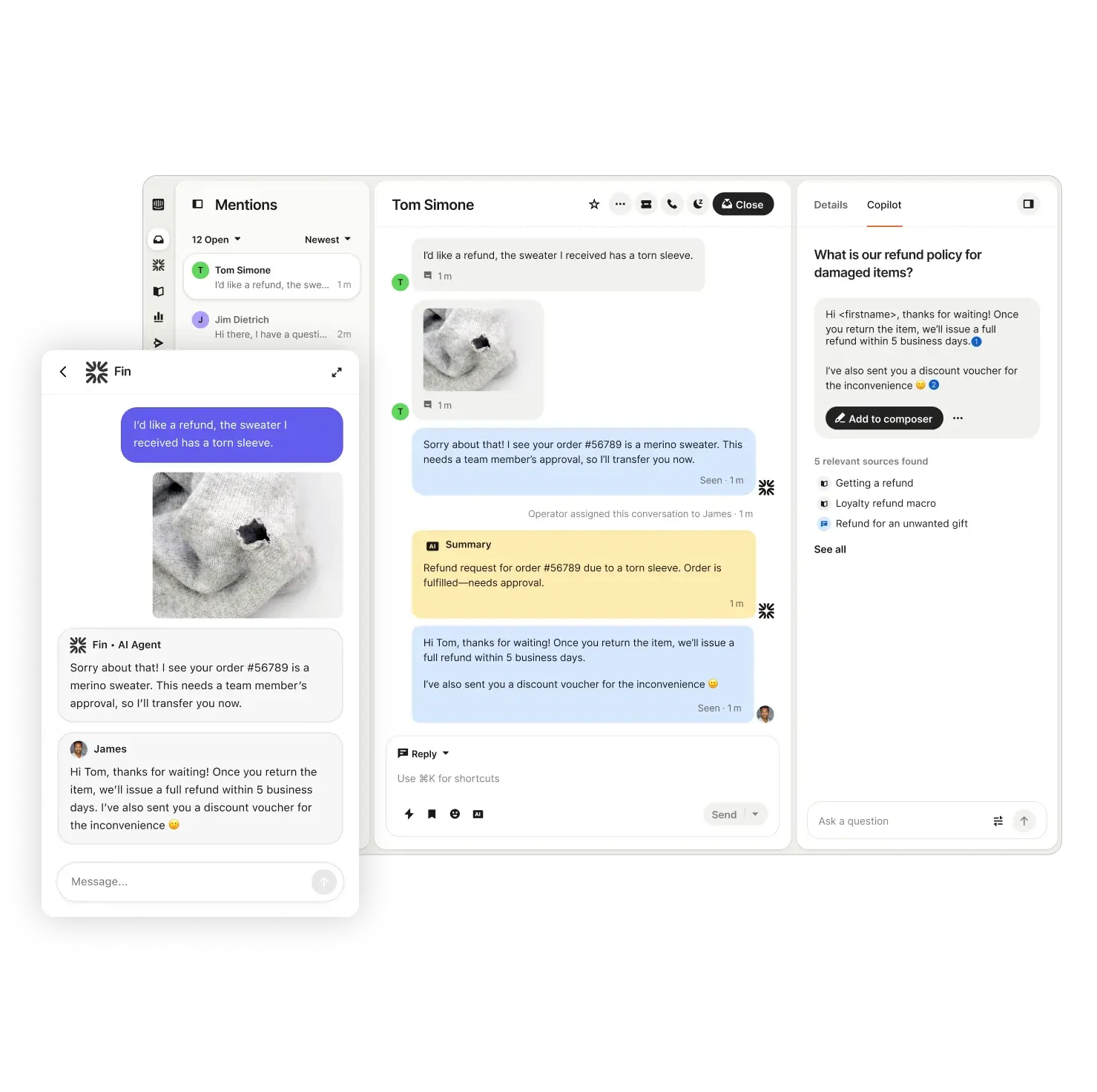
Intercom is one of the leading names in AI chatbot software, especially for SaaS and digital-first businesses. Its greatest selling point is the perfect combination of live chat, automation, help center content, and AI support agents. Collectively, it delivers a polished messaging experience.
Intercom is a great solution for businesses that want a quick and friendly customer support through chat, but do not want to spend a lot of time on creating complicated workflows.
Features
- Generate AI-powered responses using help center and support content
- Automate conversations across chat, email, and in-app messaging
- Route conversations based on intent, behavior, and customer data
- Create multilingual workflows and guided support journeys
- Provide live-agent handoff with conversation history and context
Pros
- Clean and intuitive interface for support teams
- Fast deployment for SaaS and digital products
- Strong live chat and automation experience
Cons
- Pricing can rise quickly as usage scales
- Advanced customization options feel limited in some workflows
- Reporting depth varies across pricing tiers
3. Zendesk
Best For Enterprises
Established enterprises and large-scale support organizations that need a reliable, “all-in-one” infrastructure where AI is a native layer of the ticketing system rather than a standalone tool.
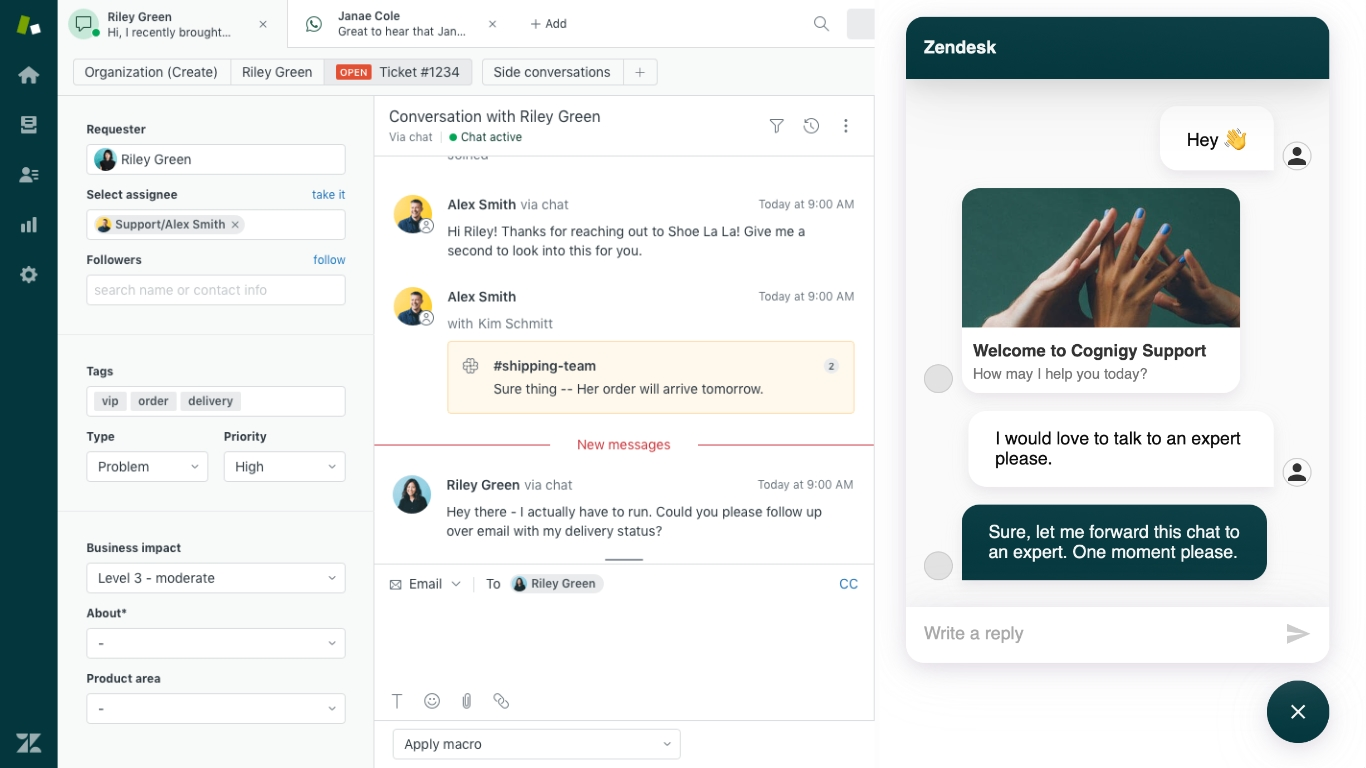
Zendesk combines AI chatbots, ticketing, workflow automation, agent assistance, and self service support inside one customer service platform. It is designed for businesses managing large support operations and high ticket volumes across multiple channels.
Its AI capabilities are deeply integrated into support workflows, helping teams automate repetitive tasks, improve response quality, and maintain more consistent customer support experiences.
Features
- Automate ticket classification, routing, and response generation
- Deploy AI agents across web, mobile, and messaging channels
- Suggest replies and knowledge articles for live support agents
- Build self-service workflows connected to help center content
- Integrate AI automation directly into existing support operations
Pros
- Mature support ecosystem with extensive integrations
- Reliable choice for enterprise service environments
- Strong ticketing and workflow management capabilities
Cons
- Initial setup can feel complex for smaller teams
- Some AI capabilities sit behind higher-tier plans
- Customization may require technical involvement for advanced use cases
4. Freshchat
Best For SMBs
Fast-growing SMBs (Small to Medium Businesses) and scaling teams that need an intuitive, omnichannel support solution without the high cost or technical complexity of enterprise-grade legacy systems.
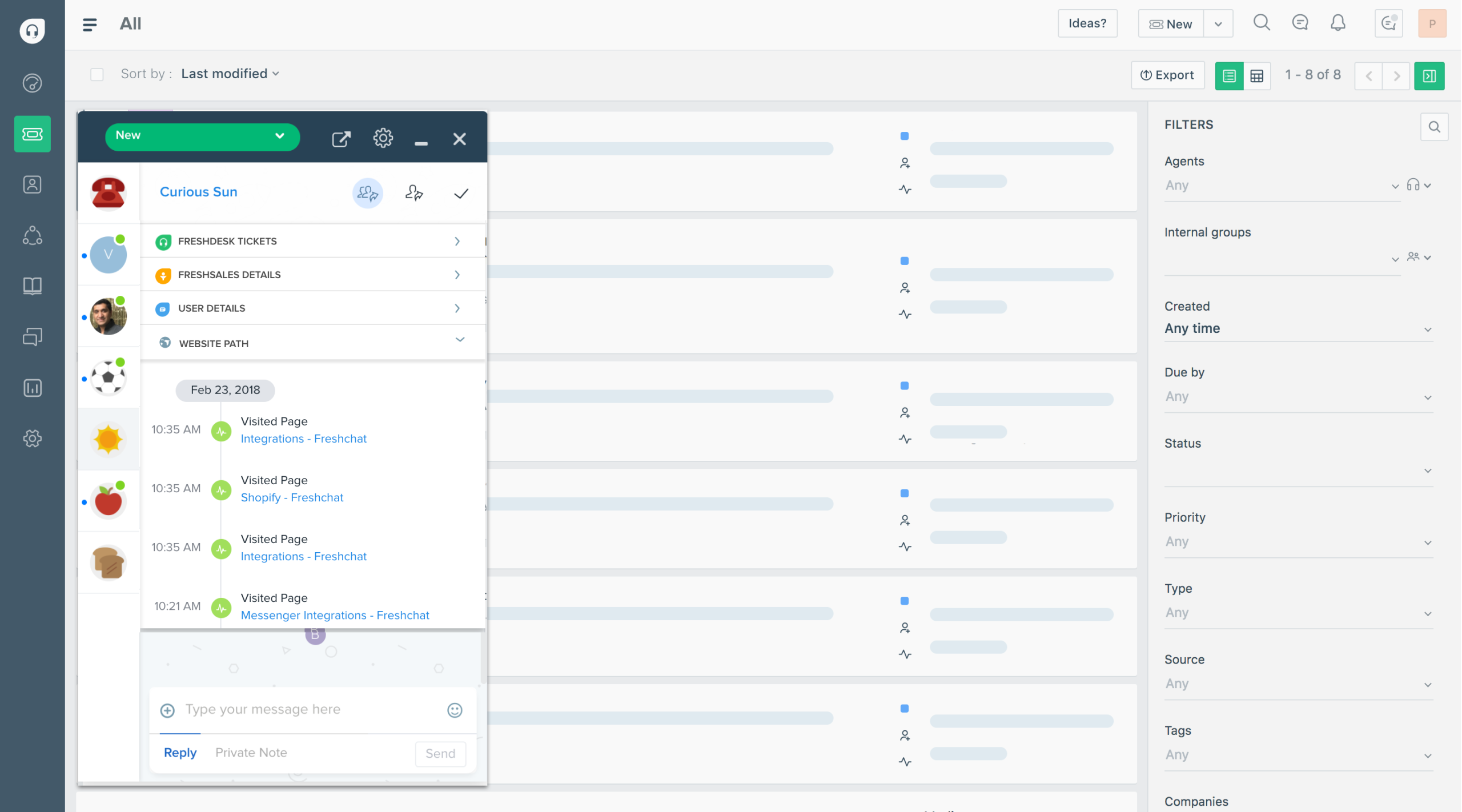
Freshchat sits between traditional live chat and newfangled AI chatbot solutions. It is not a total replacement of human conversations. It layers automation gradually into customer support. Businesses get the flexibility to combine messaging, automation, and support workflows. The processes exist inside a user-friendly interface.
As a result, growing support teams can move from Chatbot vs Live Chat models to AI-assisted engagement.
Features
- Automate customer conversations using Freddy AI and no-code chatbot builders
- Manage chat, email, WhatsApp, Instagram, and social conversations from one inbox
- Train bots using FAQs, knowledge bases, and customer intent mapping
- Route conversations intelligently based on agent availability and intent
- Deploy multilingual chatbot workflows across web and messaging channels
Pros
- Easy to set up and use for support teams
- Strong balance between live chat and automation capabilities
- Omnichannel inbox simplifies customer communication management
Cons
- Advanced AI capabilities feel limited for complex enterprise workflows
- Some users report notification delays and dashboard complexity during high chat volume
- Advanced reporting and customization can involve a learning curve
5. Botpress
Best For Flexibility
Developers, technical teams, and innovation-led organizations that require total control over conversation logic and deep integration with custom backend systems.
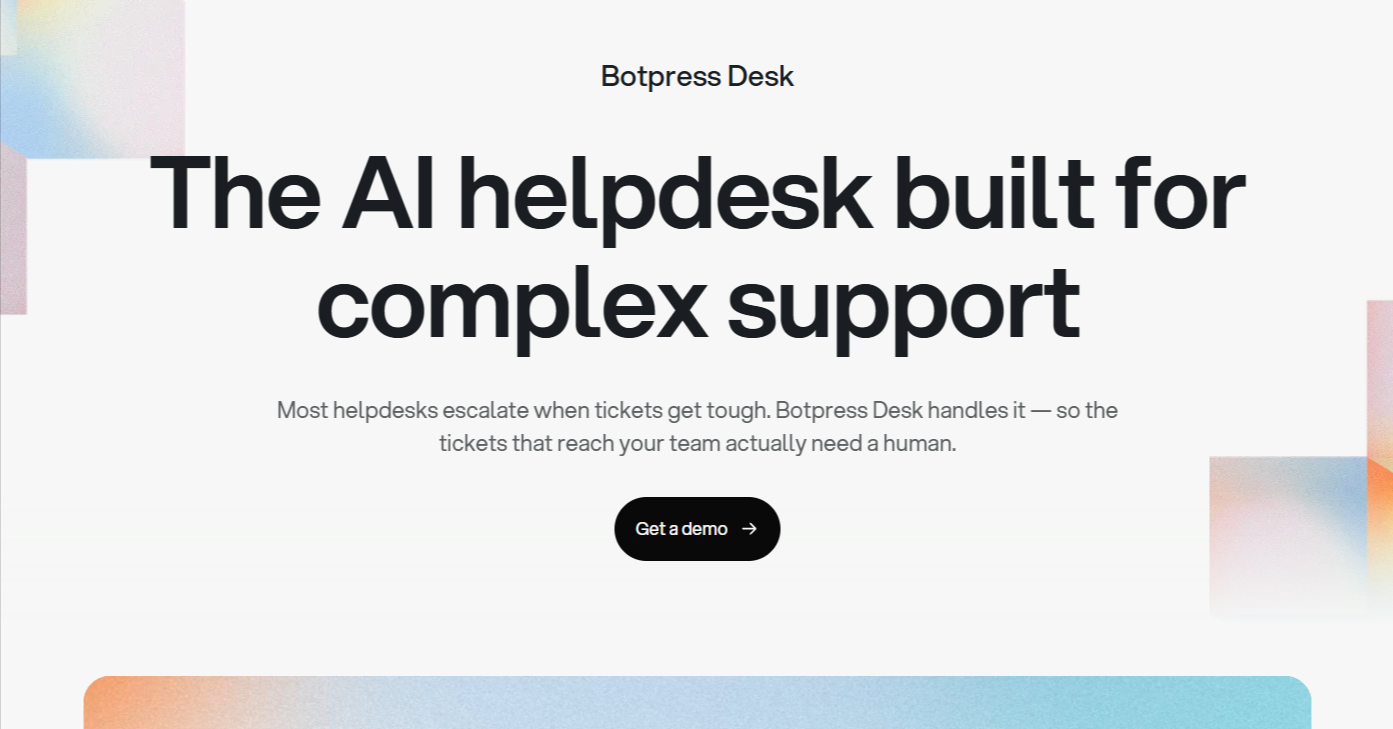
Botpress is one of the smartest AI chatbot platforms for exercising precise control over your AI chatbot behavior. Most chatbot software of the plug-and-play type are mainly geared towards basic support automation. However, Botpress opens up opportunities for developers and technical teams to create hyper-personalized workflows, multi-step engagements, and precision AI agents linked to external systems.
It is a perfect solution for those businesses that embrace conversational logic instead of fixed templates.
Features
- Build AI agents visually using a drag-and-drop workflow studio
- Connect bots with CRMs, APIs, databases, and external services
- Deploy chatbots across websites, messaging apps, and custom channels
- Train bots using documents, knowledge bases, and business data
- Test and monitor workflows directly inside the development environment
Pros
- Strong customization and workflow flexibility
- Good fit for technical and developer-led teams
- Supports complex conversational logic and integrations
Cons
- Learning curve feels steeper than no-code chatbot tools
- Requires more setup effort for non-technical users
- Interface can feel overwhelming for smaller teams
6. Chatbase
Best For Startups
Startups, small-to-midsize businesses (SMBs), and lean marketing teams that need to deploy a functional AI chatbot in minutes without any coding or technical infrastructure.
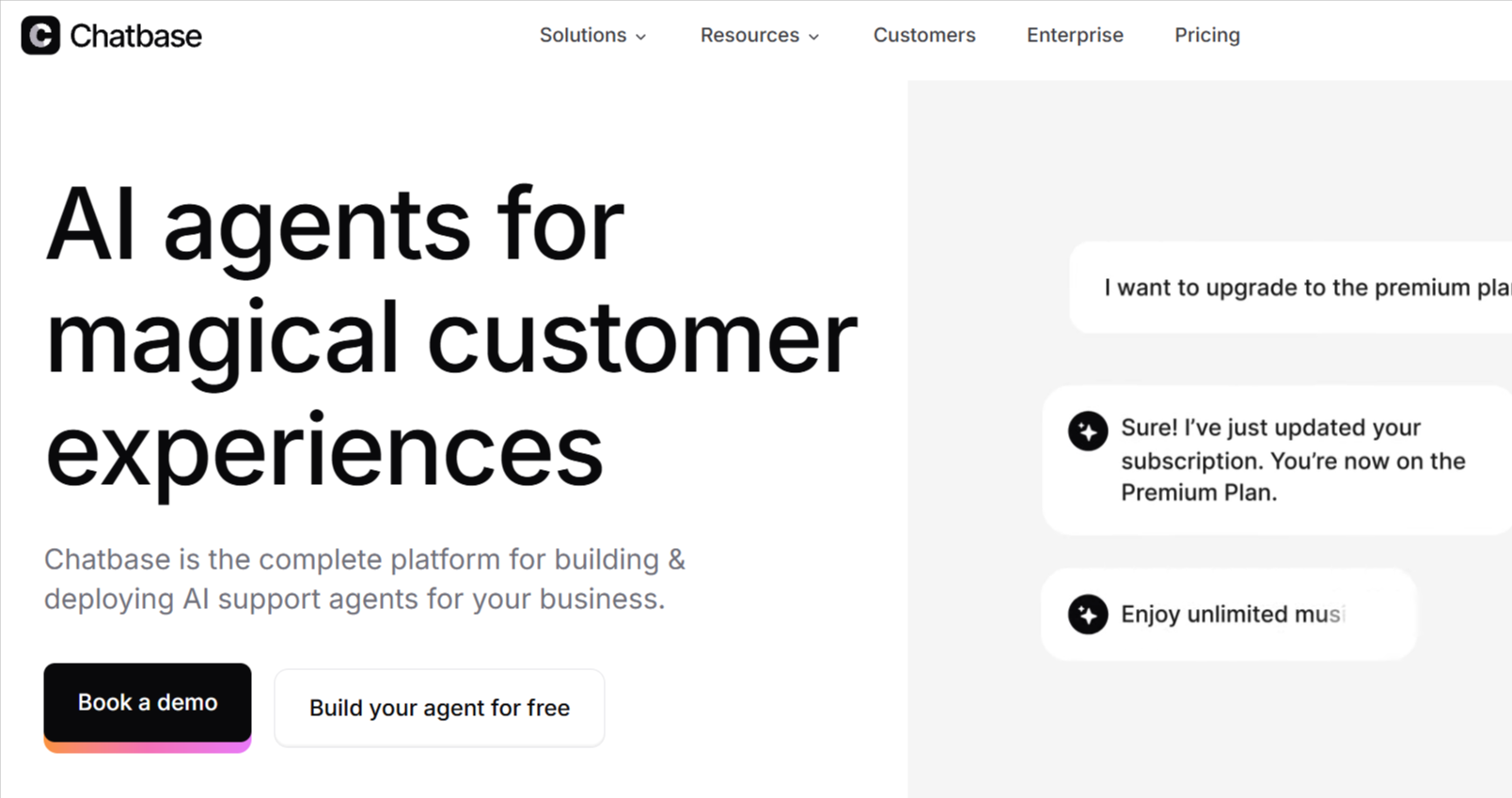
Chatbase capitalizes on two traits: speed and ease. It allows businesses to upload documents, connect website content, and launch AI chatbots within minutes. More importantly, it empowers them to do all of this without any heavy technical work.
Teams can almost instantly build customer-facing bots trained on their own knowledge base. Use Chatbase to gain the first-mover advantage. This makes it particularly invaluable to startups, SaaS businesses, and lean support teams.
Features
- Train AI chatbots using websites, PDFs, Notion pages, and documents
- Deploy support agents across websites and customer portals
- Connect AI agents with APIs and external tools
- Monitor conversations and improve bot responses over time
- Escalate conversations to human support when needed
Pros
- Extremely easy setup for non-technical teams
- Fast knowledge-base training and deployment
- Clean interface with minimal operational overhead
Cons
- Limited workflow depth compared to enterprise platforms
- Advanced customization options remain fairly basic
- Better suited for support automation than complex operations
7. Tidio
Best For SMB Support
Small-to-midsize e-commerce businesses, specifically those on Shopify, that want to bridge the gap between simple live chat and advanced AI automation without a massive technical or financial investment.
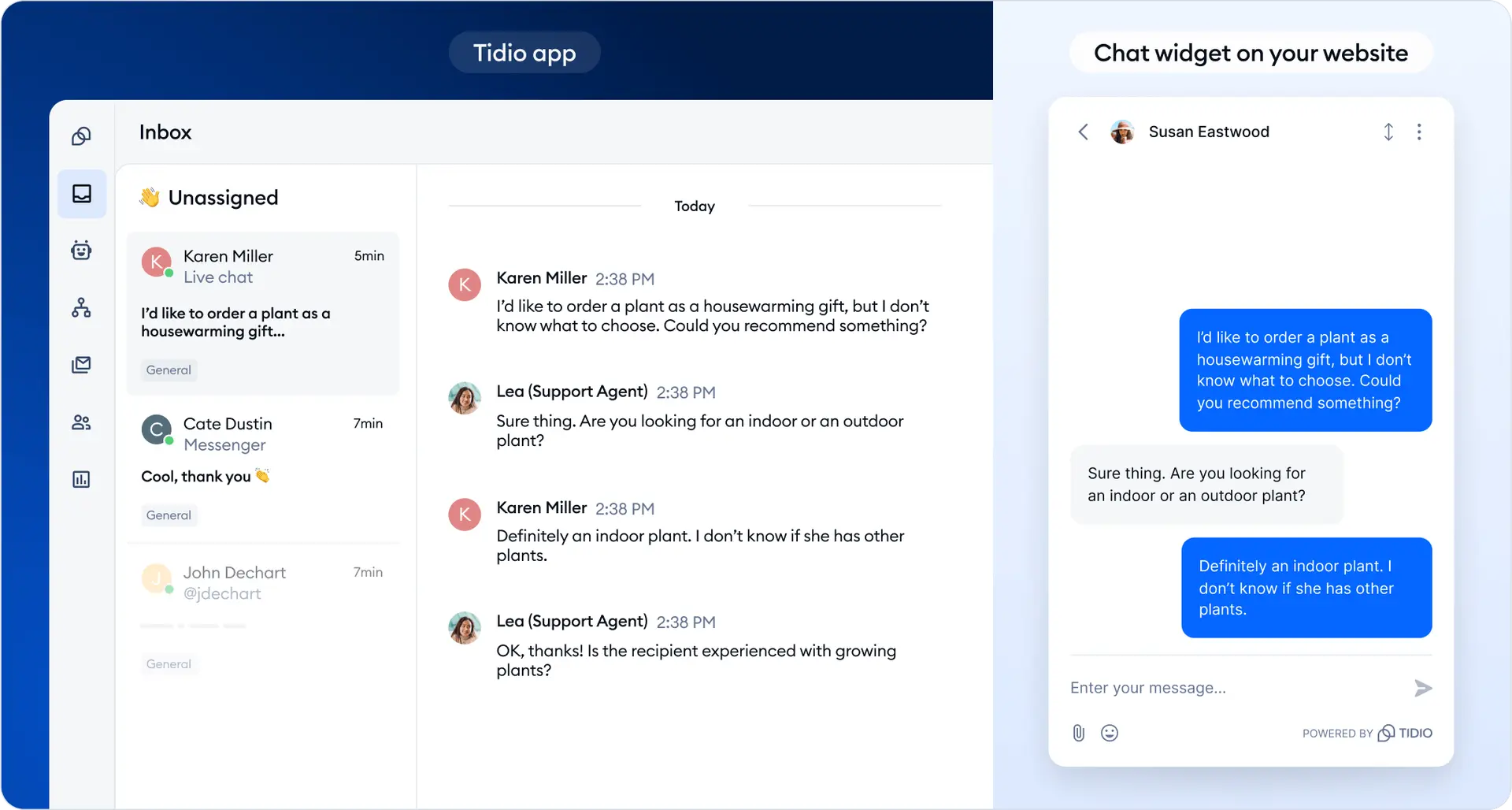
Tidio unifies live chat, AI automation, and ecommerce support into a lightweight platform. The centralization makes all these features readily accessible. Almost everyone can work with Tidio. This makes it attractive to small and mid-sized businesses.
Tidio allows them to set up chatbot services easily and without any significant implementation work. It is also a good fit for ecommerce businesses. From Instagram to websites to emails, Tidio curates automated customer interactions on all digital platforms.
Features
- Automate customer conversations using Lyro AI Agent
- Manage live chat, email, Messenger, Instagram, and WhatsApp in one inbox
- Build chatbot flows using visual automation tools
- Track visitor behavior and trigger proactive conversations
- Analyze chatbot performance, resolution rates, and conversation trends
Pros
- Easy setup for small and growing businesses
- Strong ecommerce and Shopify integrations
- Good balance between live chat and AI automation
Cons
- Advanced workflows feel limited at a larger scale
- Trigger-based pricing can become restrictive
- Better suited for SMBs than enterprise support environments
8. ManyChat
Best For Social Automation
Social media creators, influencers, and “social-first” e-commerce brands that rely on high-engagement platforms like Instagram, Facebook, and WhatsApp to drive sales and lead generation.
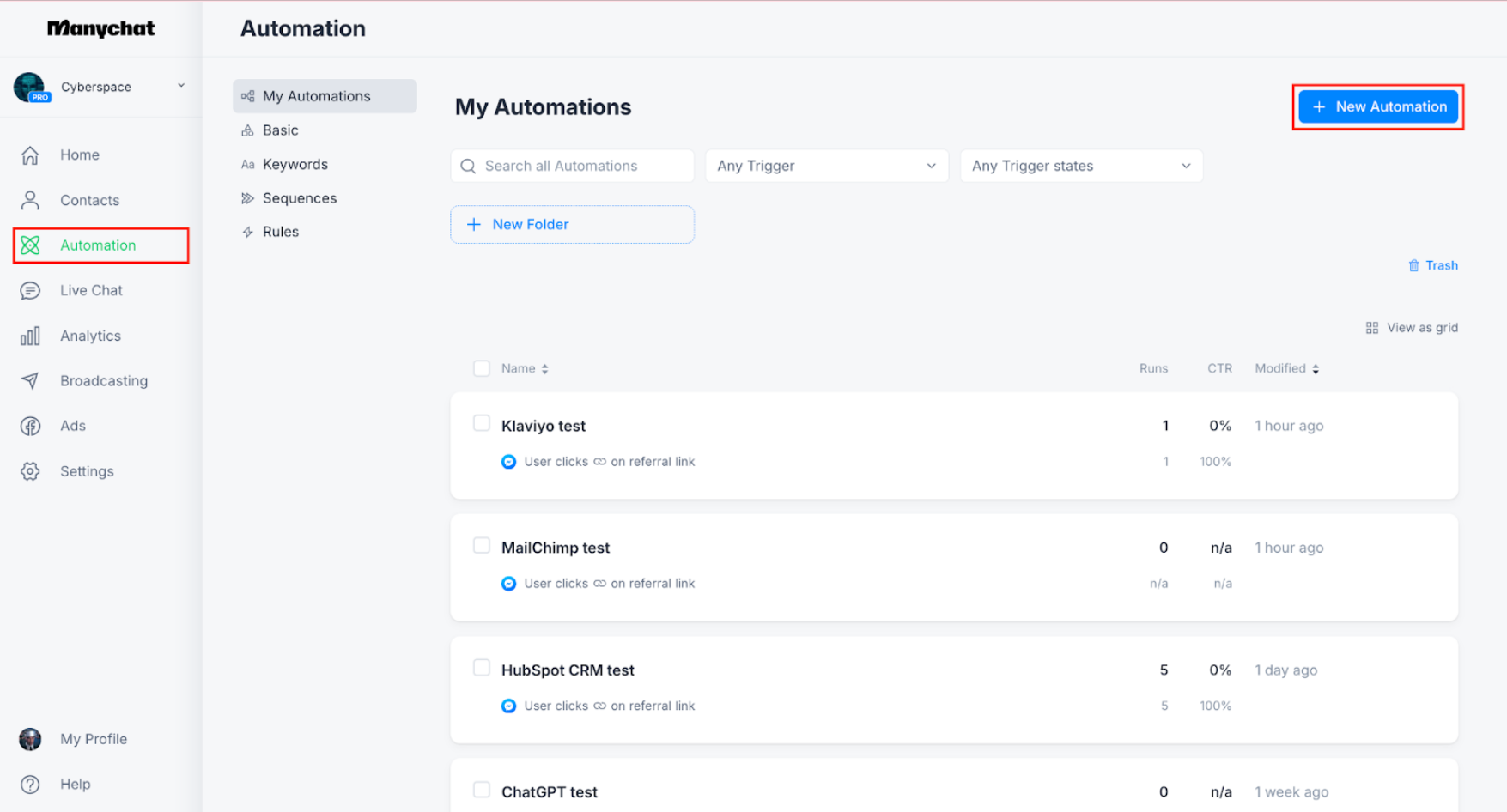
ManyChat benefits from a strong niche in social and messaging automation. The AI chatbot platform is perfect for creators, ecommerce businesses, and marketing departments.
After all, these target groups depend heavily on social channels. We’re talking about Instagram DMs, Facebook Messenger, SMS, and WhatsApp interactions. ManyChat helps maximize the usefulness of conversion-driven automation for social media channels. This quality makes it distinct from chatbot platforms oriented towards big enterprises.
Features
- Automate conversations across Instagram, Facebook Messenger, WhatsApp, and SMS
- Trigger workflows from comments, keywords, story replies, and form submissions
- Capture leads and qualify prospects through automated chat journeys
- Build chatbot flows using a visual no-code automation builder
- Send broadcasts, reminders, and promotional sequences across messaging channels
Pros
- Extremely easy setup for non-technical marketing teams
- Strong Instagram and Messenger automation capabilities
- Good fit for lead generation and social engagement workflows
Cons
- AI functionality feels lighter than enterprise AI chatbot platforms
- Advanced integrations remain somewhat limited for larger operations
- Pricing can scale upward as contact lists grow
9. Voiceflow
Best For Product Teams
Product teams, conversation designers, and CX (Customer Experience) leaders who need a sophisticated platform to design, prototype, and deploy high-fidelity AI agents across both chat and voice/telephony channels.
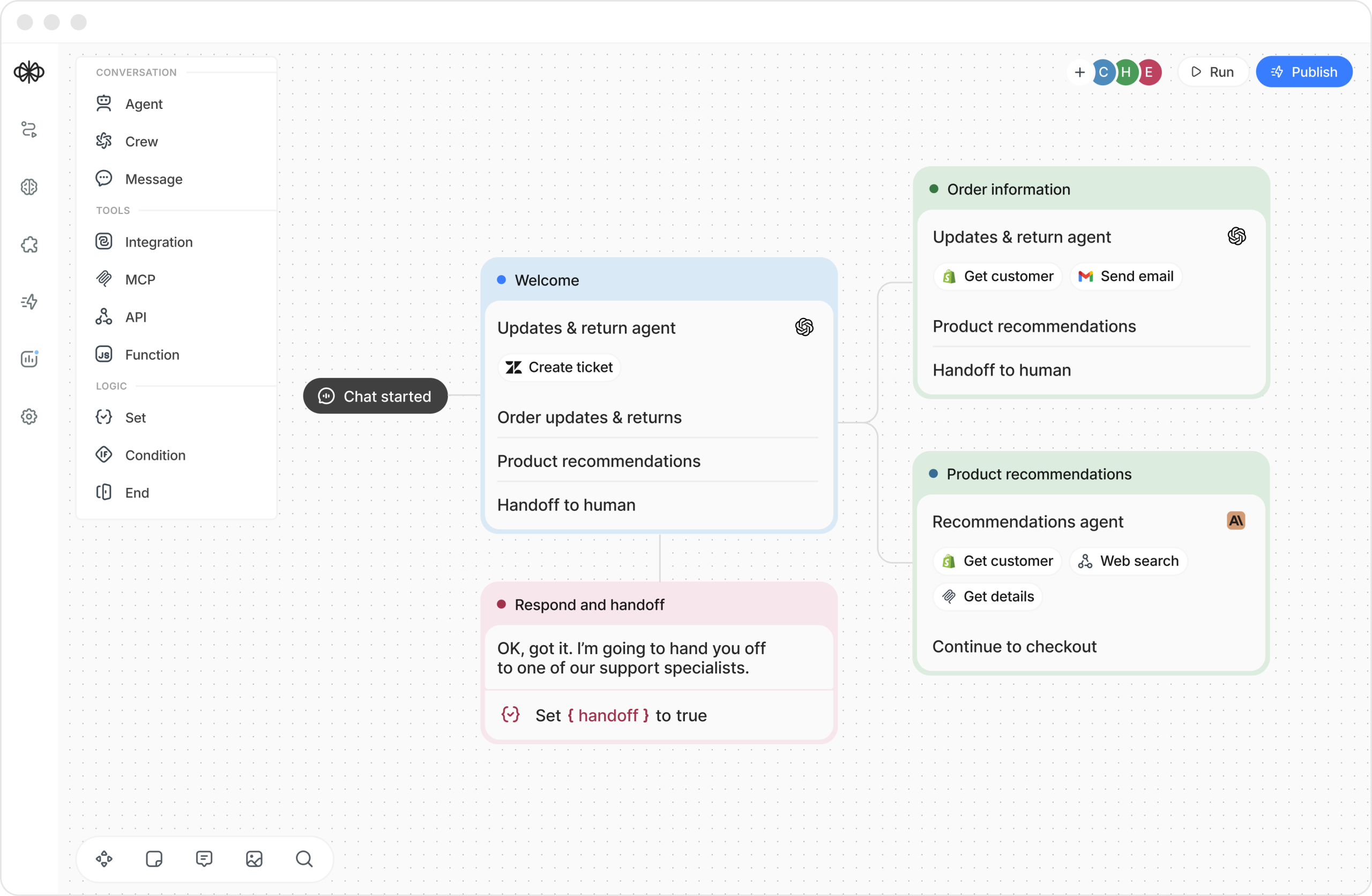
Voiceflow focuses largely on conversation design, prototyping, and collaborative AI agent building. It is particularly popular among product teams and conversation designers building advanced chat and AI Voice Agents workflows.
Voiceflow does not act purely as a support automation tool. Instead, it gives teams a controlled environment to design, test, and refine conversational experiences before deployment.
Features
- Design chatbot and voice workflows using a visual drag-and-drop canvas
- Prototype conversational journeys collaboratively across teams
- Connect AI agents with APIs, databases, and external tools
- Test conversational flows and fallback logic before deployment
- Deploy AI experiences across chat, voice, and custom interfaces
Pros
- Excellent visual workflow builder for conversational design
- Strong collaboration tools for product and design teams
- Easy prototyping without heavy coding requirements
Cons
- Can feel expensive for smaller experimentation projects
- Some advanced production workflows require technical expertise
- Better suited for conversational design than full customer support operations
What’s the Best AI Chatbot Platform For You?
The right AI chatbot platform depends on the problem you are trying to solve. A startup looking for lightweight chatbot software will evaluate platforms very differently from an enterprise managing millions of support conversations each month.
That is why there is no universal “best” platform. Intercom excels in conversational support. Botpress offers deep customization. ManyChat dominates social automation. Voiceflow shines in conversational design. And tools like Chatbase make fast deployment remarkably simple.
Amongst all the options available, Kapture CX stands out as one of the more operationally mature AI chatbot solutions. After all, it unifies AI automation, omnichannel support, workflows, ticketing, and customer operations inside one ecosystem. Such planned orchestration with well-designed support workflows helps keep up with growing customer expectations. So check out Kapture CX today!
FAQs
Traditional chatbot software typically follows a script and predefined rules. An AI Chatbot platform uses artificial intelligence to understand intent, context, and conversational variations. As a result, the conversations flow more naturally.
Enterprise-focused platforms like Kapture CX, Zendesk, and Intercom work particularly well for customer support as they combine automation with ticketing, routing, analytics, and live-agent workflows.
Tools like Tidio, Chatbase, and ManyChat offer lightweight AI chatbot solutions aimed at small businesses. These AI chatbot platforms help with quick deploy without heavy technical requirements.
Not entirely. AI chatbots cannot (and should not) replace human support agents. The best customer support strategy features hybrid models. Here, AI handles repetitive queries whereas human agents manage complex or sensitive conversations.
Businesses should prioritize deployment speed, AI quality, integrations, omnichannel support, analytics, workflow flexibility, and pricing transparency. Long-term scalability matters more for such tools.
Basic automation follows fixed scripts. Conversational AI systems add a human angle to synthetic interactions. AI chatbots understand natural language, maintain context, and respond more dynamically across customer interactions.



 +1833-386-0222 (USA)
 enquiries@kapture.cx



One thought on “9 Best AI Chatbot Platforms in 2026: An Honest Review”
Comments are closed.