












Zoho Desk often enters a support stack for a sensible reason. It brings ticketing, automation, self-service, analytics, and more than ten support channels into one product. Zia can summarize conversations, suggest replies, and flag customer sentiment. Businesses already using other Zoho products may also find the setup easier to learn.
The gaps often become clearer during routine support work. An agent may need to open a separate order system to process a return. A manager may still export data and rebuild reports in a spreadsheet. Regional teams can also run into problems with routing rules or data controls. The evaluation then shifts from basic functionality to operational fit.
This guide compares the best Zoho Desk alternatives and explains the type of support team each one serves best.
Why Businesses Look Beyond Zoho Desk
Companies usually start looking at alternatives to Zoho Desk after a workaround becomes part of the daily routine. The help desk still works, but too much of the actual service process happens elsewhere.
- More Capable AI: AI that completes actions, checks responses, and helps agents in real time
- Deeper Automation: Workflows that continue after a ticket reaches finance, logistics, or field staff
- Wider Channel Coverage: Customer service through phone, messaging, social, apps, and sales platforms
- Easier Adoption: Familiar tools with fewer settings and less training
- Better Analysis: Custom dashboards, forecasting, and conversation-level insights
- More Scale: Multi-brand, multilingual, and regional service operations
Customer support software like Zoho Desk ranges from shared inboxes to platforms connecting contact centers and field teams.
A Quick Comparison of Zoho Desk Alternatives
The table below offers a quick first glance at the market, showing the team profile, core strengths, and user ratings for each platform.
| Platform | Suitable For | Key Features | User Ratings |
| Kapture CX | Large, industry-focused service operations | AgentOS, AI agent building and orchestration, human approvals, automated quality assessment, and operational intelligence | G2: 4.5/5 (350+ reviews)Capterra: 4.2/5 (40+ reviews) |
| Zendesk | Mature support teams across industries | AI agents, routing, knowledge, and analytics | G2: 4.3/5 (6,900+ reviews)Capterra: 4.4/5 (4,000+ reviews) |
| Freshdesk | Growing teams seeking quick deployment | Freddy AI, ticketing, automation, and self-service | G2: 4.4/5 (3,700+ reviews)Capterra: 4.5/5 (3,400+ reviews) |
| Gorgias | E-commerce and Shopify brands | Commerce actions, AI agent, and unified inbox | G2: 4.6/5 (550+ reviews)Capterra: 4.6/5 (130+ reviews) |
| HappyFox | Customer and internal service desks | Smart rules, SLAs, knowledge, and reports | G2: 4.5/5 (130+ reviews)Capterra: 4.6/5 (90+ reviews) |
| Hiver | Google Workspace-based teams | Gmail help desk, shared inboxes, and AI triage | G2: 4.6/5 (1,200+ reviews)Capterra: 4.7/5 (140+ reviews) |
| ServiceNow CSM | Complex enterprise workflows | AI agents, case management, and cross-team workflows | G2: 4.4/5 (460+ reviews)Capterra: 4.4/5 (150+ reviews) |
| Intercom | Digital products and SaaS companies | Fin AI agent, messenger, and workflows | G2: 4.5/5 (3,800+ reviews)Capterra: 4.5/5 (1,100+ reviews) |
| Sprinklr Service | Global, high-volume contact centers | 30+ channels, unified desktop, and AI routing | G2: 4.3/5 (730+ reviews)Capterra: N/A |
| Helply | B2B software support | Account context, revenue signals, and outcome pricing | N/A |
| LiveAgent | SMBs needing chat, ticketing, and calls | Universal inbox, live chat, call center, and AI | G2: 4.5/5 (1,500+ reviews)Capterra: 4.7/5 (1,700+ reviews) |
| Help Scout | Growing teams that value simplicity | Shared inbox, Docs, Beacon, and AI answers | G2: 4.4/5 (430+ reviews)Capterra: 4.6/5 (220+ reviews) |
| Tidio | SMB e-commerce and service teams | Lyro AI, live chat, ticketing, and chatbot flows | G2: 4.6/5 (1,900+ reviews)Capterra: 4.7/5 (590+ reviews) |
Top Zoho Desk Alternatives & Competitors
Below, we look at 13 alternatives and where each one may suit a team better than Zoho Desk.
1. Kapture CX
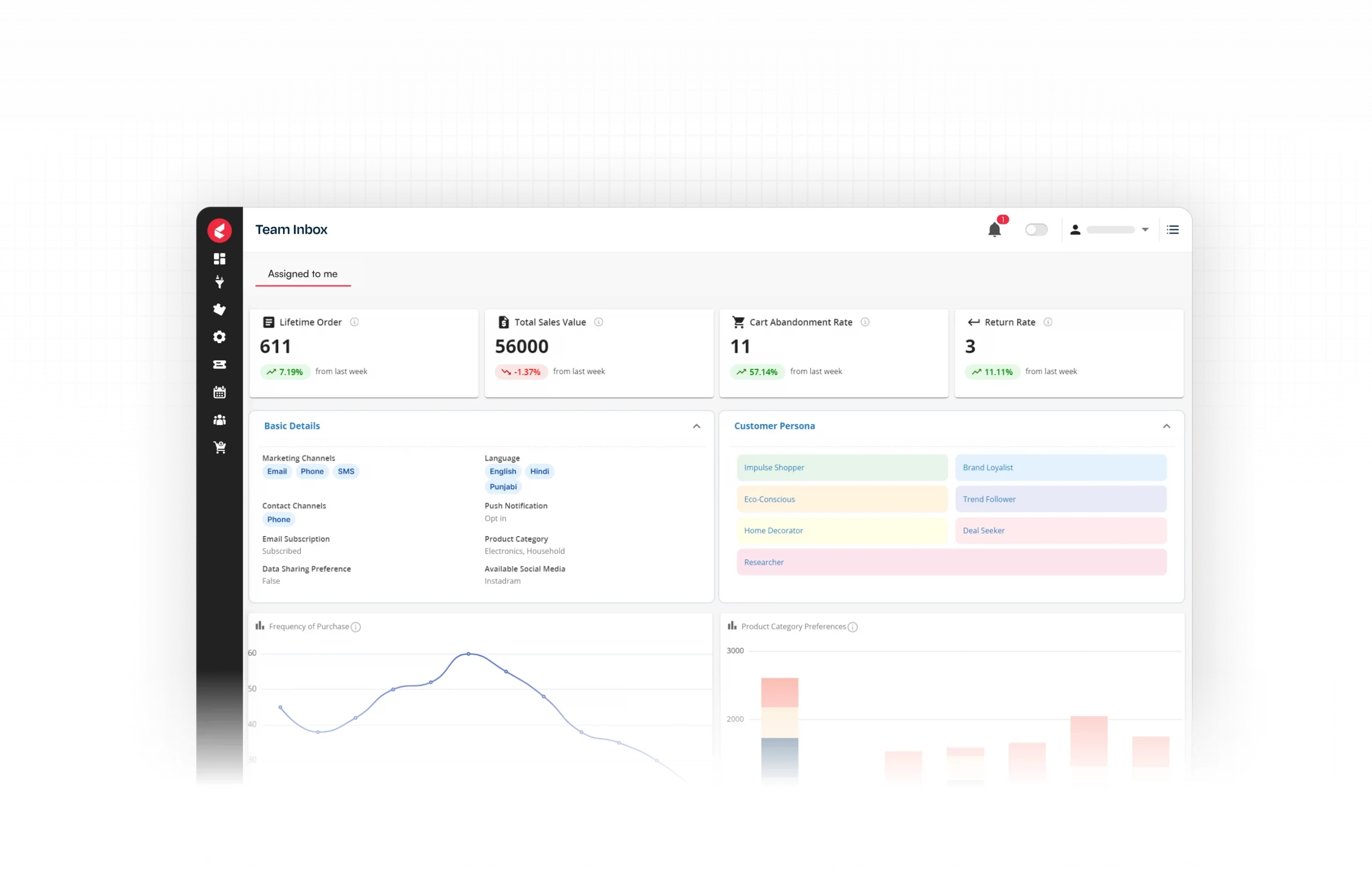
Kapture CX suits service operations where one customer issue may move through several departments. A refund, claim, billing problem, or service request can pass between teams and systems before it is resolved.
Kapture AgentOS brings AI agents, human review, and operational data into one system, helping the case move from the initial request to the completed action without losing its history.
Key Features:
- VITOS Agent Builder for building, testing, and deploying AI agents across voice, chat, email, and social channels
- COMMAND human layer for reviewing AI activity, routing approvals, and taking over live processes
- CALIBRATE audit layer for automatically assessing interactions, checking SLA adherence, and identifying coaching needs
- PULSE intelligence layer for analyzing operational data, recommending actions, and carrying out approved next steps
- Industry-specific workflows for returns, refunds, claims, booking changes, order management, and field service requests
Best For: Enterprise operations with industry-specific post-sales workflows
Ratings and Reviews:
- G2: 4.5/5 (350+ reviews)
- Capterra: 4.2/5 (40+ reviews)
Why It Is a Good Alternative: Kapture CX suits businesses where a customer issue often moves beyond the support queue. The platform can use AI agents to complete routine actions across systems, leaving employees to review exceptions and approve sensitive steps. It brings service conversations and back-office work into the same process.
2. Zendesk
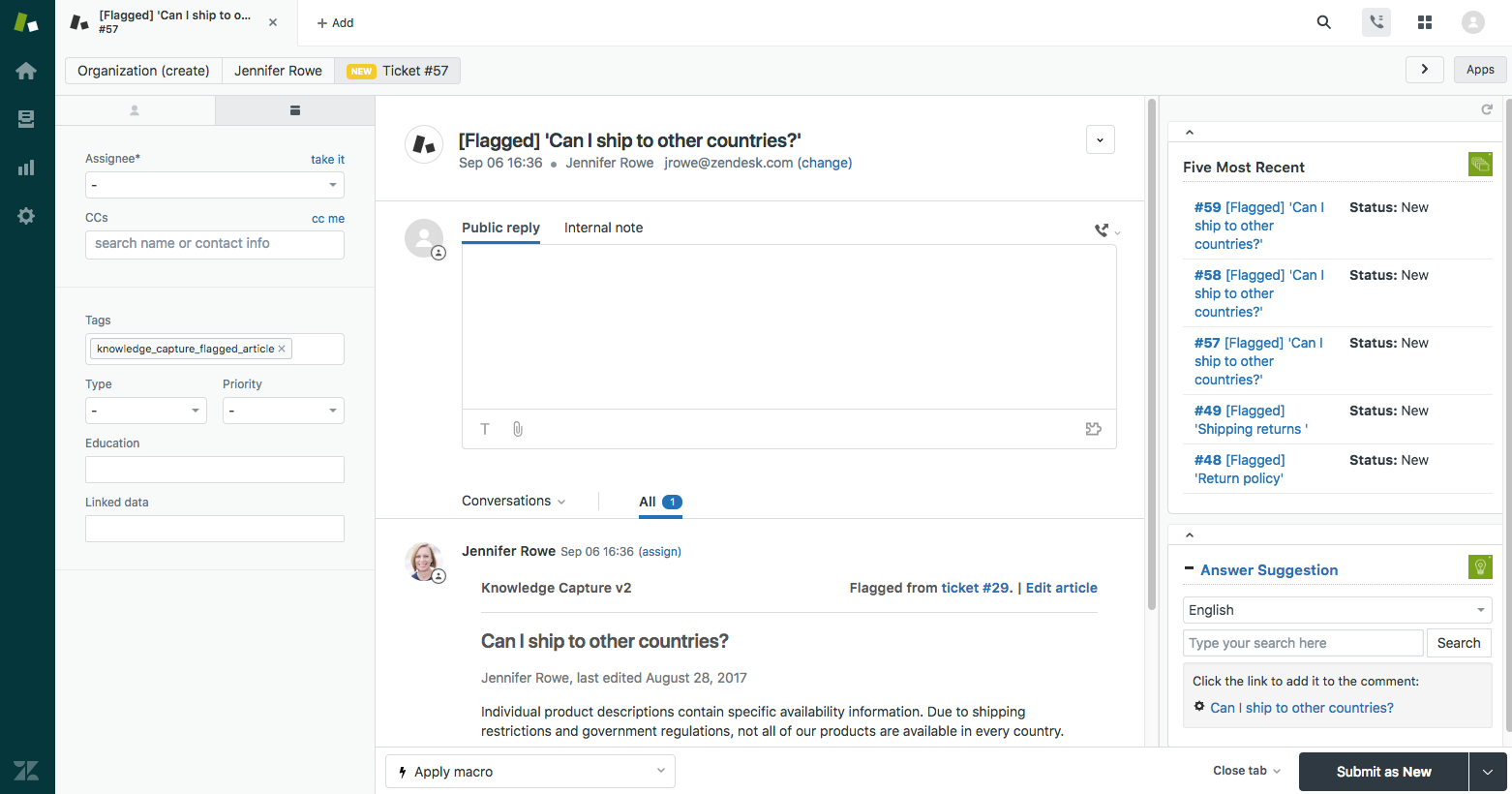
Zendesk now offers much more than ticket management. Its tools also cover messaging, voice, knowledge bases, quality assurance, and workforce management. Teams can create different queues, permissions, and support rules for each brand or regional operation.
Key Features:
- Resolution Learning Loop for self-improving AI agents
- Skill-based, capacity-based, and priority-based omnichannel routing
- Zendesk QA and workforce management tools
- Large marketplace for support and business integrations
Best For: Mature support teams with dedicated administrators
Ratings and Reviews:
- G2: 4.3/5 (6,900+ reviews)
- Capterra: 4.4/5 (4,000+ reviews)
Why It Is a Good Alternative: Zendesk gives larger teams the tools to manage a more detailed support structure. Ticket routing, access permissions, and integrations can all be adjusted around the team.
Zoho Desk is generally easier to introduce, while Zendesk suits businesses prepared for a heavier rollout.
3. Freshdesk
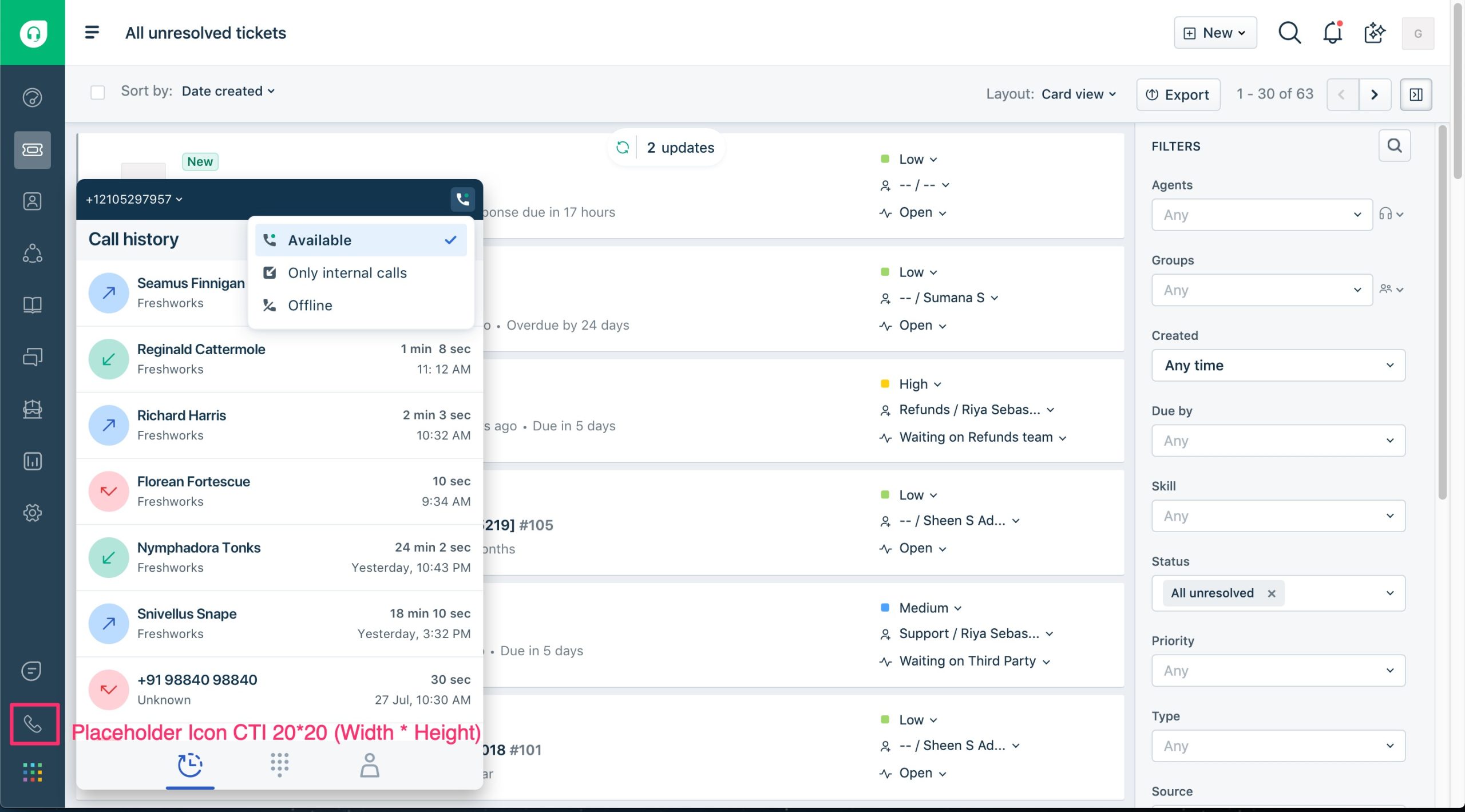
Freshdesk gives growing teams an easy entry into structured support. A company can begin with email, a portal, and a knowledge base, then adopt Freshdesk Omni when chat and messaging become important. Freddy AI works across customer self-service and the agent workspace.
Key Features:
- Freddy AI agent for autonomous customer conversations
- Freddy AI Copilot with sentiment, translation, and reply assistance
- Scenario Automations for running several ticket actions at once
- Freshdesk Omni for ticketing, chat, and messaging in one workspace
Best For: Growing teams expanding beyond email ticketing
Ratings and Reviews:
- G2: 4.4/5 (3,700+ reviews)
- Capterra: 4.5/5 (3,400+ reviews)
Why It Is a Good Alternative: Freshdesk gives growing teams more room to add new support channels and AI features. They can expand the setup as needed rather than paying for a broad enterprise suite too early. Buyers should still compare plan limits carefully.
4. Gorgias
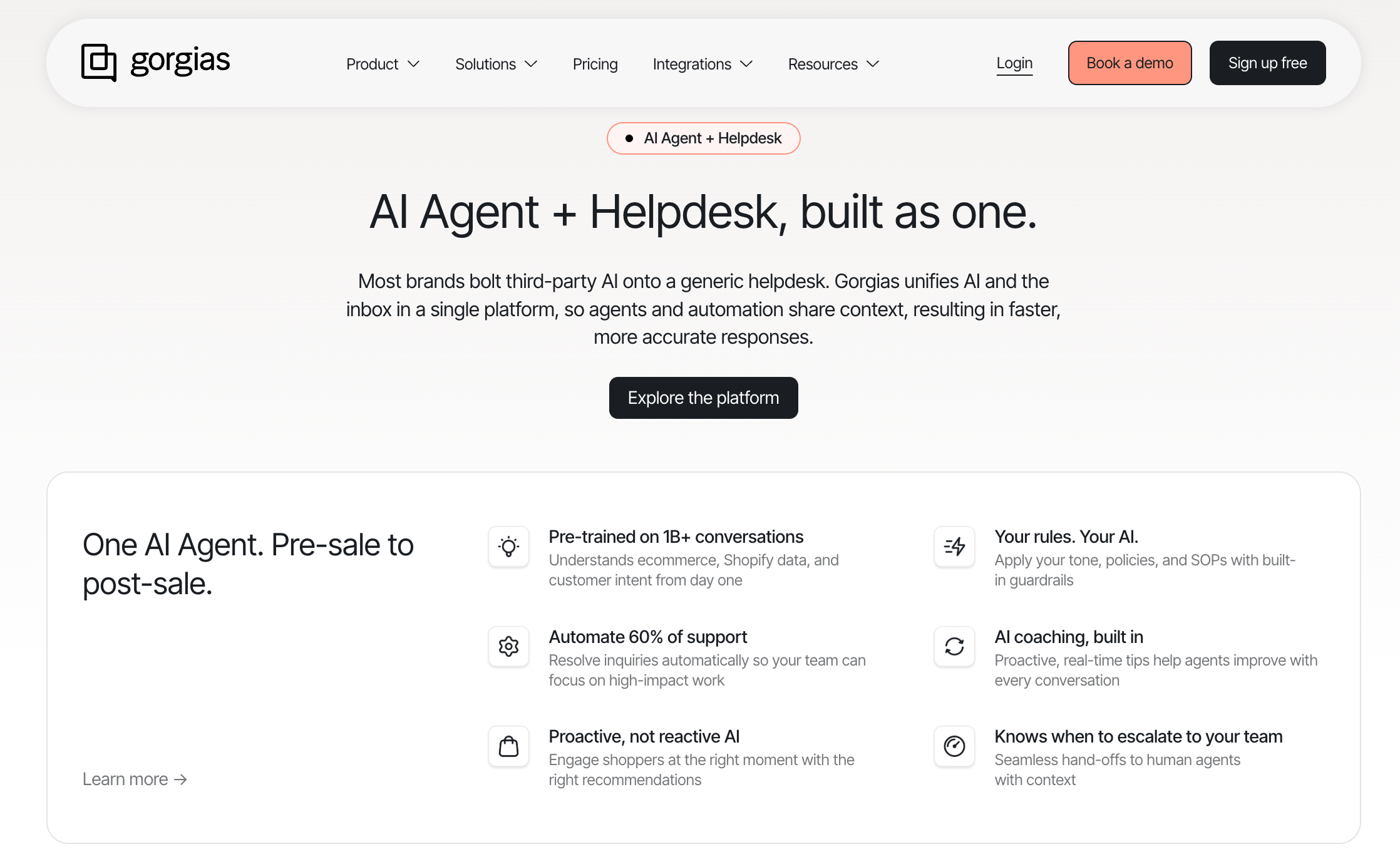
Gorgias is designed for e-commerce teams that constantly move between messages and store records. Order history, subscriptions, and shopping data appear beside the conversation.
Agents and the AI agent can answer a question and complete the related commerce action without leaving the help desk.
Key Features:
- AI shopping assistant for product discovery and recommendations
- Native Shopify order editing, refunds, and cancellations
- Automated returns, order tracking, and subscription actions
- Revenue statistics linking support conversations to sales
Best For: E-commerce brands, particularly Shopify merchants
Ratings and Reviews:
- G2: 4.6/5 (550+ reviews)
- Capterra: 4.6/5 (130+ reviews)
Why It Is a Good Alternative: Gorgias removes the tab-switching behind routine e-commerce support. A delivery query can become an order update, return, or exchange during the same conversation.
For retail teams, that store access may be more useful than Zoho Desk’s broader CRM connections.
5. HappyFox
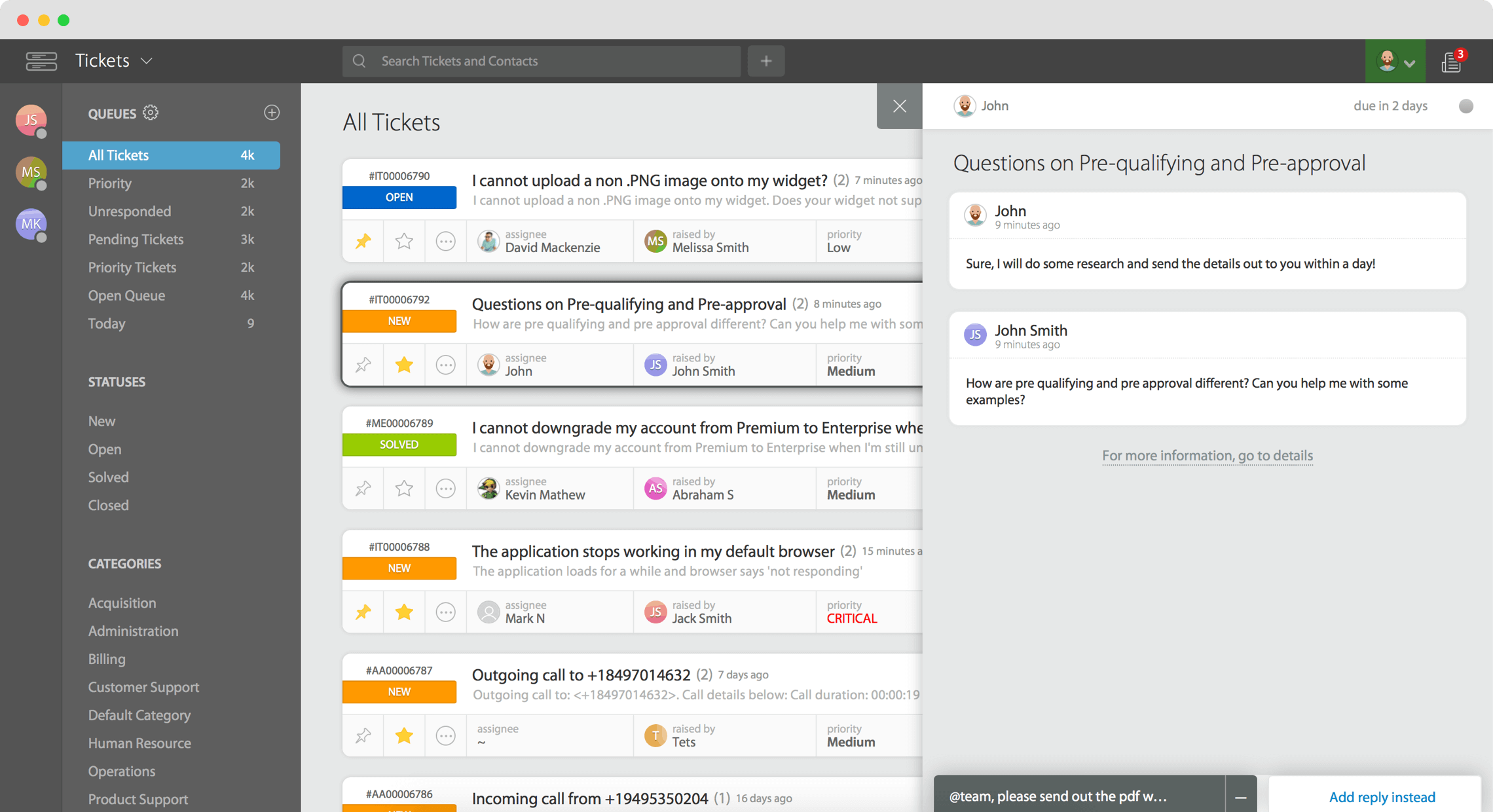
HappyFox can run customer support and internal service desks on the same platform. Each team gets its own categories, queues, forms, and service rules, so an HR request need not follow the path of a product complaint. The interface stays centered on conventional ticket handling.
Key Features:
- Smart rules for event and time-based ticket automation
- Agent scripting for guided, consistent support conversations
- Separate multilingual internal and customer knowledge bases
- Asset and task management inside the help desk
Best For: Customer and internal service desks
Ratings and Reviews:
- G2: 4.5/5 (130+ reviews)
- Capterra: 4.6/5 (90+ reviews)
Why It Is a Good Alternative: HappyFox serves customer support, IT, and internal teams without forcing them into one process. Smart Rules and separate knowledge bases provide that separation inside one product.
It is less CRM-oriented than Zoho Desk and more focused on orderly service-desk work.
6. Hiver
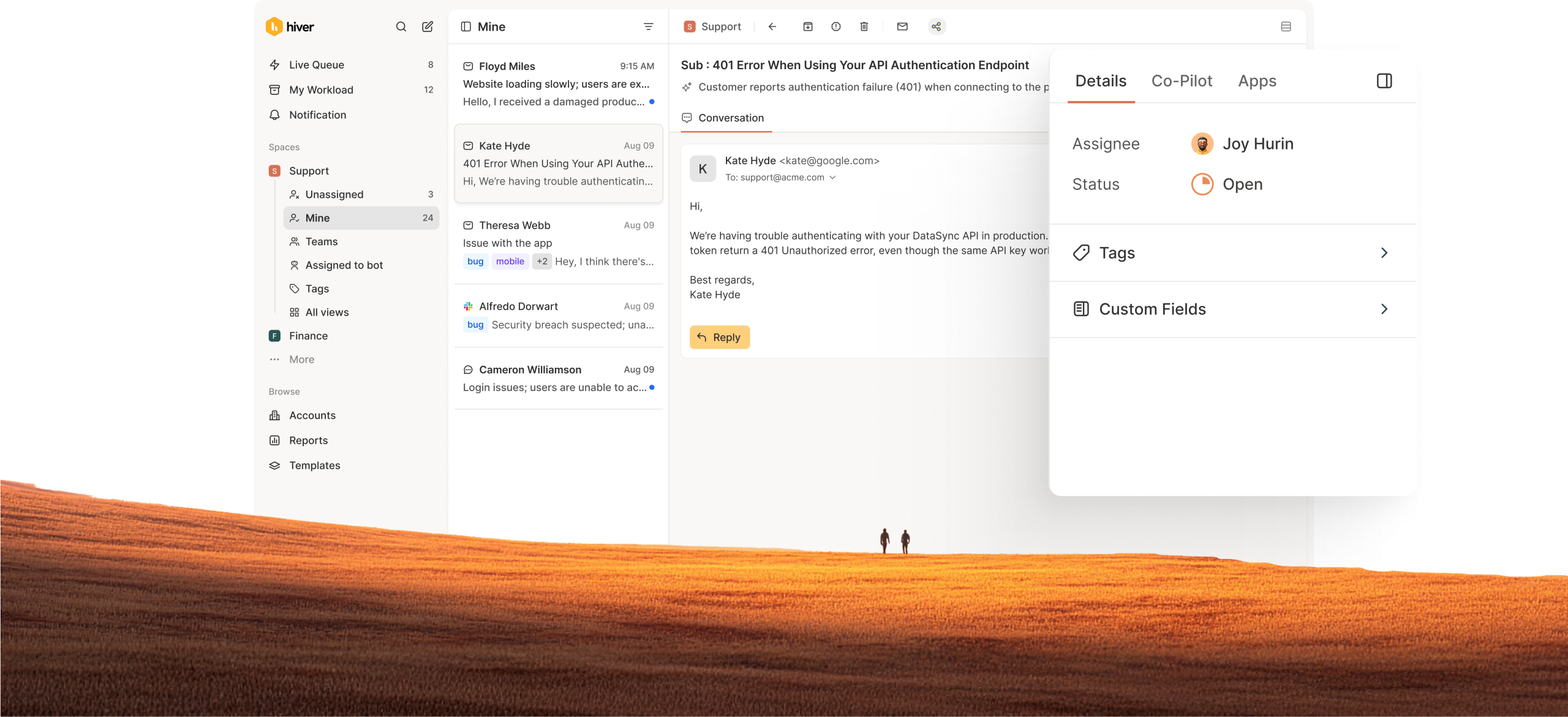
Hiver puts help-desk controls within Gmail. Messages can be assigned, given a status, and discussed privately without forwarding them or opening a separate queue. Hiver also covers chat, voice, and WhatsApp, but its Gmail experience remains the main draw.
Key Features:
- Gmail-native assignment, notes, and collision detection
- AI extract for capturing order IDs and other ticket details
- AI Triage and Thank You Detector for automatic queue cleanup
- Email workload, response time, and SLA analytics
Best For: Google Workspace teams managing shared inboxes
Ratings and Reviews:
- G2: 4.6/5 (1,200+ reviews)
- Capterra: 4.7/5 (140+ reviews)
Why It Is a Good Alternative: Hiver solves a narrower problem than Zoho Desk, which can be useful. Email-led teams gain ownership, SLAs, and reporting without changing where they work. Onboarding is less disruptive for a small team whose support process already revolves around Gmail.
7. ServiceNow CSM
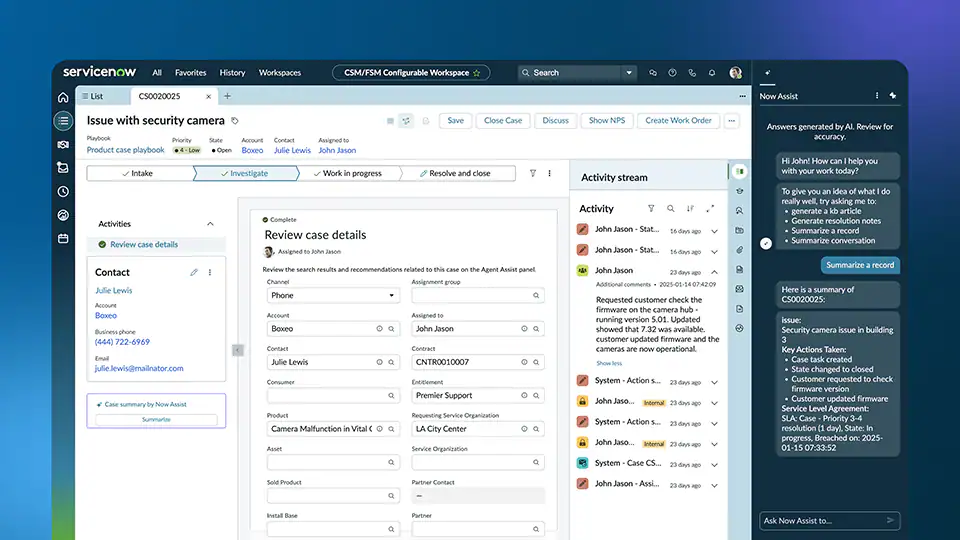
ServiceNow CSM treats a case as an operational process, not only a conversation waiting for a reply. A request can trigger work in billing, fulfillment, IT, or field service, with every department updating the same record. It is normally configured around an existing ServiceNow environment.
Key Features:
- CSM AI agent collection with prebuilt agentic workflows
- Now Assist summaries, resolution notes, and recommended actions
- Proactive customer service operations for detecting issues early
- Process mining for finding delays in case workflows
Best For: Enterprises with cross-department service workflows
Ratings and Reviews:
- G2: 4.4/5 (460+ reviews)
- Capterra: 4.4/5 (150+ reviews)
Why It Is a Good Alternative: ServiceNow CSM handles cases that remain open while several departments complete the resolution. Its audit trail and workflow control suit complex or regulated operations. Existing ServiceNow customers can place customer service on the same operational backbone instead of a separate help desk.
8. Intercom
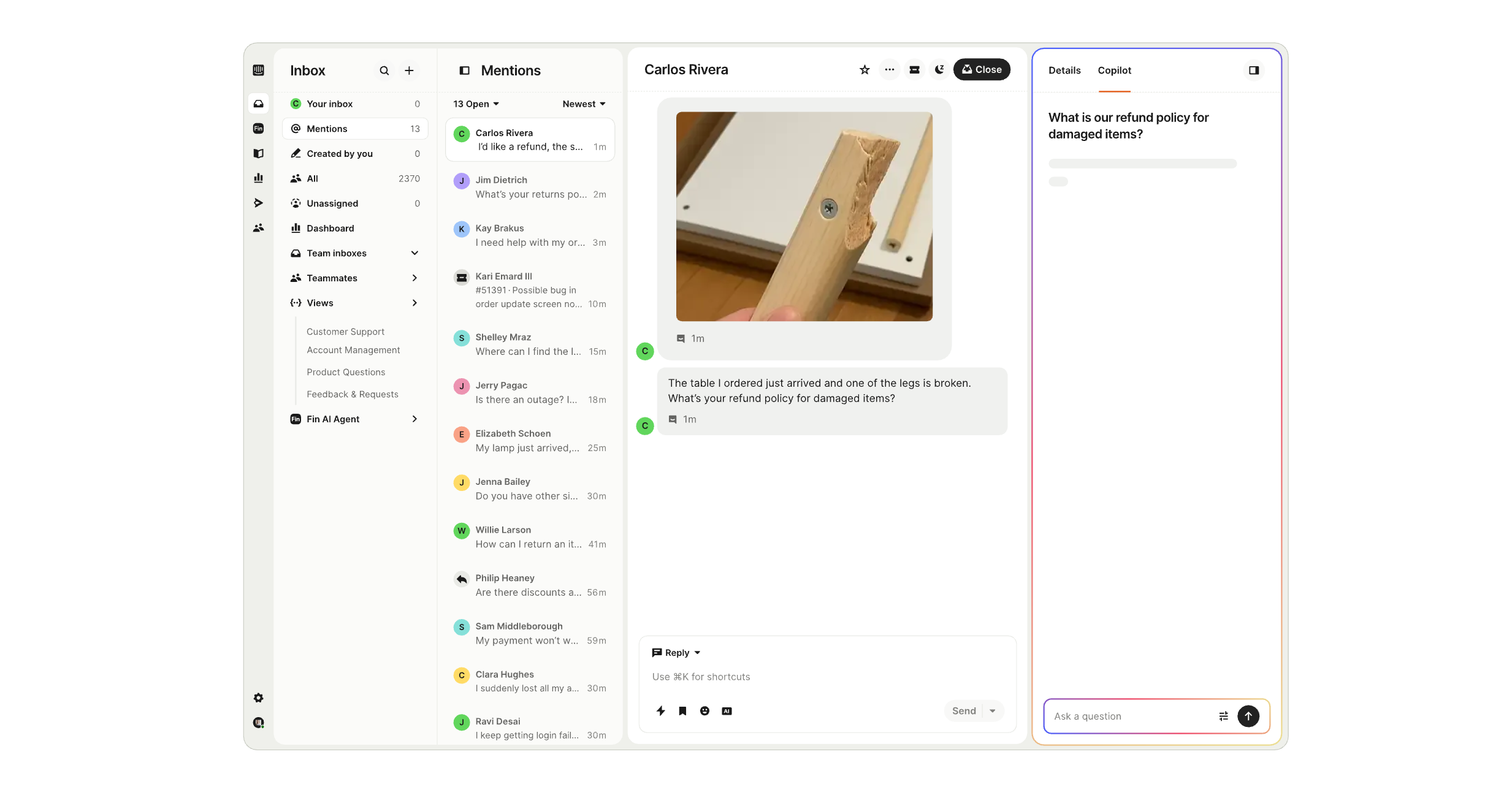
Intercom places support inside a website or digital product. Messenger can show help content, collect details, open a live chat, or hand the conversation to Fin without sending the customer elsewhere. Agents then receive the user’s earlier messages and product context in the inbox.
Key Features:
- Fin AI agent for answers, actions, and human hand-offs
- Messenger for in-app support and proactive guidance
- Fin AI insights for spotting conversation trends and knowledge gaps
- Fin AI-powered quality assurance across customer conversations
Best For: SaaS and digital-product support teams
Ratings and Reviews:
- G2: 4.5/5 (3,800+ reviews)
- Capterra: 4.5/5 (1,100+ reviews)
Why It Is a Good Alternative: Intercom lets SaaS teams support customers while they are still using the product. It can also be used to guide new users, share helpful prompts, and send messages based on customer activity.
It places more emphasis than Zoho Desk on conversational, in-product service and less on a traditional portal.
9. Sprinklr Service
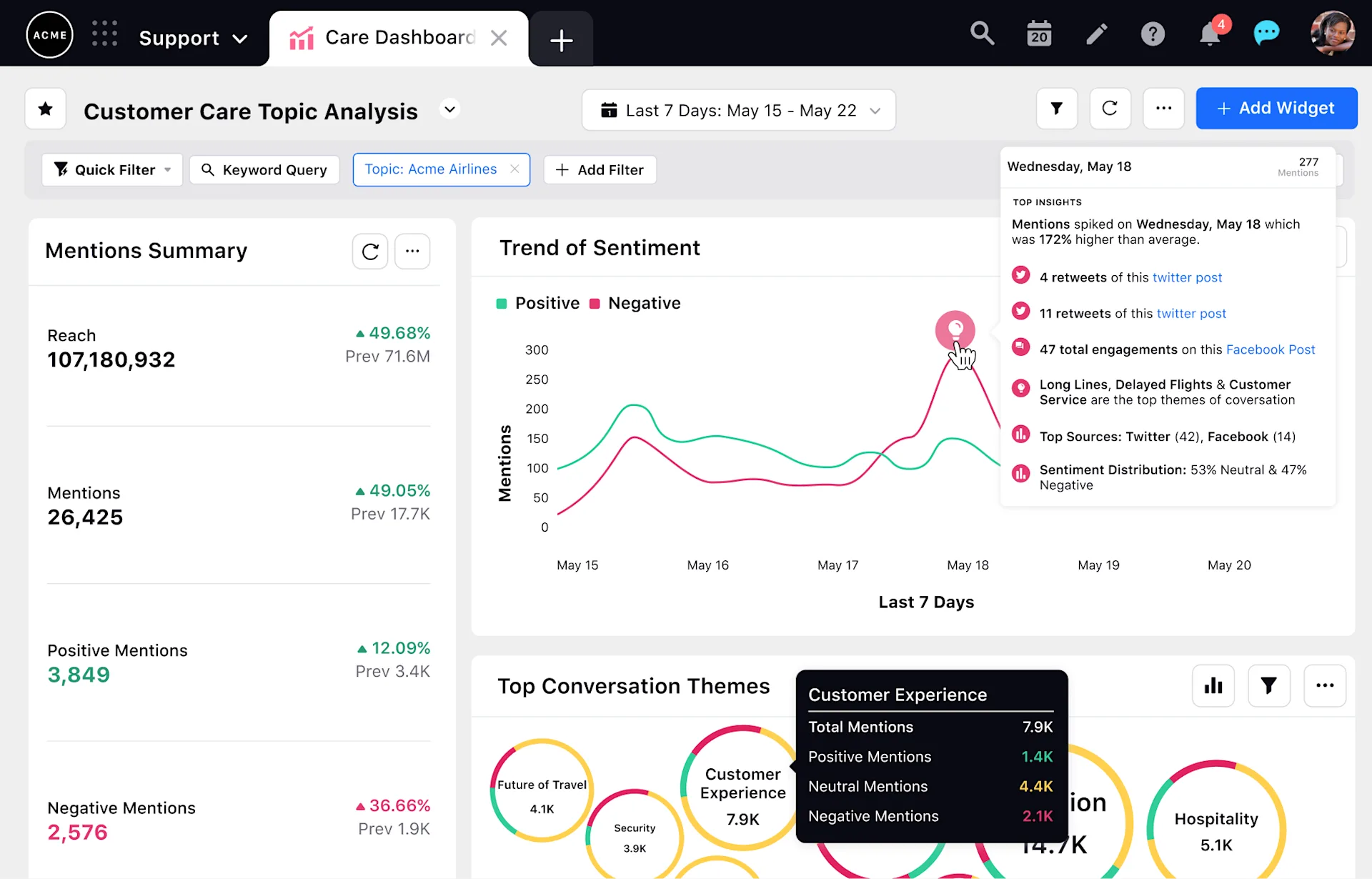
Sprinklr Service is built for contact centers handling large volumes of public and private conversations. Voice, social networks, messaging, and other digital channels share one agent desktop. Supervisors can apply common routing, quality, and workforce rules across many brand accounts and languages.
Key Features:
- Unified service across more than 30 voice, social, and digital channels
- Conversational analytics across calls, messages, and social interactions
- AI-based routing that sends each request to the right agent, with live support during conversations
- Forecasting, shift planning, and tools for reviewing service quality
Best For: Large consumer contact centers handling customers across several countries
Ratings and Reviews:
- G2: 4.3/5 (730+ reviews)
- Capterra: N/A
Why It Is a Good Alternative: Sprinklr suits global brands whose social care operation is too large to remain an add-on channel. Public posts, private messages, and contact center conversations follow one governance model. It offers greater channel depth than Zoho Desk, with a heavier implementation.
10. Helply
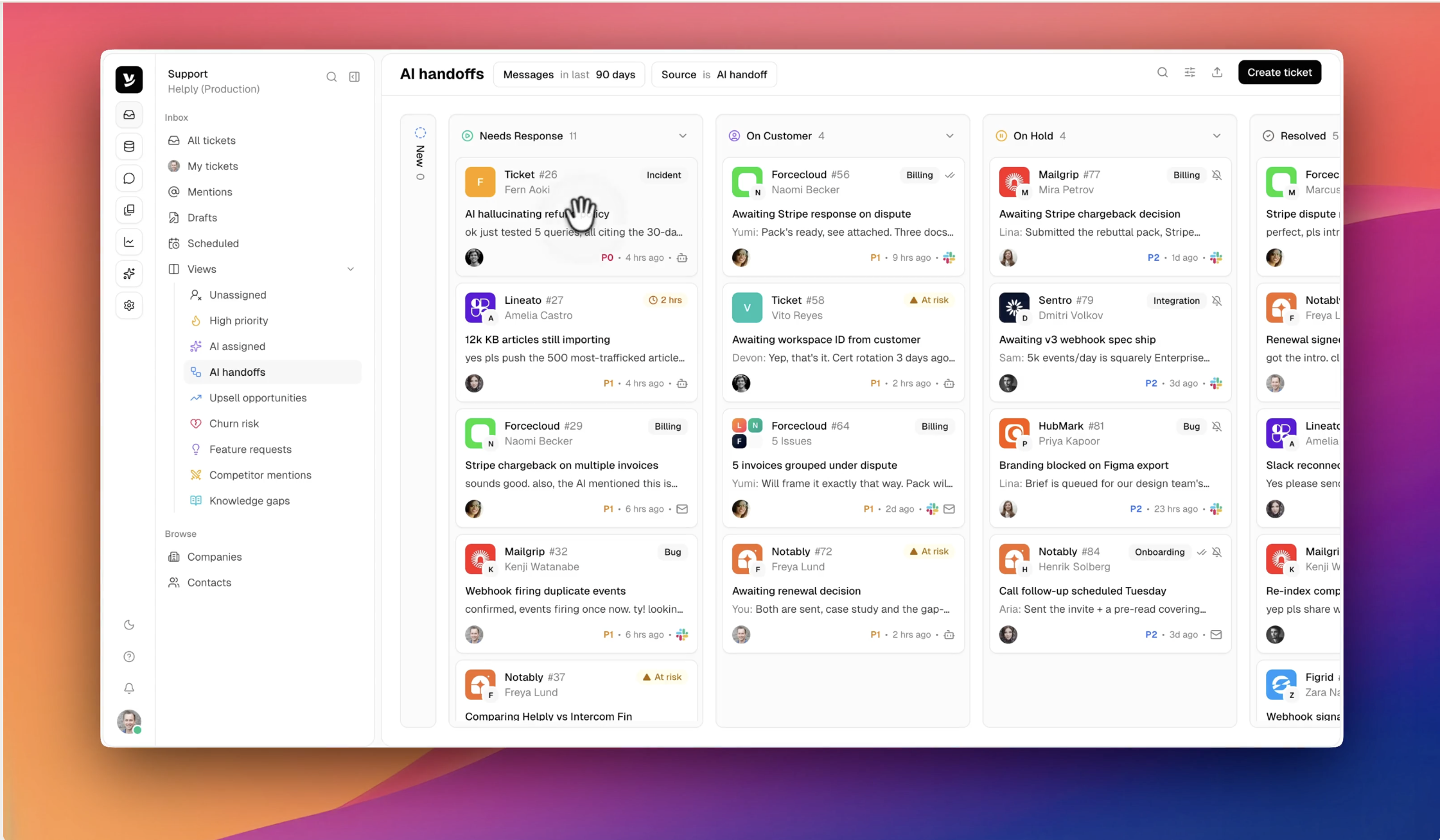
Helply is an AI-native B2B support platform developed from Groove. It reads each message alongside account data rather than treating the sender as an isolated contact. One conversation can reveal a support issue, product request, renewal risk, or customer success opportunity.
Key Features:
- Account intelligence that brings company context into each ticket
- Churn detection and upsell opportunities drawn from conversations
- Feature flag and competitor monitoring for product teams
- AI article creation from resolved support work
Best For: B2B support and customer success teams
Ratings and Reviews:
- G2: N/A
- Capterra: N/A
Why It Is a Good Alternative: Helply connects support directly with customer success and product work. Signals do not stay buried in closed conversations; they can reach the account or roadmap owner.
As a newer product, its integrations and reporting deserve close testing during a pilot.
11. LiveAgent
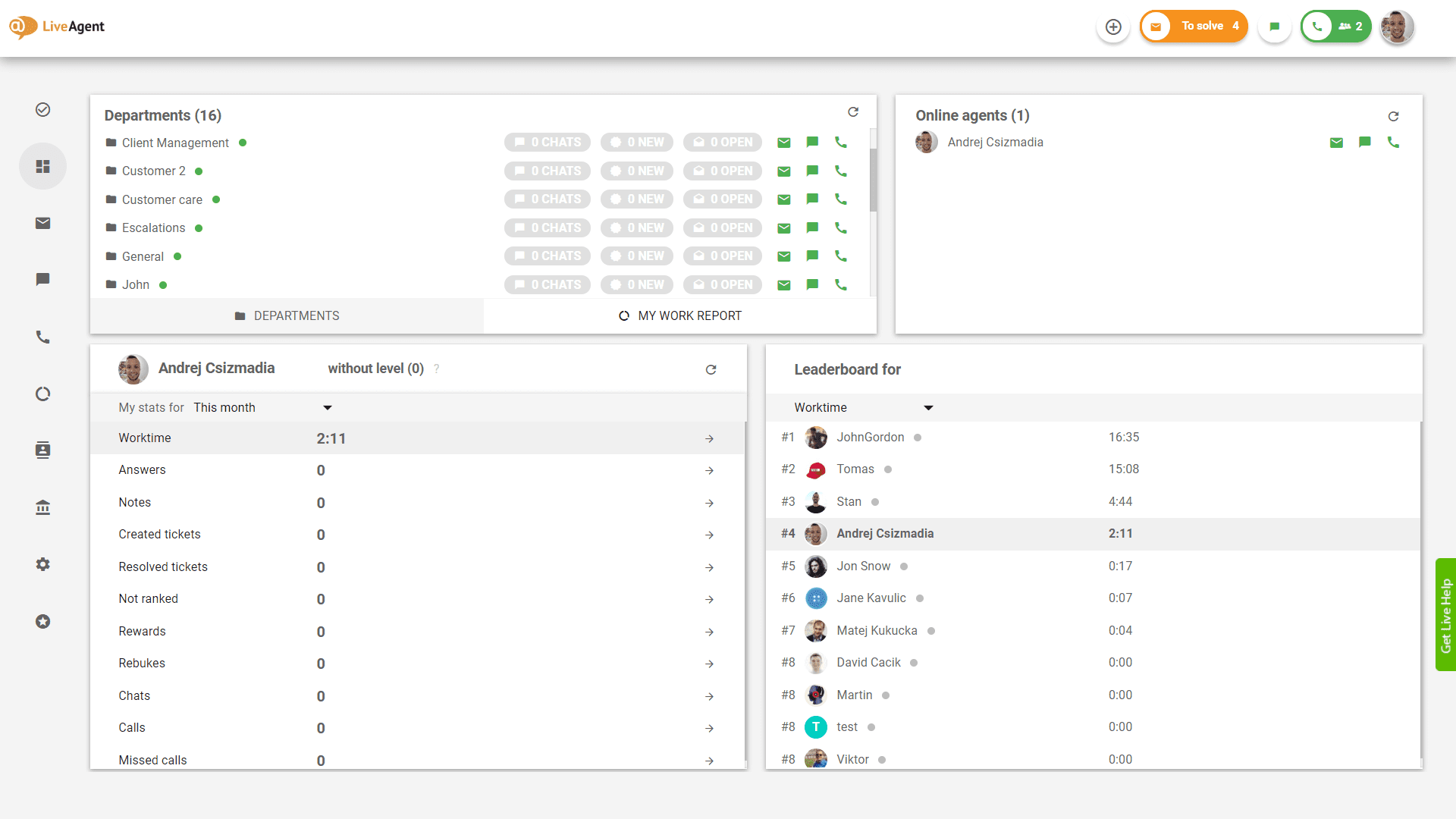
LiveAgent combines ticketing, live chat, and a cloud call center for small and mid-sized teams. Email, chat, calls, forms, and social messages enter one ticket stream. Agents can move between written and voice support without opening a separate telephony platform.
Key Features:
- Universal inbox with a hybrid ticket stream across channels
- Real-time typing view and proactive chat invitations
- Built-in IVR, call routing, recording, and callback options
- Gamification with agent levels, badges, and benchmarks
Best For: SMBs needing ticketing, chat, and calls
Ratings and Reviews:
- G2: 4.5/5 (1,500+ reviews)
- Capterra: 4.7/5 (1,700+ reviews)
Why It Is a Good Alternative: LiveAgent works well when phone and chat are everyday support channels rather than add-ons. Both are native to the agent workspace and do not require an enterprise contact center. It offers unusual real-time communication depth at an SMB-friendly scale.
12. Help Scout
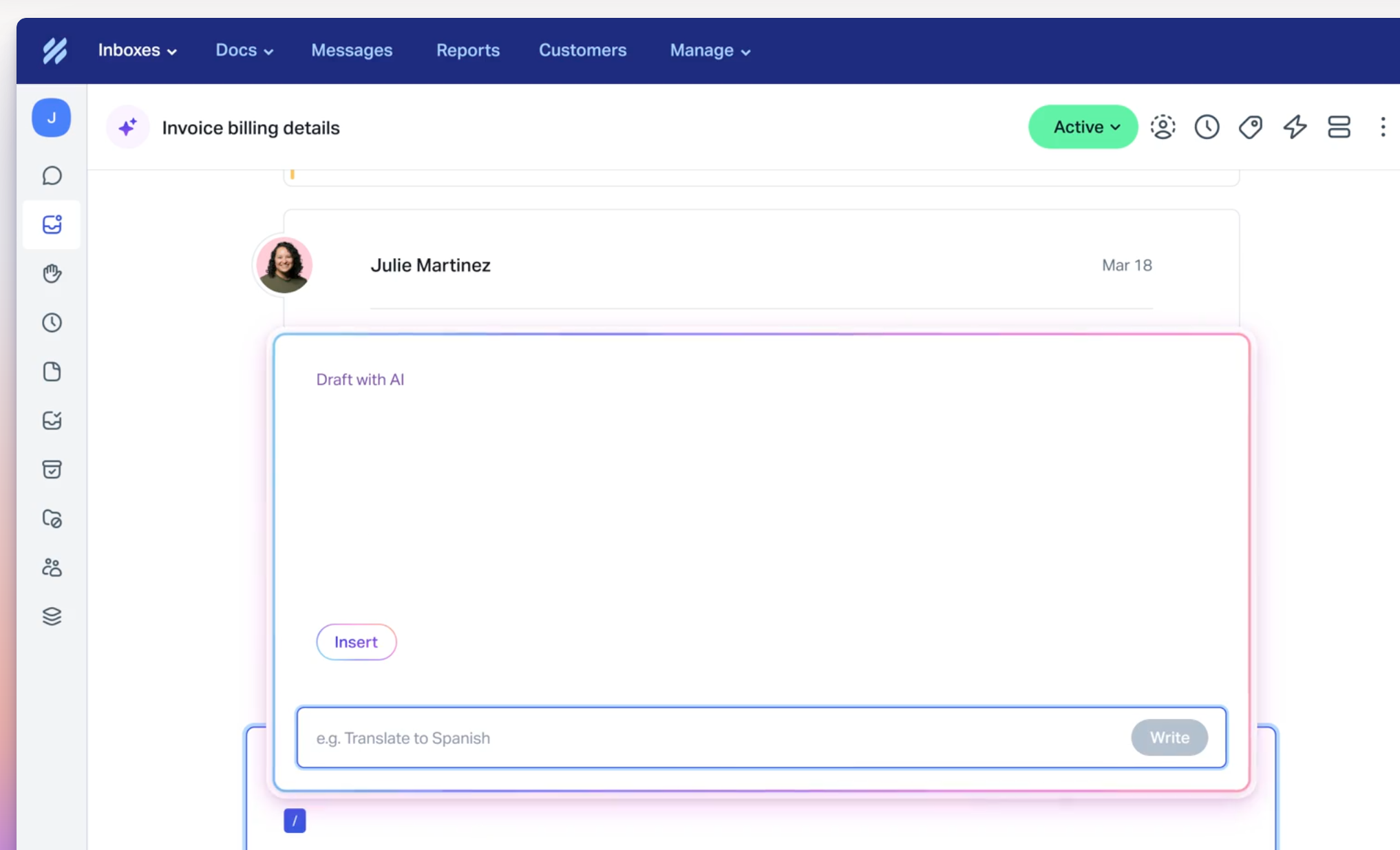
Help Scout keeps the agent experience close to email. Customers see a normal conversation instead of ticket numbers and formal updates, while agents retain assignments, collision detection, and relationship history. Docs and Beacon add self-service without separating it from human support.
Key Features:
- Beacon widget combining articles, AI answers, and live contact
- Docs knowledge base with multilingual collections
- Customer profiles showing conversation and relationship history
- Messages for targeted in-app announcements and guidance
Best For: Growing teams prioritizing simple, personal service
Ratings and Reviews:
- G2: 4.4/5 (430+ reviews)
- Capterra: 4.6/5 (220+ reviews)
Why It Is a Good Alternative: Help Scout provides more order than a shared mailbox without the tone and complexity of case-management software. The customer experience remains personal, and the interface is quick to learn. Some deep configuration is traded for that simplicity.
13. Tidio
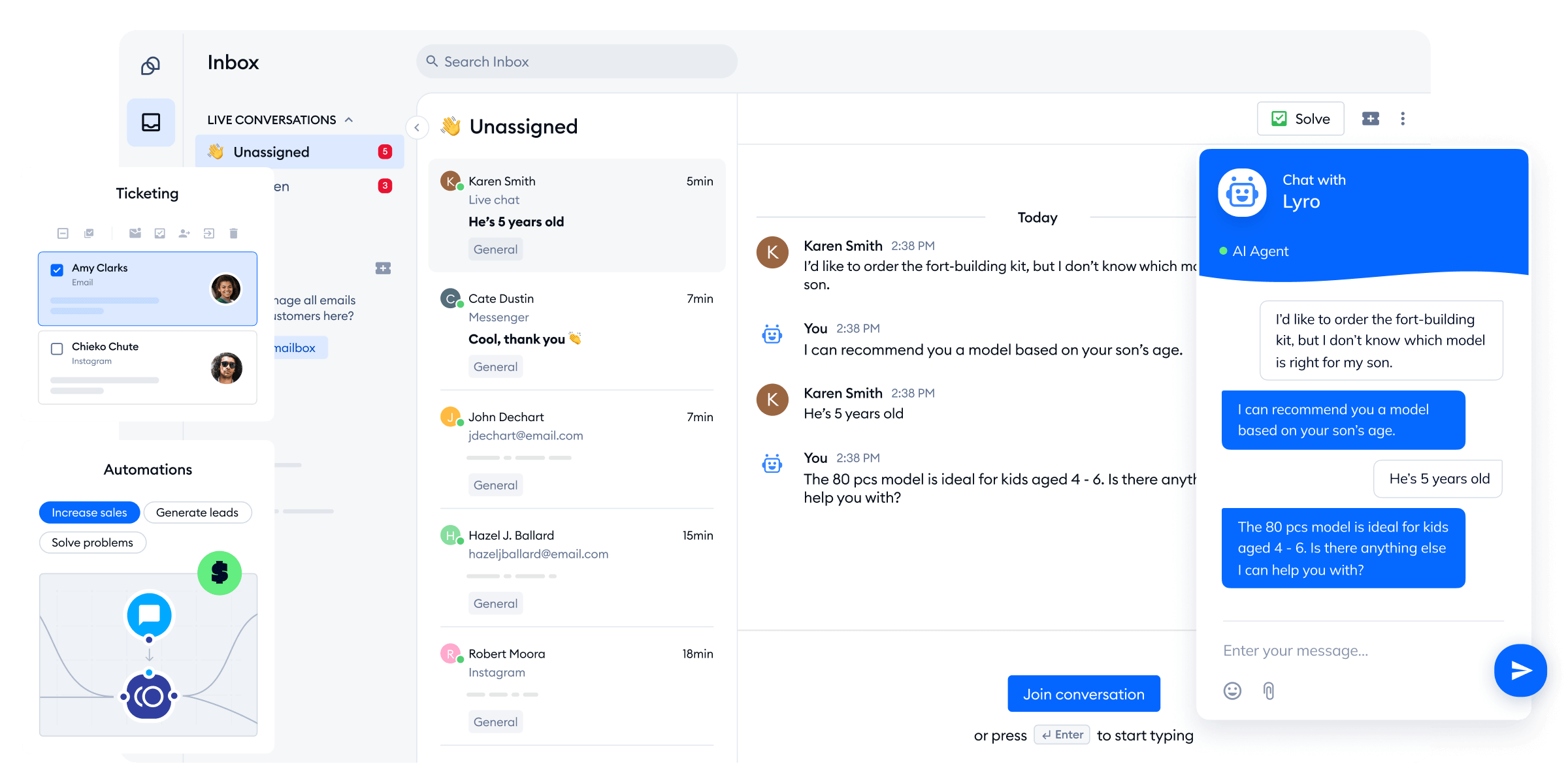
Tidio packages live chat, rule-based automation, and Lyro AI Agent for quick website deployment. Lyro learns from approved company content instead of requiring a long bot-building project. Agents can take over uncertain conversations and continue them in the help-desk queue.
Key Features:
- Lyro AI agent grounded in company support content
- Flows visual builder with ready-made e-commerce automations
- Live typing preview for agents during website chats
- Shopify product recommendations and order management
Best For: SMBs focused on website chat and automation
Ratings and Reviews:
- G2: 4.6/5 (1,900+ reviews)
- Capterra: 4.7/5 (590+ reviews)
Why It Is a Good Alternative: Tidio suits businesses that prioritize immediate website conversations over complex case management. Chat, automation, and AI require less setup than a full Zoho Desk deployment. Among Zoho Desk alternatives with AI, it is approachable for small e-commerce and service teams.
Which Is the Best Alternative to Zoho Desk?
The best choice depends on the operation behind the support queue. Test the strongest Zoho Desk competitors and alternatives with real tickets. The best pilot is the company’s hardest workflow.
Kapture CX links support conversations with service-center and field-service workflows, keeping the case visible after it leaves the contact center.
Book a personalized demo to test Kapture CX against your own channels, teams, and service processes.
FAQs
Yes. Most established vendors provide import tools, APIs, or migration help. Test attachments, custom fields, audit history, SLAs, and archived tickets in a sample migration before the final cutover.
Kapture CX covers vertical AI, agent assistance, bots, quality automation, and conversation intelligence. Intercom, Zendesk, and Freshdesk focus on autonomous resolution, Gorgias connects AI with e-commerce actions, and ServiceNow links AI agents to enterprise workflows.
Check channel coverage, routing, SLAs, automation, self-service, analytics, integrations, and security. Then test AI accuracy, human hand-offs, administration effort, and the total cost at expected ticket volumes.
Freshdesk is a practical general-purpose option. Hiver suits Gmail-based teams, Help Scout favors simplicity, and Tidio works well for chat-led support. Teams expecting complex post-sales



 +1833-386-0222 (USA)
 enquiries@kapture.cx