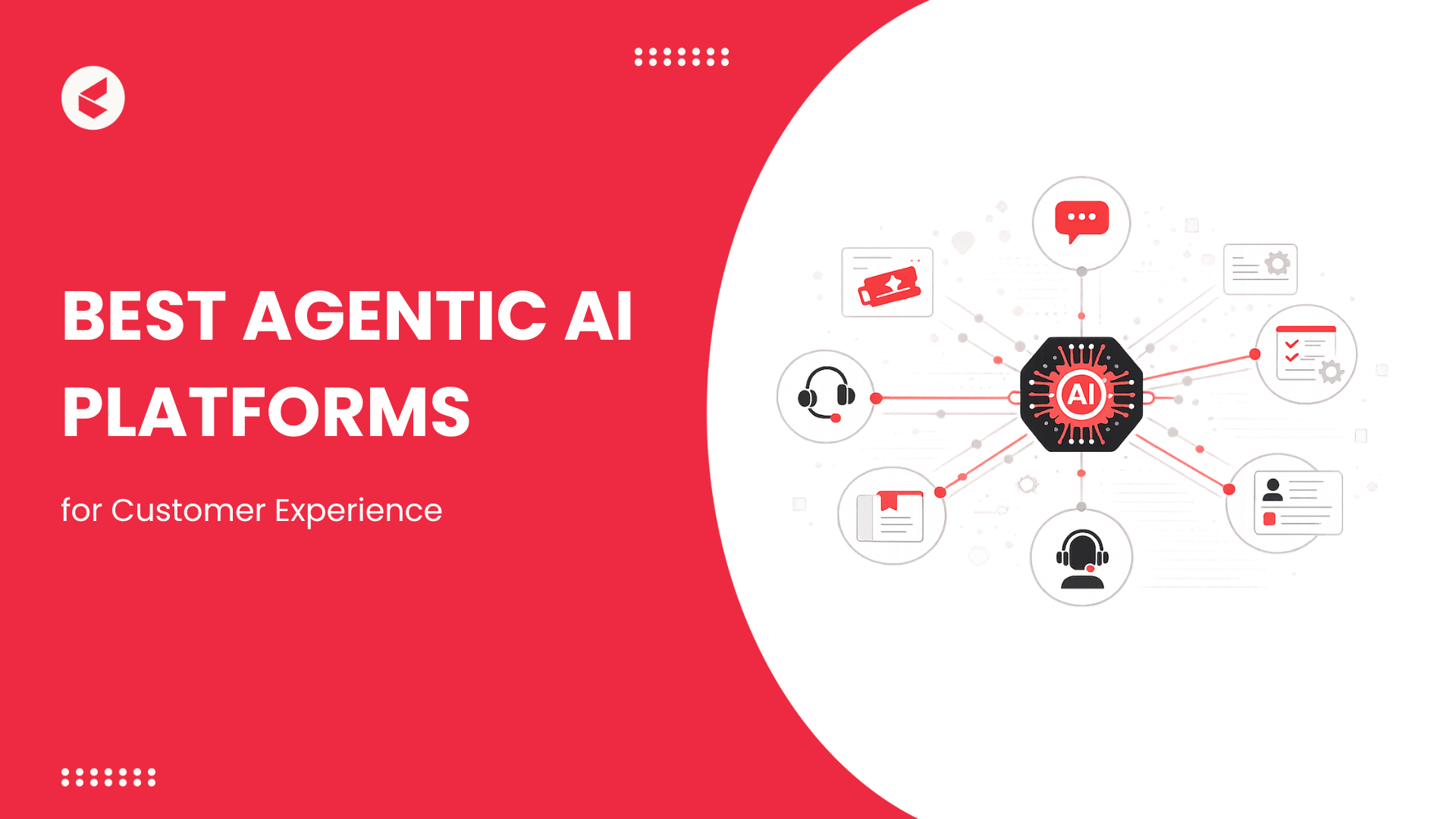

AI shows up in customer experience in ways most people don’t notice. Sure, the obvious examples, such as chatbots, prediction tools, and personalized suggestions, tend to get the spotlight. But those touchpoints represent only a small portion of what’s now possible.
Building an AI agent has become so accessible that teams can create tools tailored to almost any operational need, from frontline support to back-office coordination.
What’s interesting is how often these systems work behind the scenes. Many of the most effective CX agents operate quietly, making decisions, coordinating tasks, and more. And they matter more than ever.
According to Zendesk, 85% of CX leaders report that customers will leave a brand over unresolved issues on the first contact. That kind of pressure pushes companies to rely on AI agents that can respond contextually and consistently.
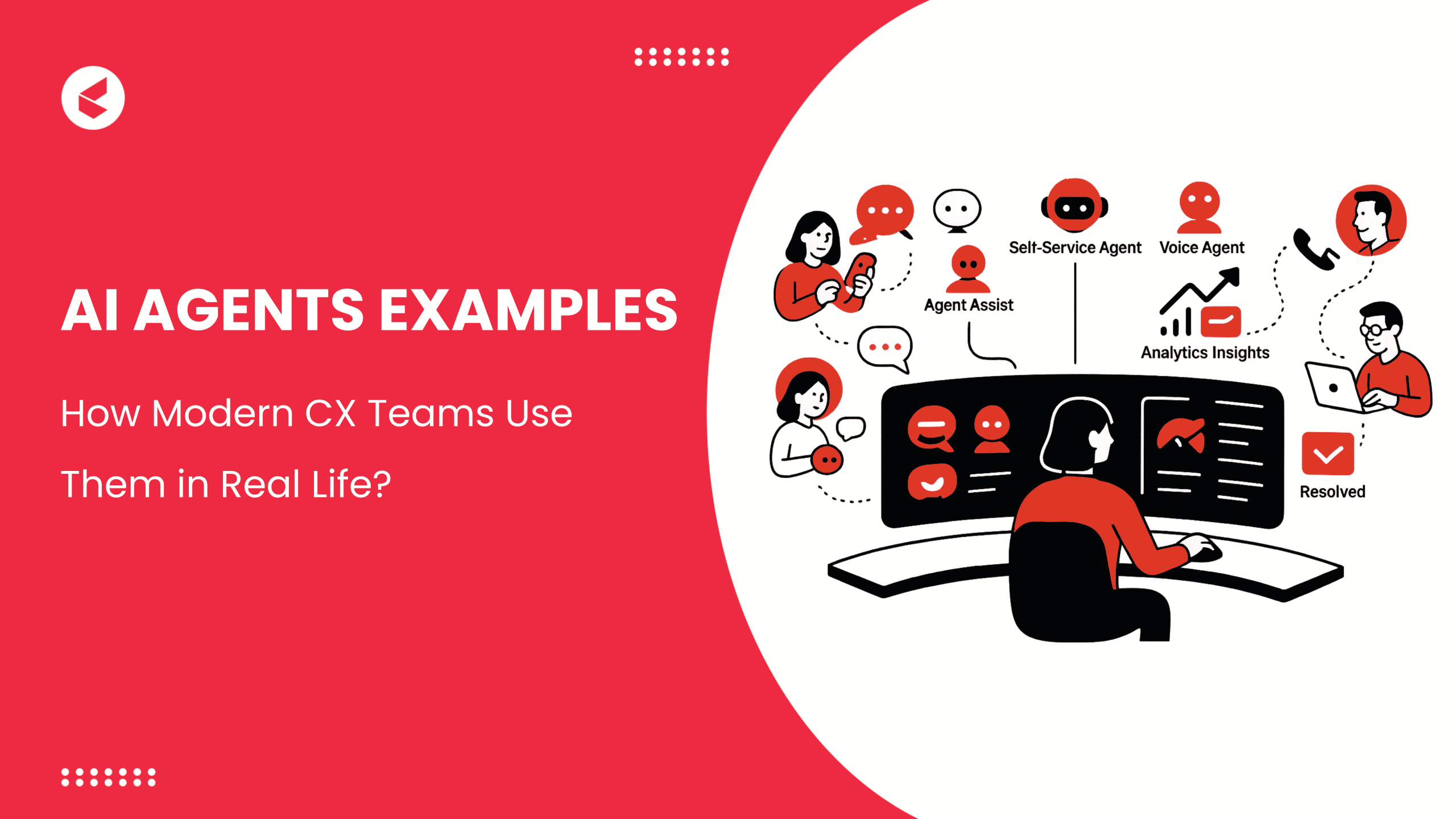
In this guide, we’ll explore how different types of agents show up in real customer service operations. Mature CX teams use multiple agents for routing, quality checks, logistics, and more. Understanding these building blocks makes it easier to see how modern CX really works.
What Are AI Agents?
AI agents are software that act on behalf of people to get things done. In CX terms, think of them as digital coworkers that can read customer requests, plan steps, call external tools, keep short- or long-term memory, and close the loop without a human typing every command.
They do triage, route tickets, suggest resolutions, reorder parts, update accounts, and follow up after a case is closed. They use large language models to understand intent and add tools and planning actually to complete multi-step work. That makes them more than a talking interface.
For instance, the leading healthcare provider, Tata 1mg, uses an AI agent to read a prescription-related complaint. Based on the complaint, it can then pull the order data, verify eligibility, update the case in their system, and send the solution to the customer.
Similarly, Indonesia’s fastest-growing logistics provider, Anteraja, uses AI agents that detect stalled deliveries, open internal tickets, adjust delivery schedules, update the tracking feed, and automatically notify customers. The work progresses on its own, rather than waiting for an agent to intervene.
But still, people often confuse AI agents with chatbots and virtual assistants. So let’s quickly look at how chatbots, virtual assistants, and full agents differ:
| Type | What It Does | Limits | Best Use Case |
| Chatbot | Answers questions and responds to prompts | Sticks to scripts or fixed responses | Quick FAQ and simple service queries |
| Virtual Assistant | Completes focused tasks like checking an order or scheduling | Works within a narrow set of abilities | Self-service actions that follow clear rules |
| AI Agent | Understands goals, selects actions, pulls data from several systems, and completes tasks end-to-end | Needs clear guardrails and quality data | Problem resolution, workflow handling, and complex CX operations |
How AI Agents Work?
Here’s a snapshot of how AI agents work:
- The procedure of AI agents is composed of a basic loop that goes on till the task is accomplished. They receive data, analyze it, select an action, execute it, and then evaluate the outcome. The process goes on with every change that occurs. Such a pattern enables the agent to respond instantly and modify its actions according to the learning process.
- Everything starts with input. The AI agent watches for signals like customer messages, order data, account history, or system events. It turns these signals into something it can reason about. Once it has the context, it compares the situation to the goal it was assigned. A goal might be to answer a question, fix an account error, route a case, or prepare an update for an internal team.
- Next comes planning. The agent looks at the possibilities available and picks the action that fits the aim. It may ask a clarifying question, change a record, get data, or delegate the task to another tool. After the action, it checks what happened. If the result does not solve the problem, the loop continues until it reaches the target outcome.
- This loop gives AI agents the ability to handle work that once needed a human watching every step. It keeps responses fast and consistent, which matters when customers judge a brand by how quickly a problem gets solved.
AI Agents Examples in Real Life — Explained Industry-Wise
AI agents already handle real work across major industries, shaping how customers get help and move through daily tasks with less friction whether built by a dedicated CX team or integrated alongside a UI UX Design Agency to improve customer interaction flows.
Many teams now face a growing agent experience debt, where outdated workflows slow support down even as expectations rise.
Let’s look at how these systems show up in different sectors and what that means for CX teams:
1. Banking & Financial Services (BFSI)
The AI-agent market in financial services was valued at about USD 490 million in 2024. It’s expected to reach roughly USD 4.5 billion by 2030, with annual growth of around 45% from 2025 onward.
AI agents in banking take routine tasks that once required long wait times and turn them into fast, guided fixes. They can check accounts, clear simple holds, spot issues before they become complaints, and give customers clear next steps without bouncing them around. Two of the most prominent examples of this include:
I. 24/7 Transaction Rescue
Late-night payroll failures and held transfers are costly. An AI agent tied into core systems can detect a failed transfer, check customer history, verify legitimacy, and propose an approved action like a temporary limit adjustment. It can complete the release or queue a rapid approval workflow. Customers get their money on time, and support costs stay low. This is remediation, not a canned reply.
II. Proactive Financial Assistant
Agents that analyze transaction patterns can warn customers about upcoming cash shortfalls, suggest a fee-free alternative, or surface a tailored savings plan. They send timely nudges via app or message and can pre-fill product applications. The interaction feels like advice, not advertising. It reduces churn and turns routine alerts into value moments.
| 🔑Why does this matter for CX teams in banking? AI agents let teams solve real problems quickly, cut costly handoffs, and deliver the immediacy customers expect from modern digital services. |
2. Retail & E-Commerce
Retail and e-commerce move fast, and customers expect quick help, clean product guidance, and smooth checkout. AI agents in retail support these expectations by handling routine decisions and reacting to intent in real time. Here’s how they help in real-time:
I. Product Discovery and Personal Shopping
An AI agent studies browsing patterns, cart history, and price sensitivity to surface options that fit the shopper’s style and budget. It answers questions about fit, delivery, and compatibility. This nudges customers toward confident choices instead of bouncing between tabs.
II. Order Updates and Issue Resolution
Once an order is placed, the agent tracks shipping events, resolves missing-package claims, and suggests alternatives when items run out. It explains return rules in plain language and completes the steps for the customer. Support teams avoid repetitive queries and focus on cases that need human review.
For instance, a leading Q-commerce brand uses this setup at scale—its agents now handle more than 200,000 order-related questions a day with near-instant responses, cutting wait times and keeping both customers and delivery partners on track.
| 🔑Why does this matter for CX teams in retail & e-commerce? These agents shorten decision time, cut friction across the funnel, and keep post-purchase service predictable for shoppers who expect speed and clarity. |
3. Telecom & Internet Providers
Telcos wrestle with complex plans, intermittent outages, and confusing setup steps. AI agents cut through that friction by helping shoppers pick the right plan and by fixing performance issues before they become support tickets. Here are two major examples where they’re useful:
I. Plan Finder and Switch Assistant
An AI agent compares available plans using a customer’s usage patterns and budget. It explains trade-offs in plain language, predicts likely overages, and can start the switch or renegotiation process automatically. The agent pre-fills forms, checks device compatibility, and schedules the activation window. For customers who fear getting the wrong contract, this feels like a smart guide that reduces doubt and speeds decision-making.
II. Network Troubleshooter and Bandwidth Manager
This agent runs diagnostics when a customer reports slow speeds. It isolates whether the issue is home Wi-Fi, the ISP link, or a local outage. It can push firmware updates, temporarily reallocate bandwidth across devices, open a ticket with full logs, and book a technician if needed. Customers get clear next steps and faster fixes, while support teams handle fewer low-value calls.
| 🔑Why does this matter for CX teams in telecom? These agents lower churn by resolving high-friction problems quickly and by turning complex product choices into fast, confident decisions. |
4. Travel, Airlines & Hospitality
Travel and hospitality run on timing, yet travelers still face delays and confusing policies. AI agents in Travel absorb routine requests and keep trips on track, a big shift as forecasts say 85% of industry interactions could be handled by AI by 2025. The effect is quicker answers and fewer slowdowns from booking to check-out.
I. Booking Assistant and Instant Rebooking
An AI agent helps customers find the right flight or room by matching preferences, price windows, and loyalty status. If a flight cancels, the agent can rebook alternatives, confirm seats, and notify connected services like transfers and hotels. It reduces the back-and-forth with call centers and keeps plans intact. Customers see immediate options and fewer follow-up calls.
II. Real-Time Disruption Manager
When delays or weather disrupt service, an agent aggregates airline data, traffic reports, and hotel availability to offer timely fixes. It pushes reroutes, arranges refunds, and manages voucher delivery. The agent can escalate only the complex cases to humans while resolving routine ones automatically. That cuts load on agents during peak disruption and speeds outcomes for affected travelers.
| 🔑Why does this matter for CX teams in travel, airlines & hospitality? These agents lift routine work, keep travelers moving during disruptions, and turn service moments into revenue opportunities while preserving human attention for complex or sensitive cases. |
5. Healthcare & Insurance
Healthcare and insurance both deal with long waits, heavy paperwork, and policies that confuse people. AI agents take on the routine coordination that eats up staff time. This matters because 41% of healthcare professionals report spending four or more hours a day on admin tasks. Let’s take a look at specific examples for the same:
I. Appointment and Care Navigation Agent
This agent manages scheduling across clinics, verifies coverage, checks provider availability, and warns patients about required documents before they arrive. It can also follow up on missed appointments and offer the nearest open slot.
II. Claims and Benefits Support
Insurance interactions often stall because members don’t understand deductibles, prior authorizations, or coverage limits. An AI agent interprets policy details, explains them in plain language, and guides members through claims submission. It tracks claim status and flags issues before they escalate.
For instance, Netmeds uses a similar setup to steady its support load. Their AI Agents now resolve most issues in a single interaction and cut handling time in half because every inquiry, prescription detail, and follow-up sits in one place instead of being scattered across channels.
| 🔑 Why does this matter for CX teams in healthcare and insurance? These agents shorten response times, reduce administrative strain, and make the system easier to navigate for patients and members who already feel overloaded. |
6. Utilities & Energy
Utilities deal with high inquiry volume, billing confusion, and pressure to communicate clearly during outages. AI agents in the Utilities and energy sector help by giving customers fast answers and by supporting teams when demand spikes.
Here’s how they work in real time:
I. Outage and Restoration Assistant
An AI agent provides real-time outage updates, estimated restoration times, and safety guidance. It pulls data from grid systems, identifies affected zones, and sends timely alerts. Customers stay informed without calling in, and support teams see fewer repetitive status requests.
II. Billing and Usage Support
This agent explains bills, identifies unusual spikes, and suggests ways to manage usage. It can start payment plans, set reminders, and flag potential meter issues. That clarity reduces bill shock and brings call volumes down.
| 🔑 Why does this matter for CX teams in utilities? These agents improve communication during high-stress moments and make everyday tasks easier for customers who want quick, direct answers. |
Generative AI Agents Examples (The New “Smart Layer” in CX)
Generative AI is becoming the layer that sits between a customer request and the systems that can solve it. Instead of reacting to single inputs, these agents interpret intent, gather context, and guide work across multiple tools without creating more complexity for CX teams. Here are examples that speak to real value for CX leaders:
1. Dynamic Case Reconstruction for Faster Resolution
Gen AI can be widely used to generate summaries for businesses with a long resolution window. So, when a customer reaches out with a vague complaint, a generative agent can read previous interactions to produce a clear case summary for both the customer and the human rep. This avoids long back-and-forth exchanges and cuts down on repetitive calls.
2. Real-Time Policy Interpretation for Frontline Decisions
Instead of making agents memorize thousands of internal rules, a generative system can read the policy as written and interpret it in the context of the customer’s situation. It gives frontline staff a reliable explanation of what can and cannot be done. This keeps decisions consistent and protects compliance without slowing everything down.
3. Root-Cause Insights from Customer Conversations
Generative agents can examine hundreds of conversations and detect patterns behind repeated complaints. Instead of surface-level trends, they reveal where processes actually break. CX leaders get evidence they can act on, not just dashboards that look impressive but don’t drive change.
Why AI Agents Are Transforming CX: The Real Benefits
Most companies already have some form of AI in their stack. The shift now is about using the right kind of system that can handle real work instead of adding another layer of automation that frustrates customers. When AI agents are designed well and integrated properly, they create an impact that leadership can measure and trust.
Here’s how it benefits in real-time:
- Fewer Cases Slipping through the Cracks: Agents can track an issue from the first message to final resolution, which reduces silent churn and prevents escalations that damage trust.
- Clearer Visibility into CX Operations: Since every step is logged, leaders can see which processes fail most often and why, helping teams fix structural problems rather than patch symptoms.
- Consistent Decision-Making at Scale: Policies are applied uniformly, even during high-volume periods. This protects compliance, reduces risk, and avoids the uneven customer experiences that frustrate customers.
- Better Use of Human Talent: Teams spend less time on repetitive checks and more time on judgment-heavy issues that actually influence retention.
- Stronger Customer Confidence during High-Stakes Moments: When money, identity, health, or logistics are involved, customers want certainty. Agents that can act with context create fewer callbacks and fewer repeat contacts.
What to Watch Out For (Challenges to Solve Early)
Most leaders know AI can strengthen service, yet many still struggle to convert promise into predictable results. Early missteps usually come from operational blind spots rather than the technology itself.
Here are three challenges worth addressing from day one:
1. Messy, Scattered Customer Data
Many teams still operate across a maze of tools that don’t talk to each other well. An AI agent can only work with what it can see. If data sits in isolated systems, the agent will miss signals, give partial answers, or trigger the wrong workflow. CX leaders need a clean path for data access, permissions, and updates. Without this, even the best agent behaves like a limited chatbot.
2. Inconsistent Rules and Decision Logic
Support policies shift often and vary across teams. Human agents can work around these gaps, but AI agents struggle when rules are unclear or undocumented. Leaders should treat policy clarity as infrastructure. When rules are stable and expressed in plain language, AI can make consistent decisions that stand up to compliance reviews.
3. Poor Escalation Design
Many failed deployments share the same flaw: agents get stuck when the situation requires a judgment call. Customers then feel trapped. A reliable AI system needs clear thresholds for handoff, context-rich transfers, and the ability to preserve the full history of the interaction. CX leaders who design escalation paths early see fewer abandoned tickets and smoother collaboration between humans and AI.
How to Get Started With AI Agents in Your CX Organization
Most companies jump straight to tools and miss the groundwork that determines whether the system will actually deliver value. But a steady rollout starts with clarity.
Here’s a four-step checklist to get started:
1. Identify the first problem worth solving
Pick a customer issue that drains time and repeats often. It should be specific, predictable, and tied to a clear outcome you can measure. CXOs who focus on one well-defined use case build early momentum and avoid the chaos of trying to automate everything at once.
2. Map where the agent will live
Decide which channels the agent will handle and how it should speak in each context. Email, chat, and messaging all require different response patterns. Tone, length, and urgency cues matter. This alignment keeps the agent from sounding out of place or sending replies that clash with established service norms.
3. Prepare your knowledge sources
Agents need clean, structured inputs. Audit your FAQs, macros, policy notes, and internal guides. Shorten what is too long, clarify what is vague, and remove dead phrases that a model might repeat. This work prevents confusing or circular responses once the agent goes live.
4. Define the actions the agent can take
List the tasks the agent should perform across systems and create safe boundaries for each. Retrieval, updates, triage, and task creation are common starting points. When these actions are well defined, human teams know exactly when the agent handles the work and when they step in.
The Case for Action: AI Agents That Actually Move CX Forward
Most leaders already know AI can help, but the real shift happens when two or three well-designed, contextual agents handle the work that keeps slipping through your queues. It is less about chasing scale and more about fixing the spots where customers lose patience and teams lose time.
In this landscape, Kapture CX stands out by treating AI agents as part of a full-service stack rather than a surface-level add-on. Our platform offers voice and non-voice agents, strong observability, and the ability to automate routine tasks without sacrificing control.
Get a personalized demo and see how your CX team can run with less friction and more clarity!
FAQs
They are simple reflex, model-based, goal-based, utility-based, and learning agents. Each one handles decisions with a different level of context and reasoning.
A common example is a system that reviews a flagged transaction, checks the customer’s history, verifies risk signals, and clears or blocks the payment without waiting for human approval.
There is no single winner. The strongest setups usually combine several agent types with a solid orchestration layer. Many CX teams pair this with platforms like Kapture CX, which helps manage workflows and keep data aligned so agents can act reliably.
AI is the broad field of systems that can learn or solve problems. An AI agent is a focused unit inside that field that observes a situation, makes a decision, and takes action to complete a task.