
TL;DR
- Agentic AI platforms go beyond chatbots by planning tasks, taking action across systems, and learning from outcomes.
- In customer experience, they’re already handling routine issues end to end.
- The right platform depends less on features and more on how well it integrates with your existing tools and workflows.
- This guide breaks down how agentic AI works and the top platforms shaping customer service in 2026.
Customer experience teams are under pressure to move faster, and that too without losing quality. According to a Gartner study, over 91% of customer service leaders plan to increase investment in autonomous AI tools by 2026 as a way to handle rising volumes and customer expectations.
That shift explains why agentic AI platforms are gaining attention. These systems can make decisions and take action with limited human input. Now that the organizations are preparing for 2026, knowing which agentic AI platforms actually deliver value has become a practical necessity.
What is Agentic AI?
AI systems built to function with a high degree of autonomy are referred to as agentic AI. These systems can interpret objectives, plan activities, carry out tasks, and modify their behavior in response to results rather than waiting for detailed instructions.
Technically speaking, agentic AI platforms integrate multiple features that were previously found in distinct systems. They employ planning modules to divide objectives into manageable parts, big language models for reasoning and context understanding, and tool orchestration layers that enable the AI to communicate with data sources, software systems, and APIs. The system can assess outcomes and improve subsequent actions thanks to feedback loops.
Quick Comparison: Best Agentic AI Platforms at a Glance
Here’s a quick comparison table of the nine key agentic AI platforms that we’ll cover in detail in the forthcoming section.
| Platform | Core Capability | Primary Use Case |
|---|---|---|
| Kapture CX | CX-focused agentic AI and ticketing | Enterprise customer support workflows. |
| Claude | Advanced reasoning AI agents | Complex multi-step automation and legacy system tasks. |
| Zapier | Workflow automation + AI orchestration | Connecting 8k+ apps with autonomous agents. |
| Glean | Enterprise AI agents and knowledge search | Data-powered internal process automation. |
| Sierra | Customer service agent automation | Customer experience and support task execution at scale. |
| Decagon | Conversational enterprise agents | Deep CRM/workflow integration and refund/update). |
| Stack AI | AI workflow and agent builder | Flexible AI agent and workflow creation. |
| Moveworks | Workforce-wide autonomous AI | End-to-end task automation inside org systems. |
| Orby | Action-model driven automation | Complex task completion with adaptive agents. |
9 Top Agentic AI Platforms for 2026
Listed below are the leading agentic AI platforms shaping customer experiences by automating multi‑step tasks and reasoning with context with minimal human direction.
1. Kapture CX ( Best for Enterprise Omni‑Channel Support)
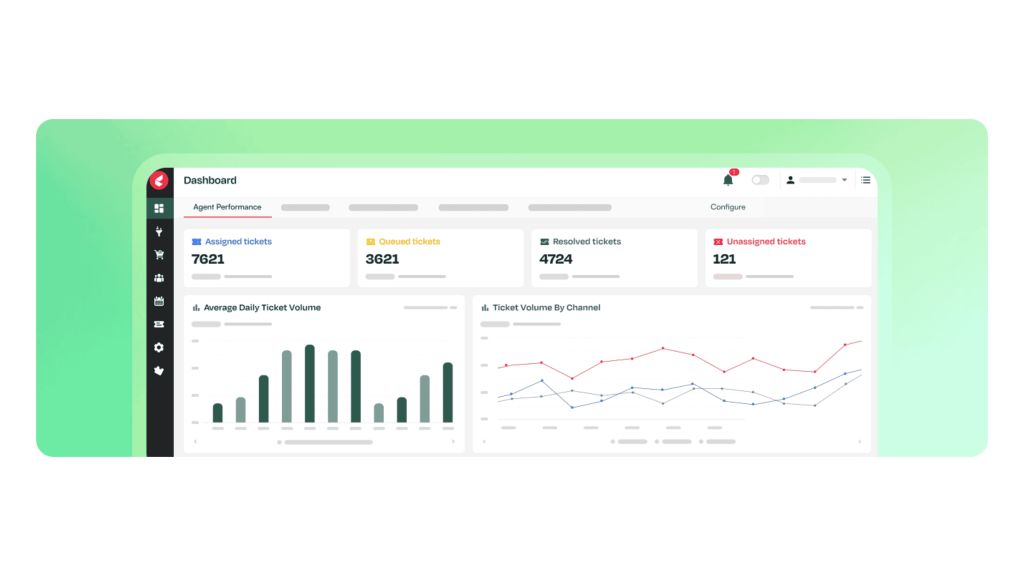
Built for deep automation across support workflows, Kapture CX leverages agentic AI at scale.
What Sets it Apart:
- Omnichannel AI agents: Automates voice, email, social, and chat support with full context and proactive follow‑ups.
- Real‑time guidance: Next‑best‑action suggestions and automated ticket routing accelerate agent responses and reduce queue times.
- Quality and insight: Continuous quality assurance and conversation intelligence turn interactions into improvement signals.
See Agentic AI in action:
2. Claude (Best for Flexible Agentic Workflows)
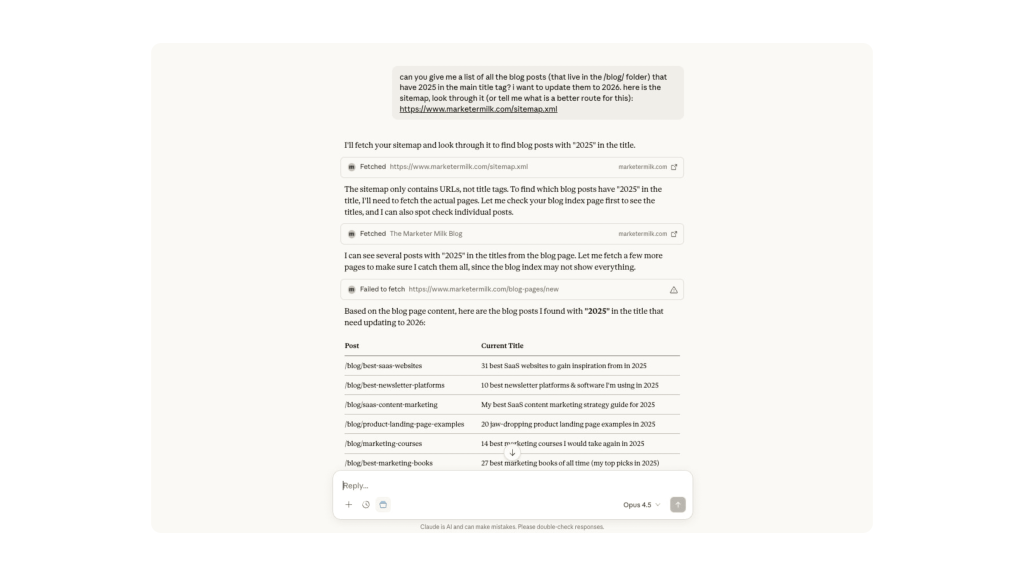
Anthropic’s Claude platform extends beyond standard LLM chat to empower autonomous tasks and agent building.
What Sets it Apart:
- Agent creation: Developers and teams can build, test, and refine workflow agents using Claude’s API and SDK.
- Advanced task execution: Claude agents can read files, run commands, and integrate tools dynamically.
- Multi‑modal reasoning: Newer Claude editions offer expanded context handling for complex, multi‑step reasoning and task planning.
3. Zapier (Best for Workflow Orchestration Across Tools)
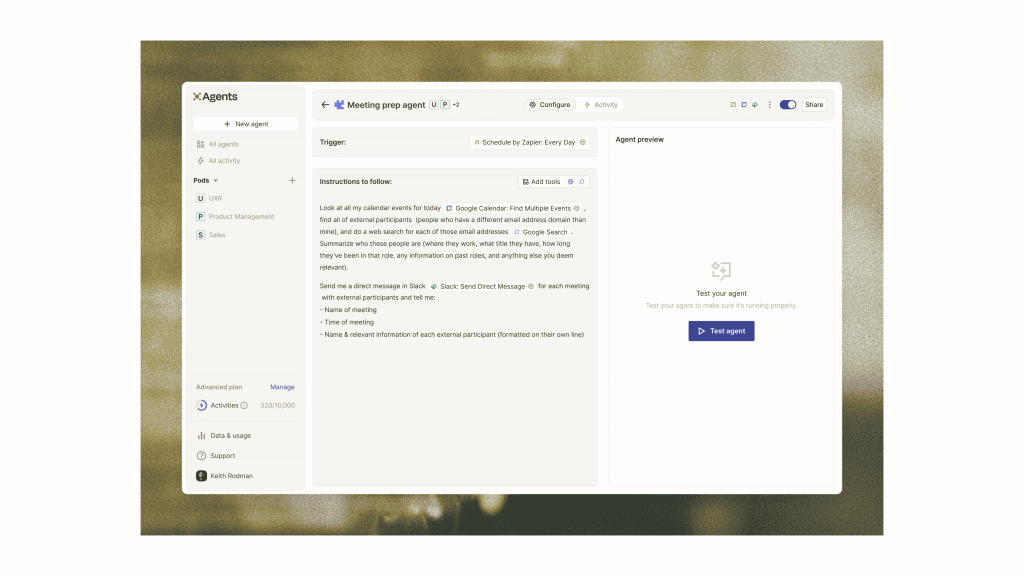
Zapier connects AI to the broader application ecosystem and turns agentic plans into actions across apps.
What Sets it Apart:
- Vast connectivity: Automate across 8,000+ integrations, enabling AI agents to trigger actions in CRMs, messaging, and support tools.
- AI integrations: Recent AI connectors bring reasoning and autonomous execution into traditional automation workflows.
- No‑code deployment: Teams can build agentic automations without developer resources.
4. Glean (Best for Enterprise Data‑Driven Agents)
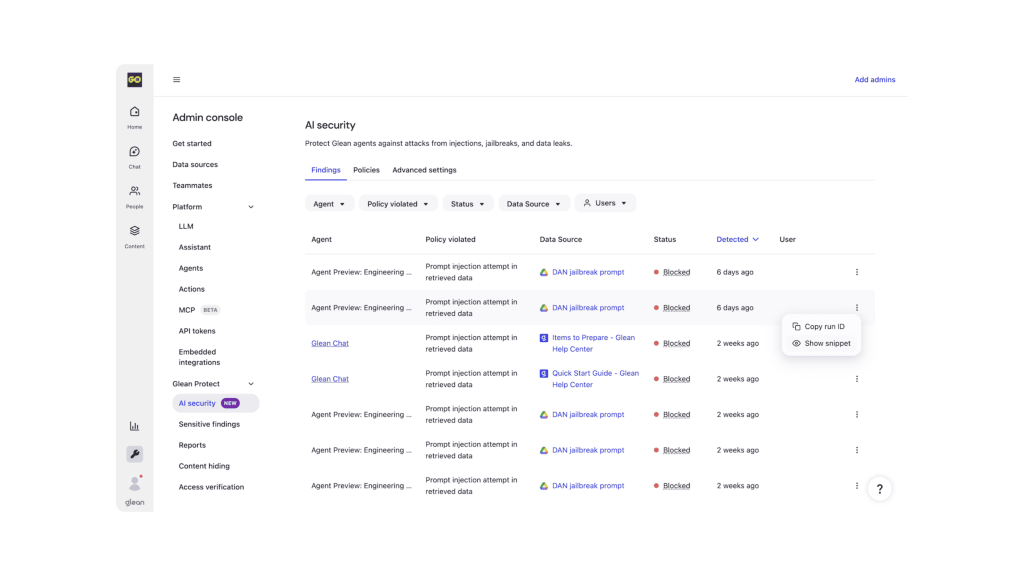
Glean’s Work AI platform ties autonomous AI agents directly to organizational knowledge and workflows.
What Sets it Apart:
- Agentic engine: Agents plan and act using enterprise context and data connections.
- Orchestration and governance: Built‑in tools allow teams to orchestrate agent tasks and enforce permissions.
- Agent templates: Pre‑built libraries accelerate building task‑specific agents at scale.
5. Sierra (Best for Customer Support Automation)
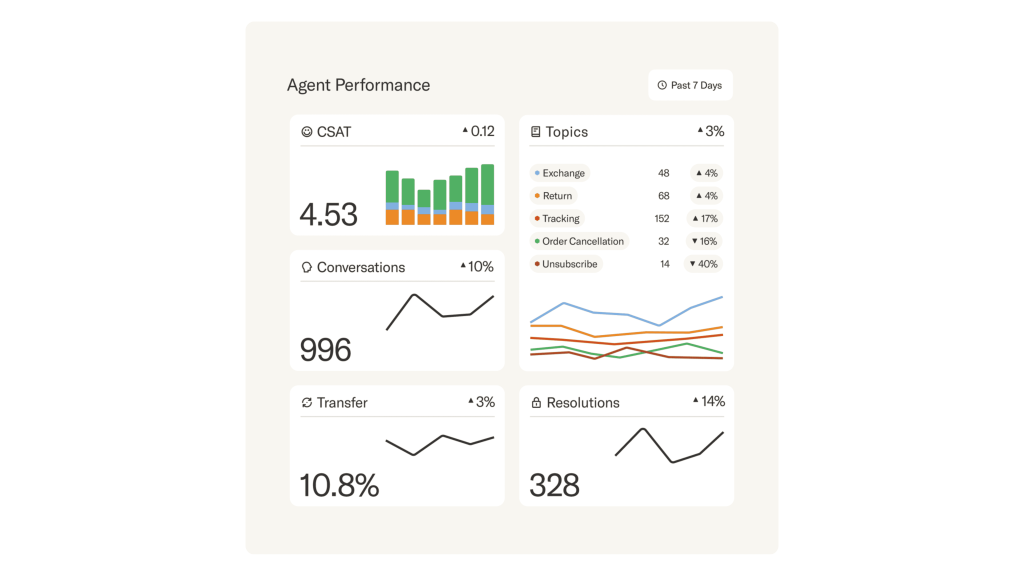
Sierra focuses on autonomous AI workflows specifically tailored to customer service execution.
What Sets it Apart:
- Deep CX automation: Agents can handle triage, resolution, and follow‑through tasks without human intervention.
- Empathetic interactions: Trained on real support patterns to produce more context‑aware responses.
- Vertical readiness: Useful for industries with high support volume where consistency matters.
6. Decagon (Best for Conversational Enterprise Agents)
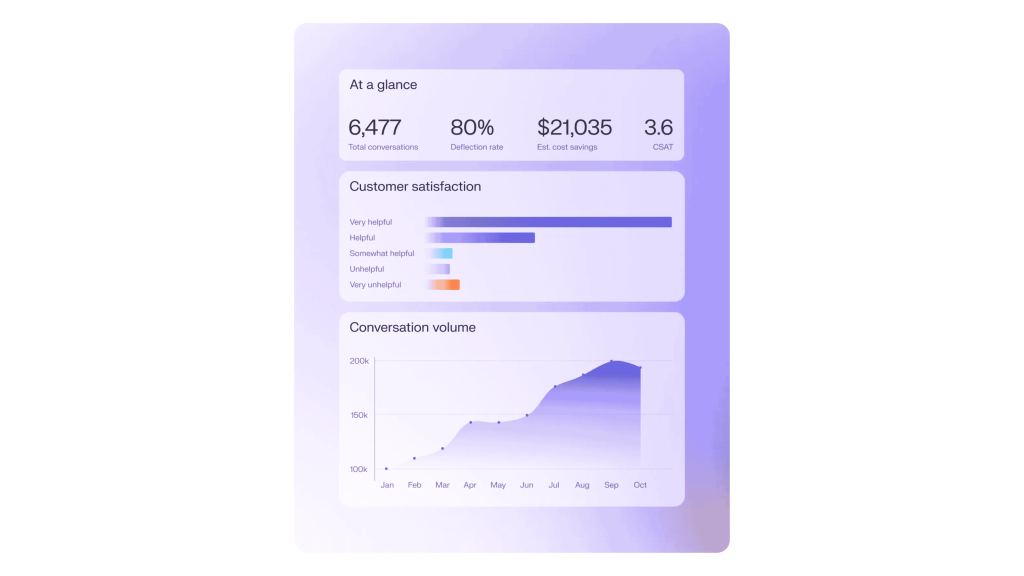
Decagon’s platform blends conversational AI with workflow integration for real‑time customer task handling.
What Sets it Apart:
- Conversational task automation: Agents can engage users directly and then take backend actions in CRM or support systems.
- CRM native: Tight integration with existing enterprise systems cuts handoffs and context loss.
- Scales with complexity: Capable of handling nuanced tasks beyond simple macro‑style automation.
7. Stack AI (Best for Custom AI Workflow Builders)
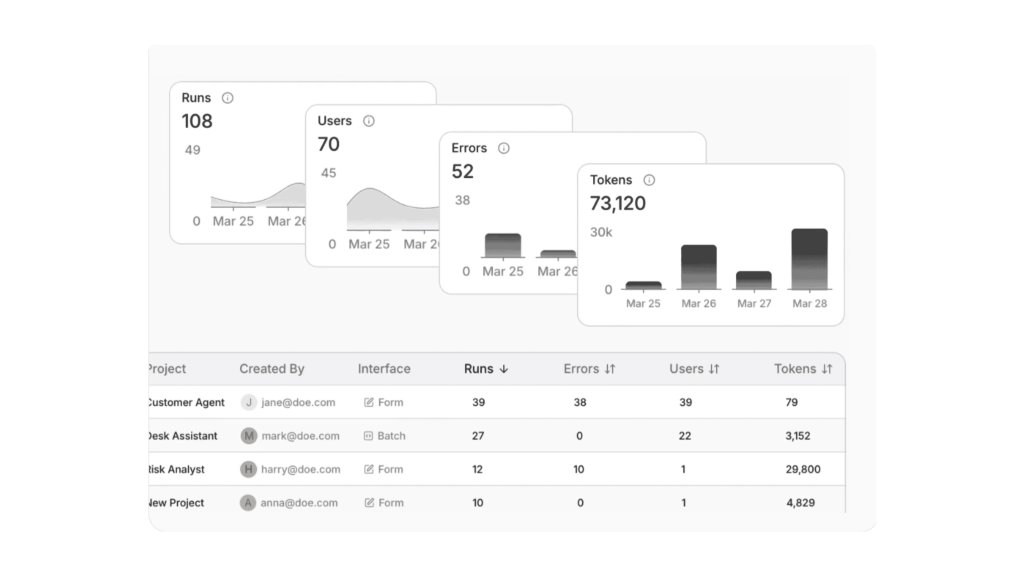
Stack AI empowers teams to design tailored agentic workflows and orchestrations with flexibility.
What sets it apart:
- Low‑code agent builder: Create autonomous workflows without heavy engineering.
- Flexible integrations: Connect agent steps to internal systems, APIs, or databases as needed.
- Modular design: Build reusable fragments that fit complex support and operational flows.
8. Moveworks (Best for Cross‑System Enterprise Automation)
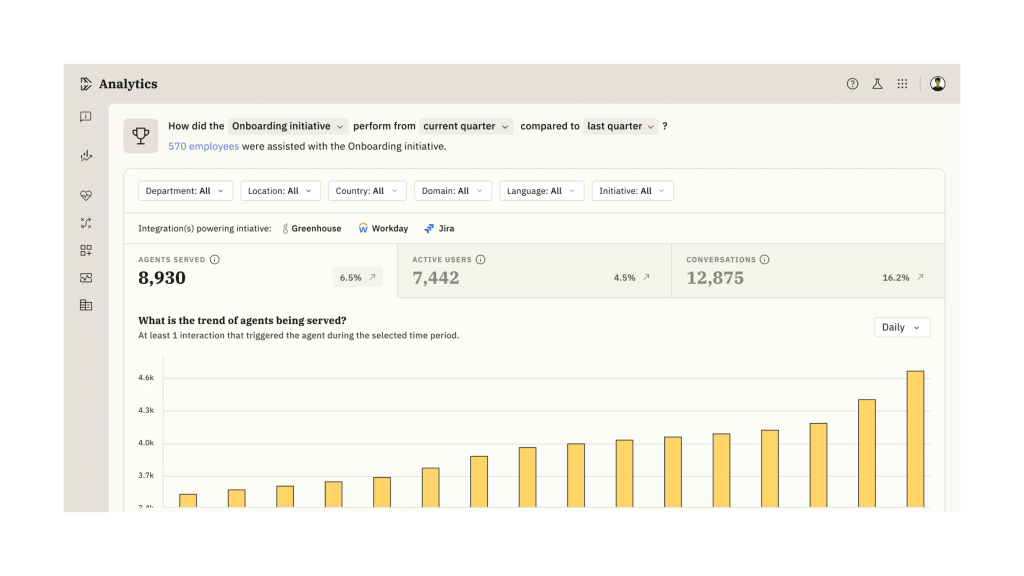
Moveworks excels at connecting agents across internal systems to deliver autonomous task completion.
What Sets it Apart:
- Complete automation: Agents span IT, HR, and support workflows with unified orchestration.
- Voice and chat automation: Natural conversational agents reduce friction in multi‑channel scenarios.
- Real‑time insights: Analytics help refine agent behavior and improve outcomes.
9. Orby AI (Uniphore) (Best for Adaptive Task Execution)
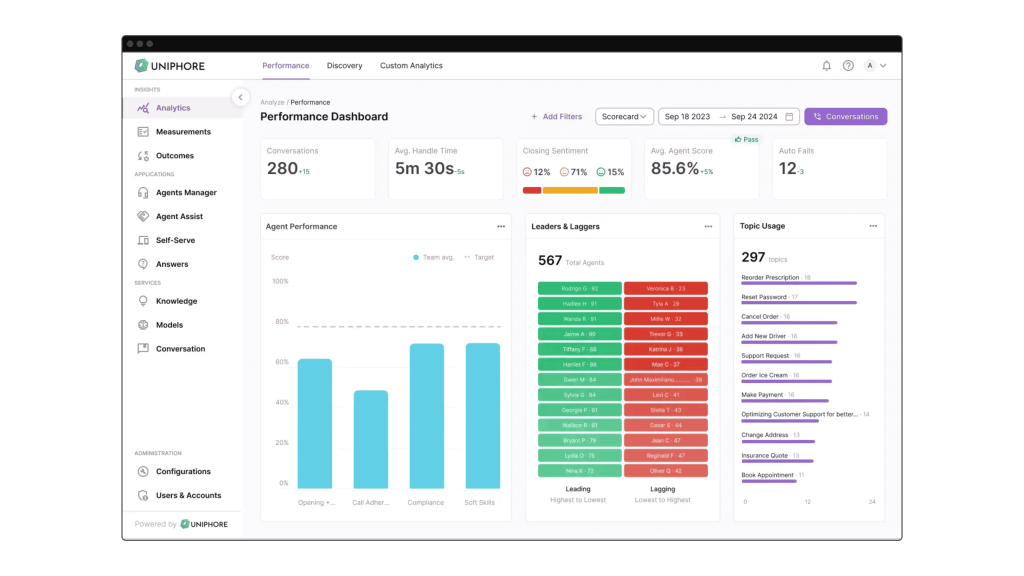
Orby’s agentic AI (Uniphore) focuses on adaptable amd action‑driven agents that complete complex workflows dynamically.
What Sets it Apart:
- Action modeling: Agents use an adaptive model to interpret goals and decide execution paths.
- Context switching: Maintains state across multi‑step tasks for seamless task flow.
- Event triggers: Agents activate based on business events or thresholds.
How Agentic AI Platforms Actually Work?
Agentic AI platforms operate as autonomous systems that sense context, plan multidimensional tasks, execute actions, and learn from outcomes continuously, far beyond simple prompt‑response generation.
We can understand this as a continuous loop:
Perceive > Reason > Act > Learn
- Perceive: The system ingests inputs from users, APIs, databases, logs, external data sources, and events to form a situational context. This includes both structured data (CRM entries, tickets) and unstructured data (text, chat, documents).
- Reason: Using that context, the planner/optimizer decomposes goals into ordered subtasks. It then evaluates paths against constraints and selects the most viable sequence of steps. Constraint checks (e.g., compliance or SLA rules) happen here as well.
- Act: The agent invokes tools or APIs to carry out each step like calling services, updating systems, sending messages, or triggering workflows. This is where planning becomes execution.
- Learn: Following an activity, the system analyzes the results, records them, and improves its memory to perform tasks more effectively in the future.
Real-World Agentic AI Examples in Customer Service
Agentic AI is already helping organizations with quicker and smarter customer service.
An agentic AI system has been implemented by Swedish fintech Klarna to manage the great majority of its customer care processes (refunds, disputes, payment difficulties, etc.) in more than 35 languages. This system now manage millions of customer conversations every month and can resolve most requests from start to finish in under two minutes, far quicker than traditional support queues.
Lyft has taken a similar approach by bringing Anthropic’s Claude AI into its customer service operations. The system handles high-volume ride questions on its own and passing more nuanced questions to human agents. Consequently, Lyft has been able to cut resolution times for routine inquiries by nearly 87% without sacrificing service quality.
What are the Benefits of Agentic AI Platforms?
The real benefit of agentic AI platforms shows up in everyday support work. Simple issues get handled instantly. Refunds are processed, order updates go through, and tickets close without an agent touching them. Gartner has estimated that automation at this level could eventually take care of around 80% of routine service requests, which is why many support teams see costs drop once these systems are in place.
Customers notice the difference first. Responses come back faster and support teams stop spending time on repetitive tasks. That shift usually leads to shorter resolution times and better satisfaction scores.
The ROI Impact
| Impact Area | Typical Result |
|---|---|
| Support cost reduction | ~30% lower operating costs (auto-resolve) |
| Resolution speed | Shorter average handle time |
| Customer satisfaction | Higher customer satisfaction and net promoter scores |
| Agent capacity | More time for complex tasks |
Choosing the Right Agentic Tool for Your Team
There’s no single “best” agentic AI platform for every team. What matters is whether the tool can plug into your existing systems and handle the kind of customer issues your team deals with every day.
Agentic AI Vendor Evaluation Checklist
| Evaluation Area | What to Look For? |
|---|---|
| Integration and APIs | Connects easily with core systems |
| Autonomous Execution | Can execute multi-step workflows |
| Security and Compliance | Enterprise-grade governance |
| Analytics and Feedback | Clear performance and error metrics |
| Customization | Configurable workflows and triggers |
If you’re looking for a practical reference point, platforms like Kapture CX’s Agentic AI show how these capabilities come together in a real customer support environment.
For teams that prefer to see how this works in action, booking a short demo can help clarify whether it’s the right fit.
FAQs
Not always. Many platforms work effectively with pre-trained models and improve performance using system prompts and feedback loops rather than full model retraining.
Yes, as long as there are guardrails. The majority of corporate products have fallback rules and approval levels to ensure that the AI stays inside predetermined bounds.
Although deployment schedules differ, many teams see the first use cases go live in a matter of weeks, particularly when the platform simply interacts with pre-existing CX tools.
As long as the platform allows for data isolation and compliance measures, regulated sectors can be a good fit for agentic AI platforms.