
TL;DR
AI voice agents in 2026 operate within enterprise systems to manage conversations and carry out defined workflows. They connect with backend platforms and help reduce manual effort across customer service and revenue functions.
Gartner’s latest projections show task-specific AI agents expanding into 40% of enterprise applications by 2026, compared to less than 5% in 2025. The firm also notes that many agentic AI programs struggle to advance when business impact and oversight frameworks remain undefined.
AI voice agent platforms present a strong upside. Strong results come from tight system integration, dependable performance, and deliberate rollout.
The next sections explore leading voice AI companies, clarify how the platform layers fit together, and highlight what truly matters during selection.
What are Voice AI Companies and How Do They Work?
Voice AI companies create technology that captures spoken input and identifies intent. The system then generates a response and connects with operational workflows behind the scenes.
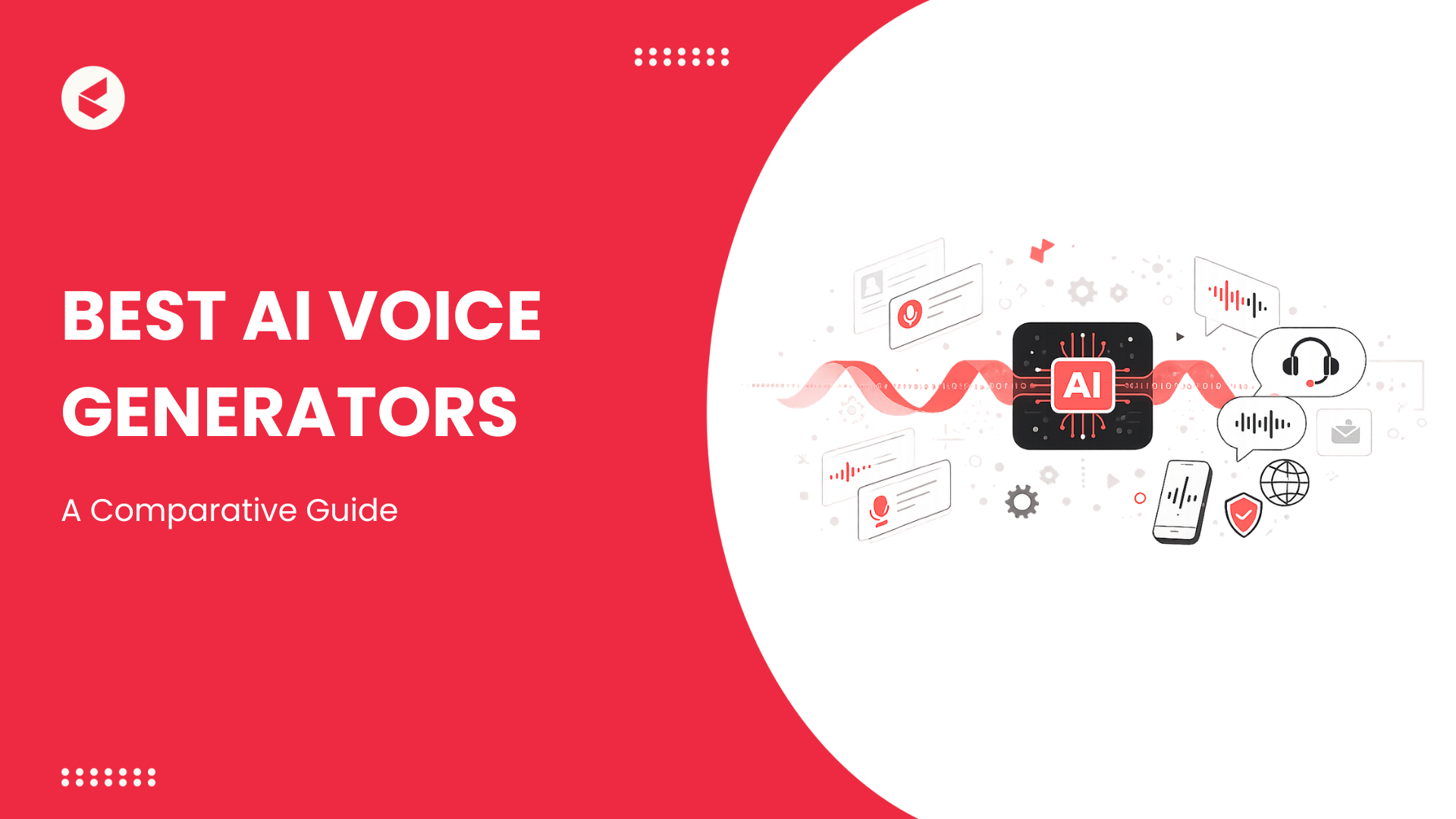
A typical voice AI platform operates across four layers:
- Speech recognition (ASR) converts audio into text
- Language models and intent engines interpret meaning and context
- Orchestration layers determine next actions and call enterprise systems
- Text-to-speech (TTS) produces natural voice output
The key advancement in today’s AI voice agent platforms lies in orchestration. Voice agents now operate inside core business systems. They handle refunds, adjust support records, verify accounts, and manage routine service tasks through system integrations.
Quick Comparison: Best AI Voice Agent Platforms at a Glance
The distinctions become easier to see when the platforms are compared directly. The overview below highlights how leading AI voice platforms differ across use cases and architecture.
| Platform Name | Primary Focus | Indian Language Support | Best For |
|---|---|---|---|
| Kapture CX | Enterprise CX voice automation | High | Multilingual customer support at scale |
| Hippocratic AI | Healthcare voice agents | Limited (vertical-specific) | Clinical communication workflows |
| SquadStack | Lead generation & outbound automation | Medium–High | Revenue-driven voice engagement |
| Lindy | No-code voice automation | Medium | Operational workflow automation |
| Retell | Low-latency phone agents | Configurable | Real-time conversational calls |
| Vapi | Developer-first voice platform | Configurable | Custom AI voice agent builds |
| ElevenLabs | High-fidelity text-to-speech | Configurable | Natural voice synthesis layer |
| Deepgram | Speech recognition infrastructure | Configurable | Voice stack foundation |
Mapping the Landscape: The 2026 Voice AI Market Map
The voice AI market separates into clear structural categories. Recognizing these categories helps organizations identify what type of solution aligns with their needs.
| Category | Primary Role | Representative Platforms/Tools |
|---|---|---|
| Enterprise CX & Support Platforms | Customer experience automation and helpdesk workflows | Kapture CX |
| Vertical Applications (Industry-Specific) | Domain-focused AI voice agents built for defined use cases | Hippocratic AI (Healthcare), SquadStack (Lead Generation) |
| Horizontal Voice Agent Platforms | Configurable orchestration platforms across industries | Lindy, Retell, Vapi |
| Voice Synthesis (Voice Layer) | Text-to-speech engines powering conversational output | ElevenLabs |
| Speech Recognition (Ears Layer) | Speech-to-text and real-time audio processing | Deepgram |
Vertical Applications
Vertical AI voice agents embed industry-specific workflows and compliance logic directly into the platform. These systems focus on defined outcomes within a specific sector. Examples include:
- Hippocratic AI
- SquadStack
Vertical platforms reduce configuration time but may offer less flexibility outside their target industry.
Horizontal Platforms
Horizontal AI voice agent platforms support customizable workflows across industries. Enterprises configure automation logic for support, collections, sales, or operations.
Examples include:
- Kapture CX
- Lindy
- Retell AI
- Vapi
These platforms emphasize integration depth and scalability.
Infrastructure and Middleware
Infrastructure providers supply speech recognition and synthesis capabilities that power broader voice AI platforms. Examples include:
- Deepgram
- ElevenLabs
Organizations building custom voice stacks often rely on infrastructure providers combined with orchestration layers.
Top 8 Voice AI Companies to Watch in 2026
With the market structure in view, the following companies represent some of the most influential voice AI companies in 2026.
1. Kapture CX (Best for Enterprise CX & Multilingual Voice Support)
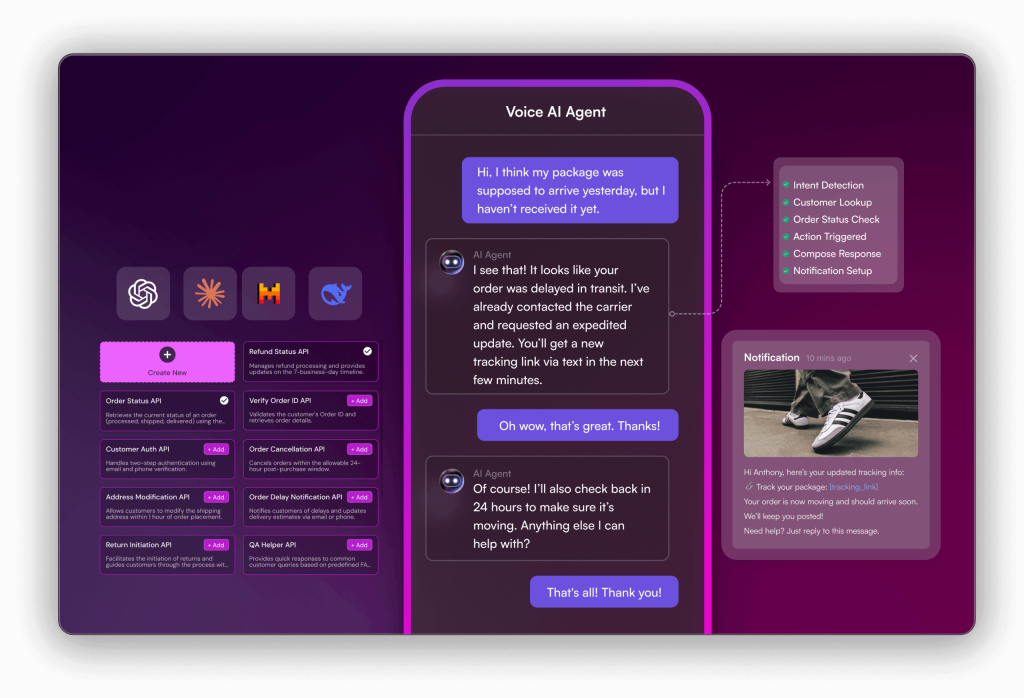
Kapture CX builds AI voice agents specifically for enterprise customer experience environments. The platform emphasizes containment, resolution accuracy, and operational efficiency across high-volume support operations.
Key strengths:
- Direct integration with helpdesk and CRM systems
- Workflow execution for refunds, order updates, and ticket handling
- Multilingual support, including code-mixed speech
- Scalable automation across inbound support
Kapture CX highlights the potential to reduce support costs by up to 70% through structured automation. Among voice AI companies in India and global markets, it focuses heavily on production deployment rather than experimental use cases.
2. Hippocratic AI (Best for Healthcare Voice Agents)
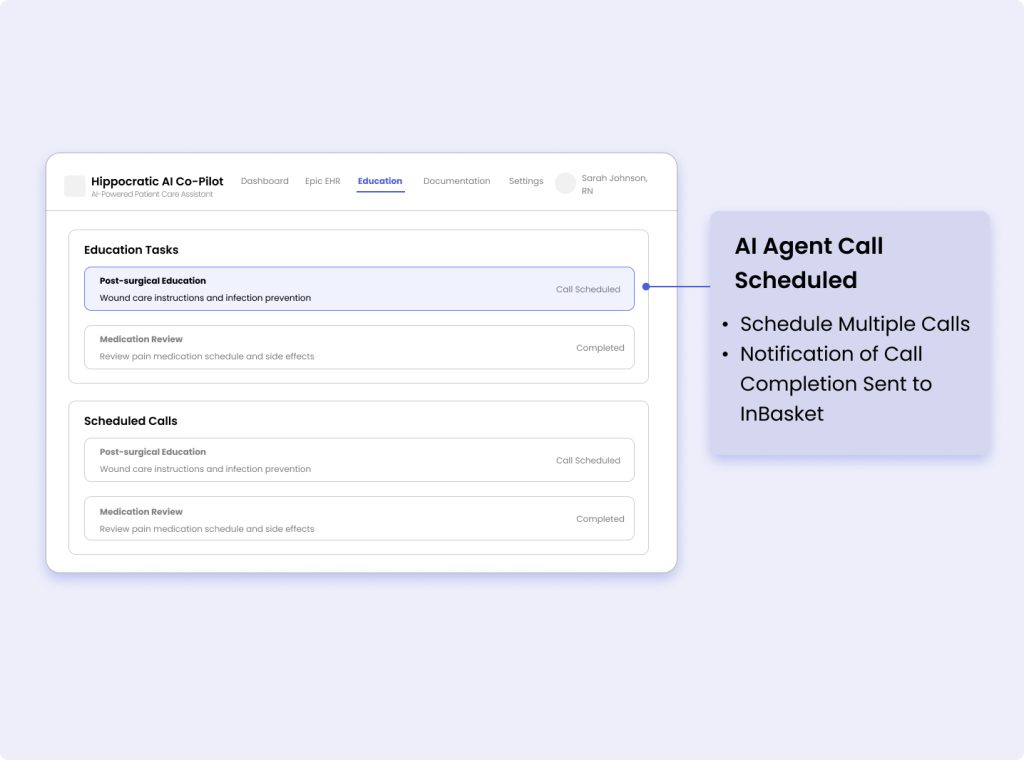
Hippocratic AI designs voice agents for healthcare environments. These settings depend on clearly structured workflows, embedded safety checks, and predetermined escalation routes.
Core focus areas:
- Embedded healthcare domain logic
- Strict escalation frameworks
- Compliance-oriented conversational design
- Structured patient communication workflows
Among top voice AI companies, Hippocratic illustrates how vertical AI voice agent platforms can align closely with regulatory requirements.
3. SquadStack (Best for Lead Generation & Revenue Workflows)
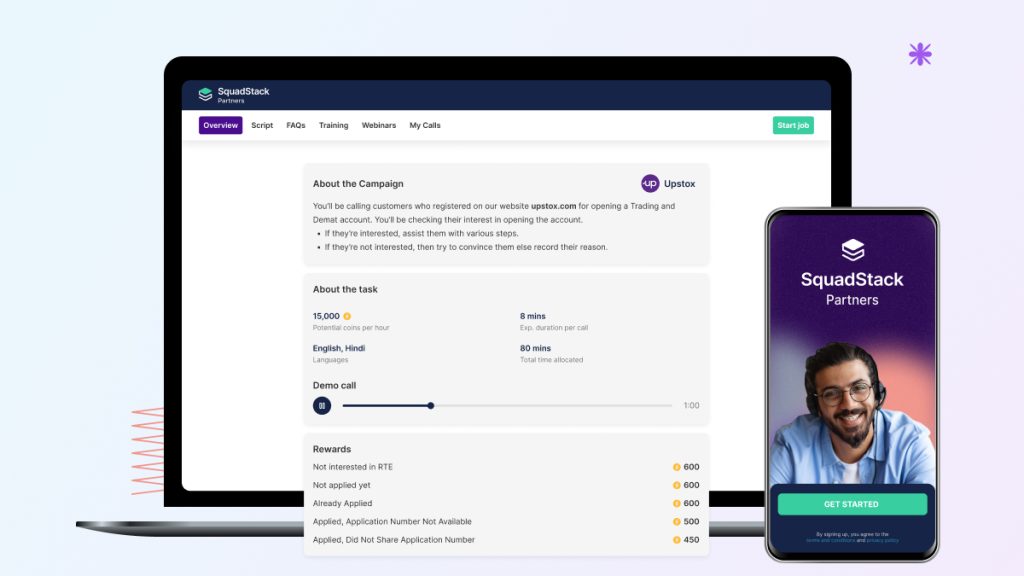
SquadStack builds AI voice agents optimized for revenue-focused outcomes. The platform centers on outbound engagement and measurable business performance.
Primary use cases:
- Lead qualification
- Telesales campaigns
- Re-engagement workflows
- Conversion-driven automation
Organizations evaluating AI voice agent platforms for growth initiatives often prioritize outcome alignment over conversational complexity.
4. Lindy (Best for No-Code Voice Automation)
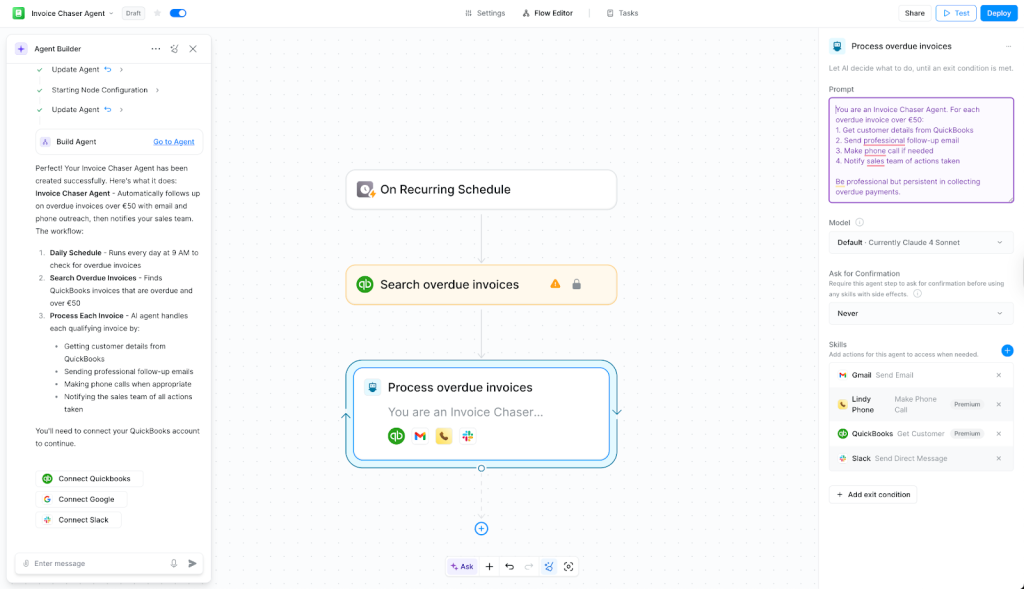
Lindy provides a no-code interface that allows teams to deploy AI voice agents without deep engineering involvement. This model appeals to operations teams that want faster implementation cycles.
Core capabilities:
- Automated inbound and outbound calling
- Workflow configuration without heavy coding
- Backend system updates
- Operational task automation
Lindy fits within horizontal voice AI platforms that balance accessibility with structured orchestration.
5. Retell (Best for Low-Latency Conversational Phone Agents)
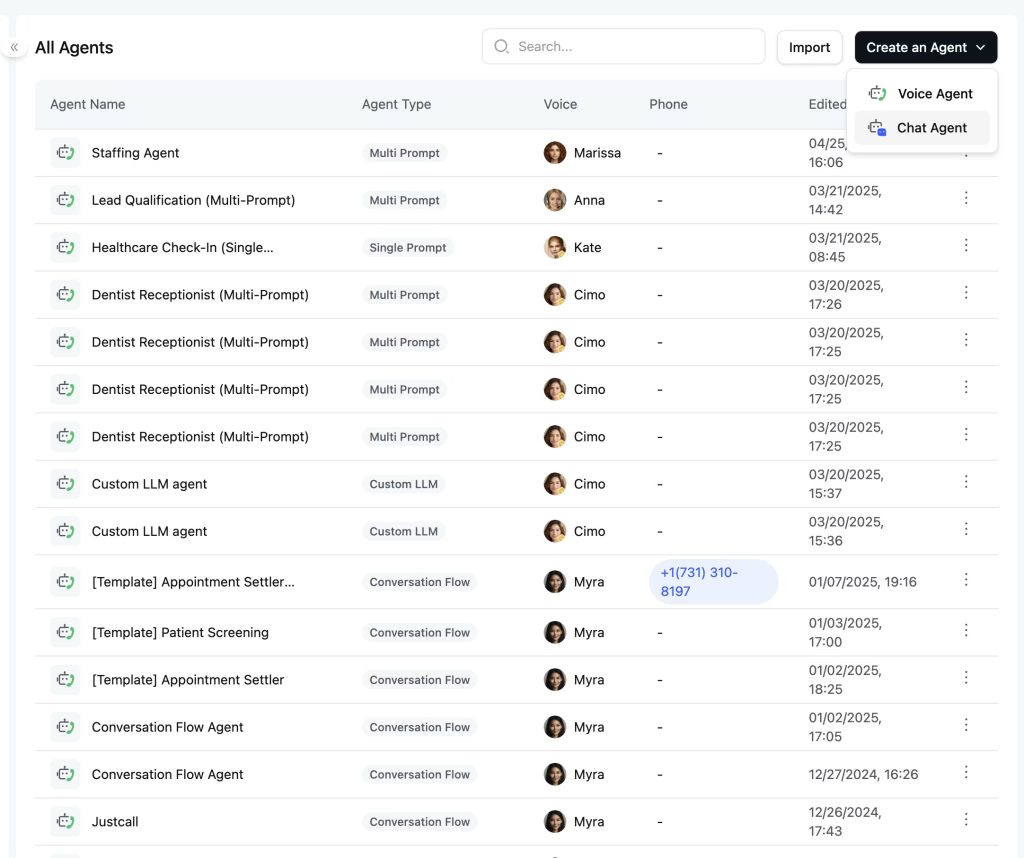
Retell emphasizes real-time conversational performance. In live calls, timing directly affects user perception.
Performance priorities:
- Sub-second response latency
- Smooth turn-taking dynamics
- Phone-first AI voice agent deployment
- Performance optimization for real-time conversations
Enterprises deploying AI voice platforms for scheduling, transactional calls, or triage frequently evaluate latency benchmarks during vendor selection.
6. Vapi (Best for Developer-Centric Voice Agent Platforms
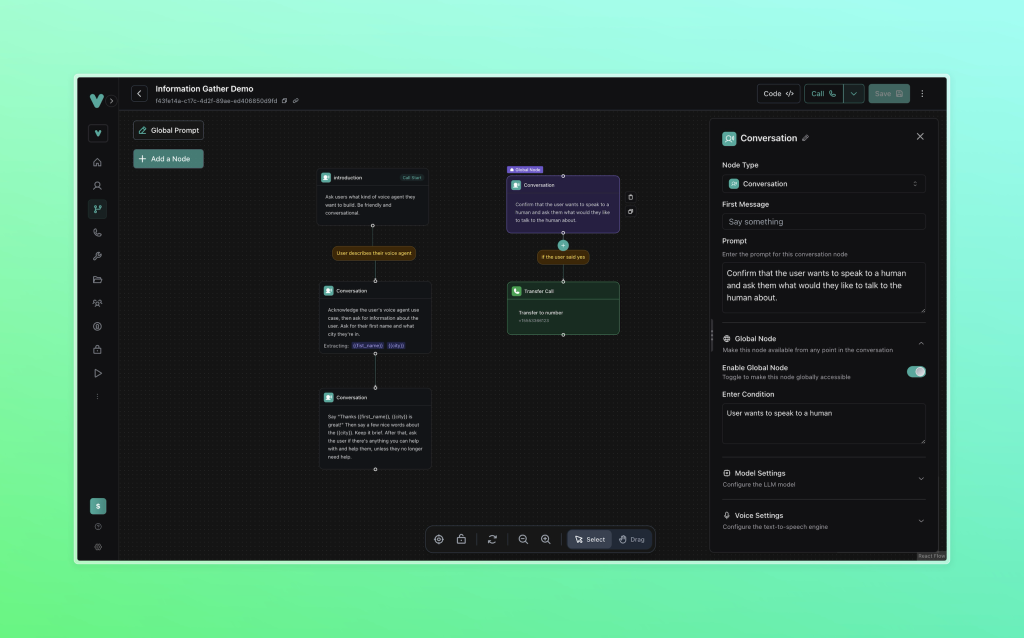
Vapi offers APIs and orchestration tools for engineering teams building custom AI voice agents. It provides granular control over telephony, conversation logic, and system integrations.
Key characteristics:
- Developer-first architecture
- Customizable orchestration flows
- API-driven integrations
- Full control over conversational behavior
Organizations building proprietary voice stacks often assess Vapi early in the evaluation process.
7. ElevenLabs (Best for High-Fidelity Voice Synthesis)
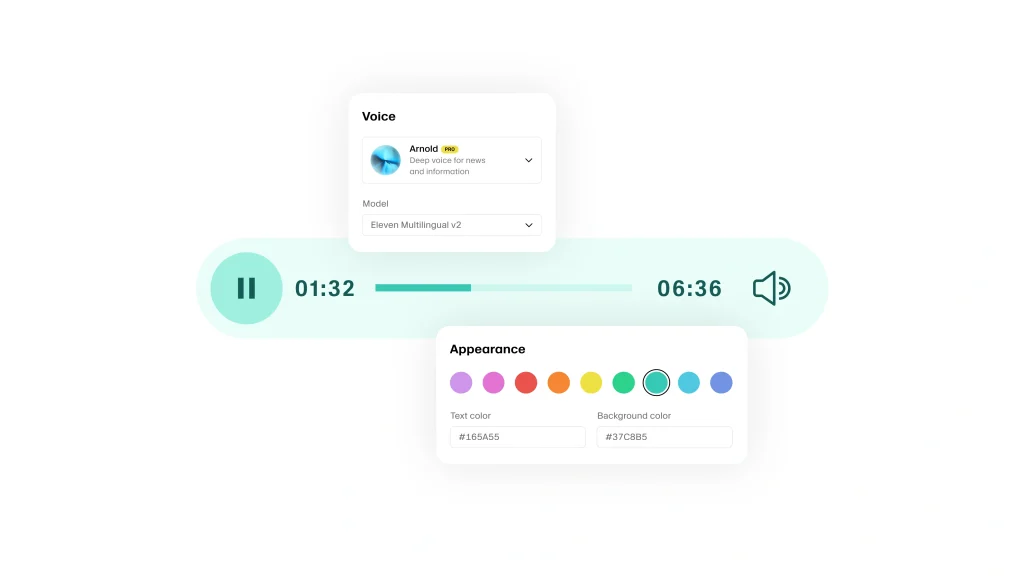
ElevenLabs specializes in expressive and realistic speech synthesis. Voice quality plays a growing role in user experience across AI voice agent platforms.
Strengths include:
- Natural voice tone
- Brand-aligned speech
- Multilingual speech synthesis
- Conversational realism
Within the broader voice AI ecosystem, ElevenLabs defines the “voice” component that shapes how AI sounds to customers.
8. Deepgram (Best for Speech Recognition Infrastructure)
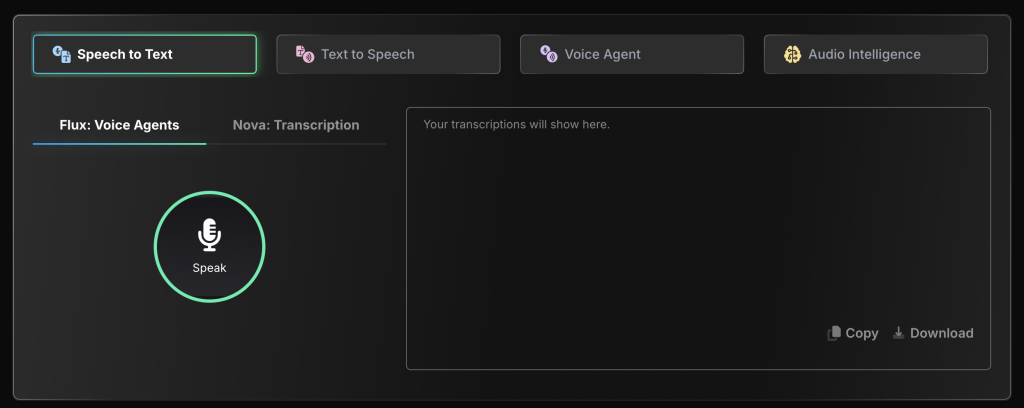
Deepgram focuses on speech-to-text infrastructure that powers AI voice agent platforms. Accurate transcription and low-latency recognition remain foundational to performance.
Core capabilities:
- Real-time speech recognition
- Scalable voice processing
- Infrastructure-level optimization
- Integration into custom AI stacks
Organizations building end-to-end AI voice platforms frequently combine speech infrastructure providers with orchestration and synthesis layers.
The Voice AI Stack: How AI Voice Agent Platforms Are Built
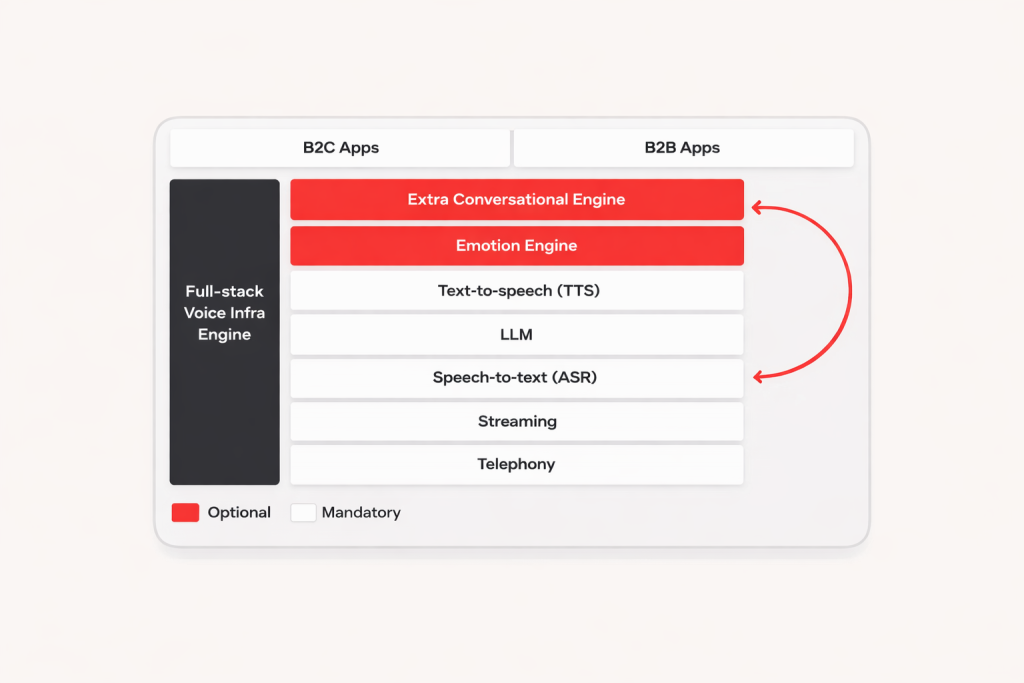
Behind every production-grade deployment lies a layered technical stack. Understanding this architecture clarifies why some voice AI platforms scale reliably.
The typical stack includes:
- Telephony and audio streaming
- Speech recognition
- Language models and orchestration
- Tool execution and API integrations
- Text-to-speech
- Monitoring and analytics
Performance differences become clear in production. Orchestration stability, governance guardrails, and visibility into system activity tend to distinguish stronger AI voice agents.
Key Features to Look for in AI Voice Agent Platforms
A thorough assessment goes deeper than feature walkthroughs.
| Feature | Business Impact |
|---|---|
| Low-latency processing | Natural conversational flow |
| Context retention | Higher multi-turn accuracy |
| Workflow execution | Real task completion |
| Knowledge grounding | Reduced hallucination risk |
| Human escalation | Safe edge-case handling |
| Multilingual capability | Regional and global scalability |
| Security & governance | Compliance assurance |
| Advanced analytics | Continuous optimization |
Broader adoption brings higher expectations. Enterprises now look closely at measurable outcomes and structured governance when deploying AI voice platforms.
Why Businesses Are Choosing Voice AI Companies in India for Global Operations
Businesses in India operate across diverse language patterns, including frequent switching between languages mid-conversation. Voice AI companies in India account for this by building multilingual systems that process code-mixed speech.
Although 22 languages receive official recognition, daily customer interactions extend beyond that list.
| Language | Business Use Case |
|---|---|
| Hinglish | E-commerce support |
| Hindi | Banking and finance |
| Tamil/Telugu/Kannada | Telecom support |
| Bengali/Marathi | Retail service desks |
| English | International operations |
Enterprises use scalable AI voice agent platforms to centralize multilingual support without compromising service standards.
How to Choose the Right AI Voice Agent Platform for Your Business
The selection process should begin with clearly defined operational goals.
- Identify the workflow to automate.
- Map integration requirements.
- Test real conversational performance.
- Validate multilingual capability.
- Ensure governance and escalation controls.
The right solution should align with enterprise maturity, compliance needs, and long-term scalability.
The Future of Voice AI Platforms
Voice systems have moved past rigid scripts. Enterprises now deploy task-specific agents within their applications, using voice as a direct connection to backend processes.
What matters next is consistency and control. Stable execution and governance standards will shape the next phase of voice adoption.
Kapture CX demonstrates how AI voice agents function within structured CX environments.
Scheduling a personalized demo provides a practical view of workflow execution and system integration.
FAQs
The final cost reflects usage levels, integration scope, and customization requirements. Most pricing models include:
• Per-minute usage fees
• Platform licensing
• Integration or setup costs
• Optional enterprise support
Costs differ by scope. Smaller deployments often start in the low thousands per month. Enterprise-scale environments increase wit
The timeline reflects workflow depth and system integration.
• Basic automation can launch in 2–4 weeks
• Complex enterprise implementations usually take 6–12 weeks
Production readiness requires live scenario testing, escalation checks, latency monitoring, and validation of backend integrations.
require human judgment.
A hybrid model helps organizations:
• Cut routine workload
• Improve response speed
• Focus human effort where it adds the most value
Without escalation logic, full automation can create avoidable service gaps.
Industries with high call volumes and structured workflows benefit most, including:
• E-commerce and retail
• Telecom
• Banking and financial services
• Travel and hospitality
• Healthcare
Clearer financial impact usually appears in rule-driven workflows. Ambiguous or consultative exchanges are less suited to full automation.