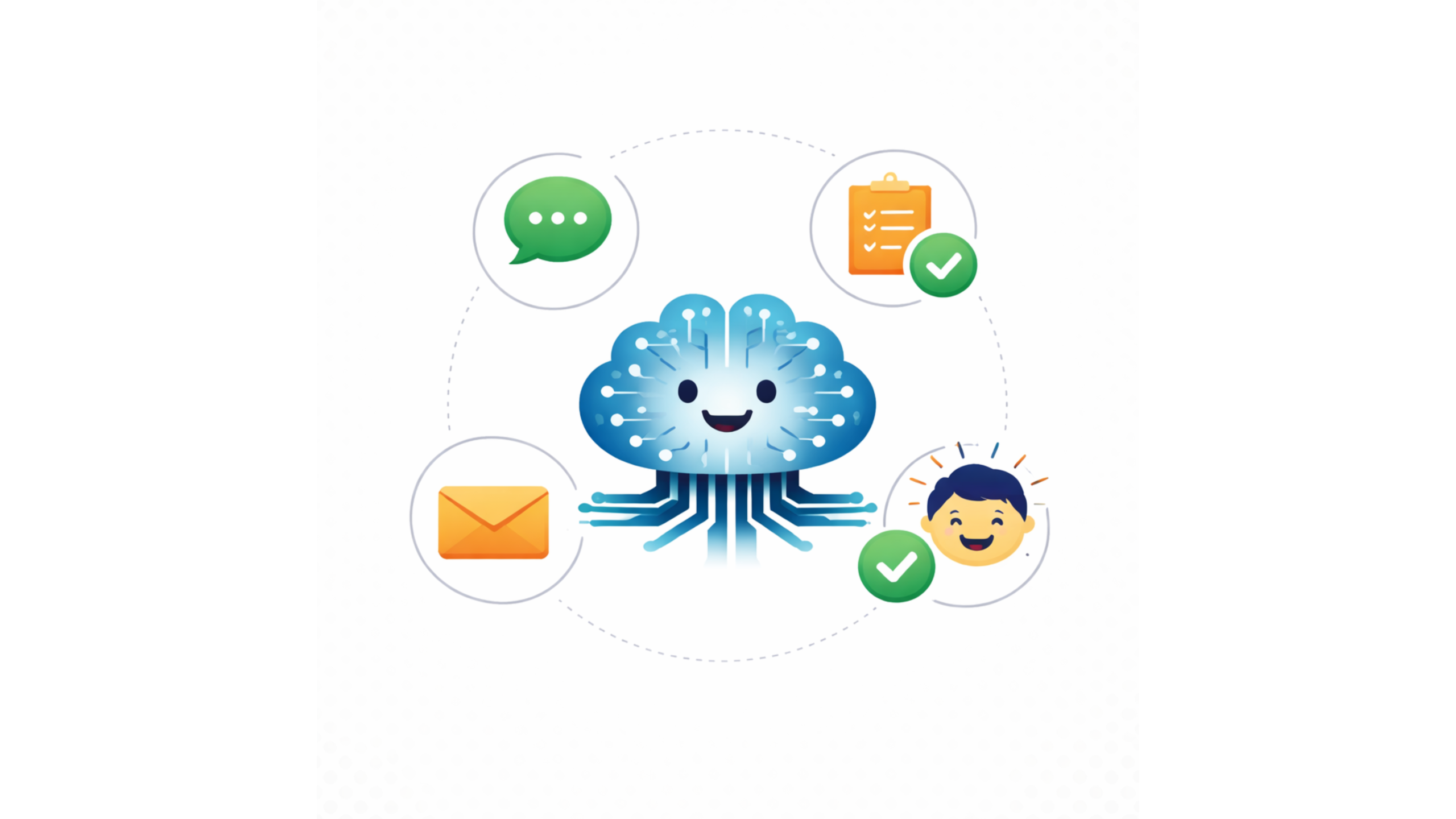

Intent architecture sits at the heart of CX automation. It shapes how well an AI system understands what customers mean, how smoothly requests move to the right teams, and how useful agent assist feels during a live conversation.
If the taxonomy is unclear or contains overlapping entries, the model struggles to match real phrases to the correct intent. That small gap quickly affects everything built on top of it.
When intents are poorly structured, bots often guess wrong or respond in ways that feel slightly off. Routing starts to slip because similar issues sit in different categories or mix the type of request with the channel used. This pushes calls and chats into the wrong queues, creating extra work for agents who need to redirect them.
Agent Assist faces the same problem. If intent labels do not cleanly reflect customer goals, the system cannot pull up the right article or prompt when the agent needs it.
A well-designed intent structure ensures that all parts of the AI ecosystem speak the same language. It becomes the layer that supports accuracy across bots, routing, and live agent guidance. Without it, even strong models produce inconsistent results.
What a Broken Intent Taxonomy Looks Like
Intent architecture plays a central role in making CX automation dependable. Without a clear and well-structured intent system, conversations get misrouted, bots lose clarity, and analytics become harder to trust.
Recent research shows that when systems use well-structured intent and query rewrites based on historical feedback, their accuracy improves and they can even outperform heavier transformer models. It’s a clear reminder that AI works best when the intent framework is clean, consistent, and aligned with how customers actually speak.
Here’s a quick snapshot of what typically goes wrong when the intent foundation isn’t solid and the patterns that signal your taxonomy needs repair:
1. Duplicate Intents
This happens when two labels describe almost the same customer goal, like “Change Address” and “Update Profile Address.” The system ends up splitting similar messages into different buckets, which leads to mixed responses and unnecessary workflow clutter.
2. Missing Intents
Sometimes an entire type of customer request is left out. When that happens, the bot cannot find a suitable match and falls back to irrelevant answers or pushes the conversation to an agent.
3. Overly Broad or Overly Granular Labels
If an intent is too broad, such as one single intent for all support issues, the AI cannot tell one problem from another. If the taxonomy goes too deep with hyper-specific labels, the system struggles to gather enough examples for each one. Both situations reduce accuracy.
4. No Policy Mapping
Even when an intent is detected correctly, things break if it is not tied to a clear routing rule or internal process. Without that link, requests land in the wrong queue or trigger the wrong workflow. Good intent design always connects each label to a defined next step.
5. Language Mismatches
If the training phrases do not reflect how customers actually speak, the system misfires. Missed slang, spelling variations, or multilingual inputs cause the AI to make poor guesses, even when the intent itself exists.
What Makes a Strong Intent Architecture
A strong intent architecture gives your AI a clear way to understand customer goals and connect them to the right actions. It organizes information in a way that feels natural for customers and practical for your internal teams. Here are the traits that usually set a solid taxonomy apart.
1. Hierarchies and Parent–Child Relationships
Instead of a long, flat list of intents, a well-built system groups related items together. A broad category like Account Management can hold more specific needs, such as Update Address, Change Password, or Close Account.
This makes the structure easier to manage, avoids repeated intents, and helps the model learn the difference between general and specific requests. It also gives you room to expand without creating clutter.
2. Domain and Policy Awareness
The best taxonomies mirror how the business actually operates. Each intent should match a real process or rule inside the organization. For example, a Billing Issue intent should already point to the correct queue, steps, or knowledge article.
When intent labels line up with internal policies, the system responds more consistently and routing becomes more predictable.
3. Seasonal or Time-Based Variants
Customer language shifts during holidays, sale periods, tax season, travel months, and other peak moments. A strong taxonomy accounts for these changes by allowing temporary variants or sub-intents tied to seasonal trends.
This helps the model stay accurate even when people phrase their questions differently for a limited time.
4. Multi-Language Coverage
If your customers speak in multiple languages, the taxonomy should support that mix. You can include examples for each language, or use an NLU layer to detect the language before classification.
The important part is that the structure stays stable while still recognizing different ways customers may say the same thing.
5. Clear Separation Between Intents and Entity Details
Good design separates the goal from the details needed to complete it. For instance, “Track Order” is the intent. The order number or delivery date is an entity. Treating them separately keeps the taxonomy simpler, reduces the number of intents you need, and makes workflows more flexible.
6. Coverage with Thoughtful Fallback Handling
No taxonomy will capture every new question from day one. A solid structure includes a fallback path that asks for clarification or routes the customer to an agent when needed. These moments also help you learn what to add or adjust in future updates.
Maintaining Intent Architecture Over Time
Intent architecture needs regular care. Customer language shifts, products change, and new policies come in, so the taxonomy has to move with them.
1. Drift Detection
Customers stop using old phrases and pick up new ones. Product updates or seasonal offers can also change how people describe what they want. You can spot drift by noticing:
- More fallbacks or low-confidence matches
- Growth in the “unknown” category
- Intents that suddenly become less accurate
Simple analytics and NLU checks help catch these changes early so you can refresh examples or update labels.
2. Clustering for New or Broken Intents
Clustering real chat and call transcripts shows how customers actually talk, not how the taxonomy expects them to talk. It helps you:
- Find new topics that do not have an intent yet
- See where two intents are basically the same in practice
- Identify mixed intents that bundle several goals together
This gives you a clean, data-driven way to refine or add intents.
3. Consolidation vs. Expansion
Once you understand the gaps, you can shape the taxonomy in a clearer direction.
- Consolidate when multiple intents lead to the same outcome or create confusion
- Expand when one intent is covering very different journeys or when a new product or rule brings in a fresh type of request
This keeps the catalog tidy instead of letting it grow without structure.
4. Incorporating Agent Feedback
Agents are usually the first to see intent issues. They handle real conversations and can tell when something does not fit. With the right feedback loop, they can:
- Flag wrong or missing intents
- Mark transcripts that suit a different label
- Suggest new intents that appear often in daily work
Their input helps the taxonomy stay close to how customers actually speak.
Why Horizontal AI Fails Without Strong Intent Design
Horizontal AI models can read almost anything, but they do not understand your intent catalog, routing rules, or compliance needs unless you give them a structure to follow.
1. LLMs Misclassify Without Grounding
Customer messages are messy and often contain more than one goal. Without a clear intent taxonomy, a general-purpose model guesses, blends similar intents, or creates labels that do not exist.
LLMs usually give more stable intent predictions when they work within a clear set of intent options. When the model knows exactly what it can choose from, it is less likely to drift toward vague or invented labels.
2. Lack of Policy Awareness Creates Compliance Risk
General models also lack built-in awareness of regulations or internal rules. In regulated sectors, this can lead to incomplete disclosures or incorrect guidance. A strong intent architecture ties each intent to a specific policy or action path, which keeps the system inside safe boundaries.
CX Failures Caused by Bad Intent Structure
A weak intent taxonomy affects every part of the customer journey. Most breakdowns in bot performance and routing trace back to unclear or incomplete intent design.
1. Incorrect Routing
Overlapping or vague intents send conversations to the wrong team. Common signs include:
- More transfers
- Longer handling times
- Simple requests reaching the wrong queues
To customers, this feels like slow or ineffective service.
2. Weak Chatbot Performance
Bots rely on intent clarity. When the taxonomy is weak, you often see:
- Frequent fallbacks
- Low containment
- Off-topic suggestions for agents
The model cannot perform well if the structure guiding it is unclear.
3. Misleading Analytics
Intent data shapes decisions about automation and resourcing. Poor structure leads to:
- Different teams labeling similar issues in different ways
- Broad intents hiding separate problems
- Trend lines that reflect labeling changes instead of real customer shifts
This makes insights unreliable and can push teams toward the wrong priorities.
How Kapture CX Builds Enterprise Intent Architecture
Kapture CX approaches intent architecture through industry knowledge, structured workflows, and AI agents that share the same understanding of customer queries.
1. Vertical Intelligence for Industry-Specific Use Cases
The platform uses a vertical-first AI approach shaped by patterns seen in BFSI, retail, travel, logistics, and other sectors. This gives enterprises a starting point that already reflects common service requests and customer language in each industry.
Instead of building intent structures from the ground up, teams can work with patterns that match real situations customers bring to support channels.
2. Workflow and Policy Alignment
Intents in Kapture CX can be linked to defined workflows, routing steps, and business rules. The platform provides compliance-focused features, including audit trails, access controls, redaction options, and secure data handling.
When an intent is recognized, the system can trigger a mapped set of actions or an escalation rule, helping keep interactions consistent and reducing process errors.
3. AI Agents for Triage and Classification
Kapture CX includes AI agents that help with classification, routing, summarizing conversations, and drafting responses across channels like chat, email, voice, WhatsApp, and social platforms.
Shared interpretation of customer issues across these agents supports more consistent classification and smoother triage across channels.
Conclusion: Build Reliable CX AI by Fixing the Intent Foundation
Intent architecture plays a central role in making CX automation dependable. Without a clear and well-structured intent system, conversations get misrouted, bots lose clarity, and analytics become harder to trust.
Kapture CX strengthens this foundation by pairing industry-informed AI with structured workflows and unified intent understanding across channels. This helps support accurate routing, more reliable automated replies, and better assistance for human agents.
Book a demo now to explore how a stronger intent foundation can transform your CX automation and deliver more accurate, scalable, and reliable customer support!