
TL;DR
CDPs unify each customer’s history from multiple sources to present a quick, 360-degree view. This helps support teams offer faster, personalized assistance without long waiting times
- CDPs employ sophisticated data modeling and identity resolution techniques to stitch together disparate data points. This equips CX agents to offer high-end omnichannel engagement.
- The average customer retention rate for businesses with very good omnichannel customer interaction is 89%, whereas the average for businesses with bad omnichannel customer engagement is 33%.
- While CRMs only focus on sales and contact information, CDPs handle both structured and unstructured data at scale
Defaulting to single-channel personalized engagement methods is obsolete, as customers now demand seamless, complete brand contact across their multiple interaction points. The Deloitte report demonstrates that brands that create customized customer experiences will achieve 71 percent greater customer loyalty and 48 percent higher revenue growth.
However, many CX teams face a common challenge: scattered data across multiple systems. They have data, but it is fragmented, spread out, and hard to use. This makes delivering tailored experiences harrowing.
This is where the customer data platforms shine. A CDP consolidates data from all sources into a single, unified view. It provides teams with accurate, real-time insights. This enables personalized, seamless support that nurtures loyalty.
The blog demonstrates how CDP technology transforms fragmented data into remarkable support offerings that improve business profitability.
What is a Customer Data Platform?
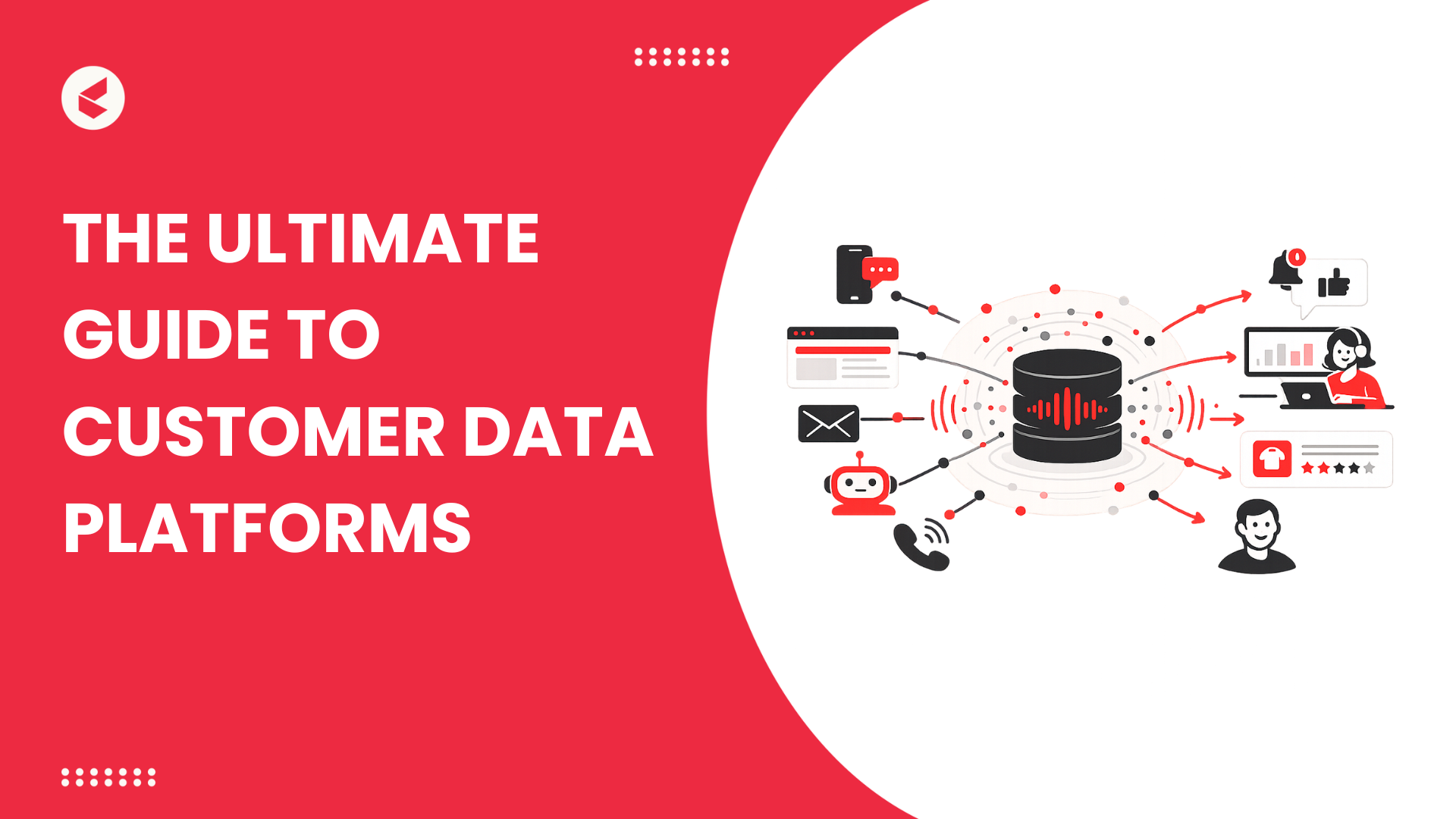
A Customer Data Platform is a centralized software system that gathers and organizes customer data from multiple sources to create a single, unified customer profile. The system enables businesses to track customer behavior through multiple support channels. Results? More personalized support and improved CX.
Here is an example- suppose a clothing brand uses a CDP. The system tracks and records every action a customer takes. From browsing online products to visiting an offline store.
When the customer reaches out to the retail customer support with queries, the agents can quickly access a bird’s-eye view of all previous interactions to offer real-time assistance. This personalized approach improves CSAT and chances of repeat business.
How Does a Customer Data Platform Work?
A customer data platform converts dispersed customer data into meaningful insights using a four-step procedure.
1. Data Collection
CDP collects information from a variety of sources, including –
- Social media
- Email marketing
- CRM systems
- Retail websites
- Mobile apps
- In-store sales
Every interaction a customer has with a business is recorded, such as browsing products or visiting a store.
2. Unification
Unification consolidates this data into a single customer profile. This involves deduplicating entries and resolving identities, like recognizing that the same person is browsing on their phone and desktop.
For example, the CDP creates a comprehensive profile that provides a clear picture of customer choices by combining –
- Purchase records
- Web browsing history
- Support interactions
3. Segmentation
In the segmentation process, companies categorize clients according to common characteristics.
A clothing store can create two customer groups: “occasional shoppers” and “frequent buyers”. This way, the company can apply targeted marketing methods like sending re-engagement campaigns to customers who have not purchased anything recently and providing special offers to their dedicated customers.
4. Activation
The activation process uses the collected information to create operational changes. The system generates customized emails and specific customer assistance methods that activate according to segment assignment.
The customer who purchases running shoes on a regular basis will receive inviting deals for new athletic products. The system boosts purchasing likelihood while creating better user experiences.
Here is a quick rundown to help you understand how this process unfolds:
| Step | Action Name | What Happens? | Benefits |
|---|---|---|---|
| Data Collection | Gathering Data | Data from multiple sources is collected into the CDP | Creates a comprehensive data pool for analysis |
| Unification | Data Integration | Data is cleansed Deduplicated Merged | Ensures accurate and complete customer views |
| Segmentation | Customer Segmentation | Grouping of customers based on specific attributes | Targeted, personalized outreach |
| Activation | Campaign Activation | Data is used to trigger personalized campaigns and support | Improves customer engagement |
CDP vs. CRM vs. DMP: Key Differences
The various data tools used for customer support operations demonstrate different levels of effectiveness. Therefore, CRM, CDP, and DMP deliver varied support results as follows-
CRM
A CRM offers detailed, customer-specific data. However, they mainly focus on sales and marketing rather than holistic customer journeys. They lack the depth needed for real-time, personalized support.
CDP
A CDP, however, goes beyond what a CRM offers. While CRMs primarily handle known customer data, CDPs integrate both known and anonymous data from multiple sources.
DMP
A DMP, on the other hand, is less about individual support. It mainly handles anonymous data used for targeted advertising. It doesn’t store detailed customer profiles, so it’s not useful for resolving support issues directly.
Below is a quick comparison table –
| Feature | CRM | CDP | DMP |
|---|---|---|---|
| Data Type | Personal, identifiable data | Both personal and anonymous data | Mostly anonymous data from cookies |
| Identity | Customer-specific (name, email) | Unified customer profiles | Cookie-based, anonymous segments |
| Primary Goal | Manage customer relationships | High-end personalized support | Audience targeting and ad campaigns |
Strategic Benefits of Customer Data Platforms
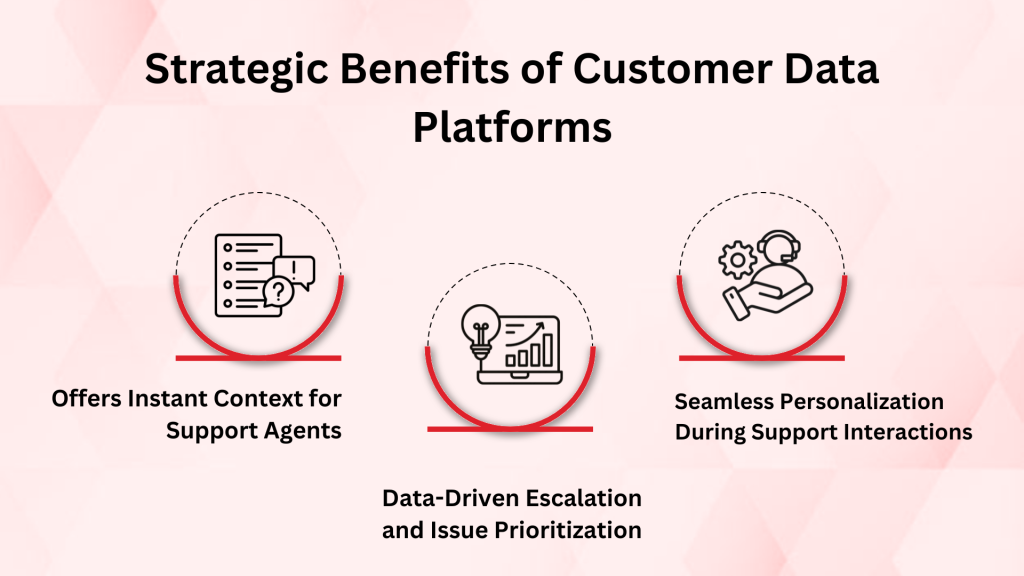
No more jumping between tools or guessing about past customer issues. Here are the top ways CDP benefits CX teams.
1. Offers Instant Context for Support Agents
All customer data is compiled into a single, easily accessible profile via a CDP. A support agent can view the entire customer journey in real time when answering the phone or chatting online.
This instant contextual reference helps reduce resolution time and boost CSAT.
2. Data-Driven Escalation and Issue Prioritization
Not all support tickets are created equal. A CDP helps prioritize cases based on –
- Customer value
- Sentiment analysis
- Past behavior
This helps process VIP tickets or those showing signs of dissatisfaction more quickly. This strategic triaging process directs support resources to your most important operational areas.
3. Seamless Personalization During Support Interactions
A CDP’s deep data integration allows for hyper-personalized interactions. If a customer has a history of service issues with a product, the support team can proactively suggest troubleshooting tips tailored to their specific use case.
How to Choose a CDP: Software Selection Criteria
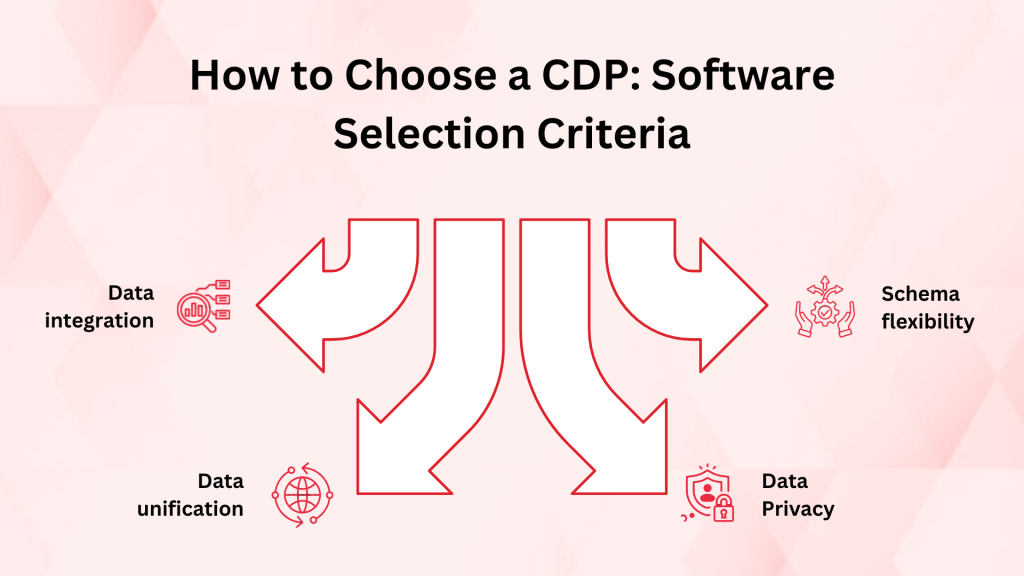
When selecting a CDP, don’t limit your focus to features alone. You will also need to ensure that the platform’s technical capabilities match your support team’s needs.
Here’s what to focus on –
- Data integration: Make sure the CDP can easily ingest data from your support systems (CRM, ticketing, chat) through flexible connectors or API support
- Data unification: Find top-notch identity resolution algorithms that combine various data points with probabilistic and deterministic matching. This helps deliver a single, accurate customer profile.
- Schema flexibility: The platform must support complex, customizable schemas to accommodate support-specific data (escalation history, issue types). It should allow schema evolution without downtime.
- Data Privacy: Ensure robust data governance with granular access controls and compliance support for regulations like GDPR and CCPA. Focus on support for data anonymization and consent management.
Customer Data Platform Examples and Use Cases
According to Fortune Business Insights, the worldwide customer data platform market will grow at a compound annual growth rate of 19.60% from its present value of USD 4.07 billion in 2026 to reach USD 17.03 billion by 2034.
The figures suggest that businesses are increasingly turning to customer data platforms. Here are the top use cases to take inspiration from –
1. Vodafone’s Proactive Customer Engagement
Vodafone uses the CDP’s real-time analytics to spot signs of customer discontent or churn risk. This way, Vodafone’s support team lowered attrition rates by 12% and improved retention metrics by 15% over a year by proactively pinpointing issues before they escalated.
2. Giva’s Multichannel Support Powered by Kapture CX
The absence of a single system that combines multiple support channels made it difficult for Giva to provide fast and dependable service.
By partnering with Kapture CX, Giva integrated all communication mediums into a single platform. Kapture’s high-end CDP features, like past ticket visibility and detailed reporting, helped to cut down on resolution times. Additionally, Giva was able to monitor CSAT more precisely thanks to automated feedback collection.
Below is a mapping table showcasing how CDPs address common CX challenges:
| CX Problem | CDP feature | Business Impact |
|---|---|---|
| Fragmented customer data | Data unification + identity resolution | Faster issue resolution Increase in CSAT scores |
| Lack of personalization in support | Segmentation + real-time data access | Increase in upsell/cross-sell conversions Higher NPS |
| Delay in issue detection and resolution | Real-time data processing + alerts | Reduction in support ticket volume Improved ROI |
Boost ROI with Customer Data Platforms
When looking for a CDP, you must verify the platform’s scalability. Ensure the platform offers horizontal scaling options and high-throughput processing to handle peak support loads without latency.
CDPs must provide data to all of your teams so that business operations can be powered in real time. Confused about where to start? Kapture CX is here to help.
We mine valuable CX data in real-time and equip your agents to scale support operations seamlessly. Our wide suite of AI-powered data analytics is highly secure and compliant with SOC-2, GDPR, and ISO-27001.
Book a demo today to explore how our in-built vertical data models can mirror your organization to improve support operations.
FAQs
Implementation time is really determined by how intricate the data is. That said, a committed provider will offer you clear timelines and support the integration process to solve any issues on the spot.
You need a phased approach. Start with the key data sources. Figure out the most important integrations and then slowly expand. This way, CDPs can smoothly integrate with your existing data systems.
You must prioritize proper training and onboarding. Always opt for a CDP provider that offers onboarding sessions and live support to make the transition process smooth for your support staff.