
A customer starts a complaint on WhatsApp. Then calls your support line. Then emails you.
By the time they reach your agent, they repeat everything from scratch.
That is the problem an omnichannel contact center solves. It connects every channel into one view. Your agent sees the full history before they say hello.
In this guide, we cover what an omnichannel contact center is, how it works, and how to set one up the right way.
Let us get into it.
What Is Omnichannel Contact Center?
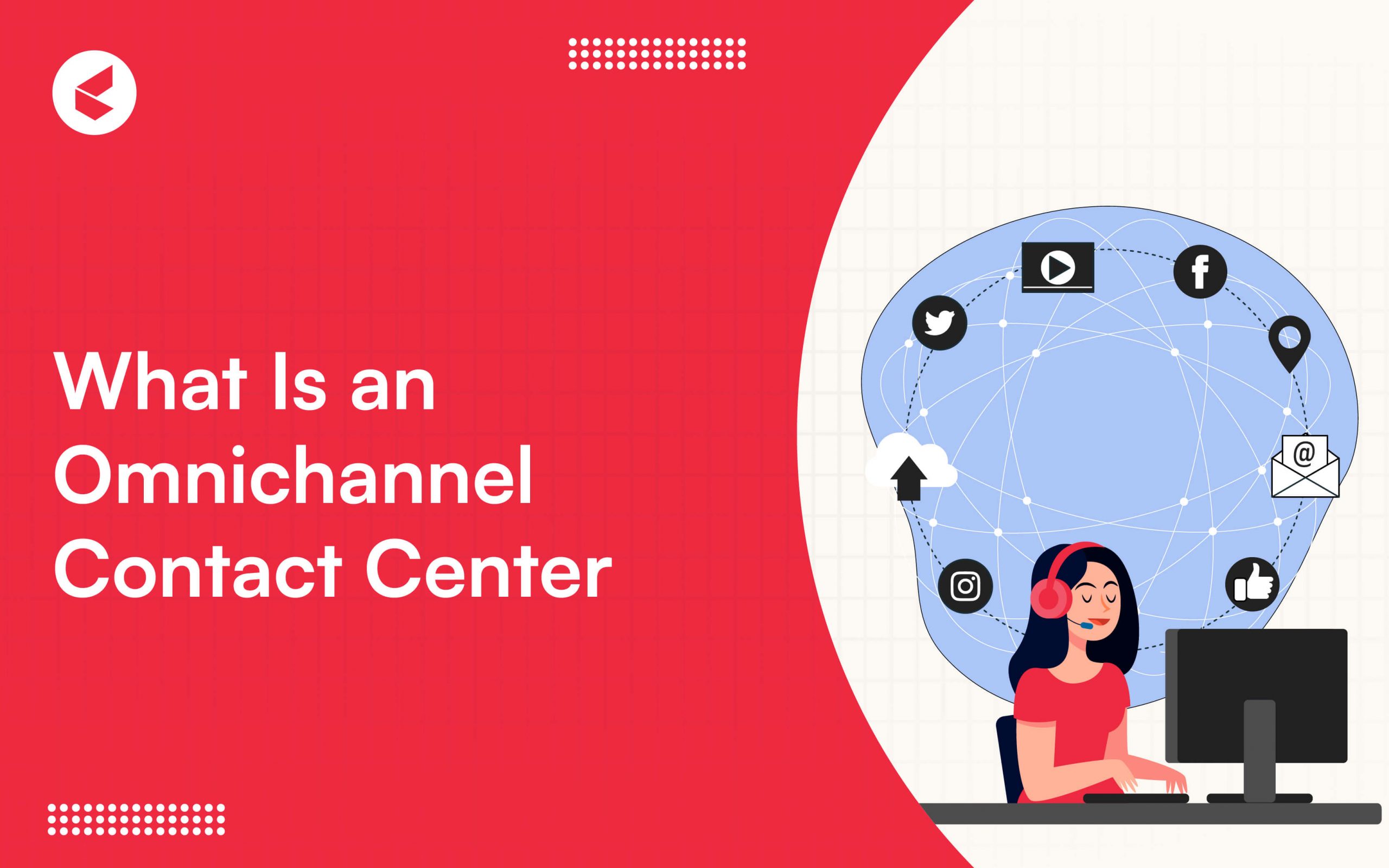
An omnichannel contact center is a customer service solution that offers a uniform and customized customer experience by effectively combining all communication channels and consumer interactions into a single platform.
Voice calls, email, instant messaging, SMSs, and social media are some examples of these channels.
Consumers have the control to select any channel of their choice and can quickly flip between them as required.
According to research by the Aberdeen Group, there has been a staggering 91% rise in client retention rates for businesses using an omnichannel approach over previous years. This data emphasizes how crucial it is to provide a consistently high level of assistance across all of these channels.
An omnichannel contact center offers an integrated platform for communication, in contrast to a multi-channel approach where every interaction mode functions independently.
For instance, a client can start a web chat session and then switch to a voice call with a representative who can view the whole history of the preceding chat exchange. Customers no longer have to reiterate details thanks to this consistency, which guarantees a seamless, continuous experience.
Some of the key features of Omnichannel contact center software are:
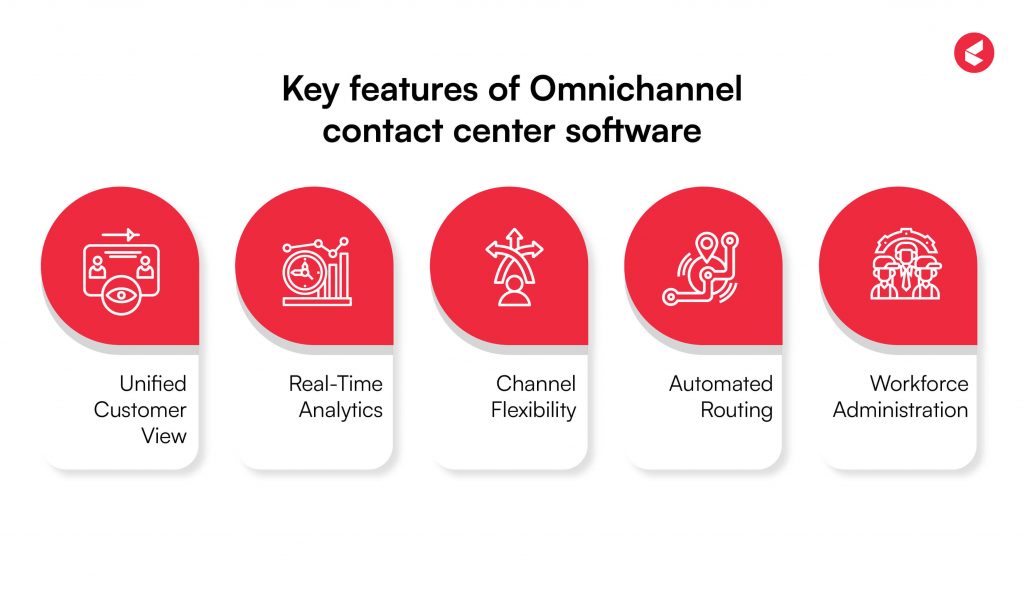
- Unified Customer View: A 360-degree client profile that unifies interactions across many channels, including chat, email, social media, and the phone, is available to agents. For instance, the agent can view the prior exchange if a customer approaches for assistance over Twitter and then phone calls.
- Real-Time Analytics: Analytics are used by omnichannel contact centers to track agent performance and consumer interactions across all channels for data-driven decision-making.
- Channel Flexibility: Channel switching doesn’t affect the context for customers. A consumer can, for example, initiate a chat session on a website and carry on the discussion by email.
- Automated Routing: Inquiries can be sent to the most suitable agent depending on the channel and the agent’s experience, which speeds up response times.
- Workforce Administration: Contact center workforce management (WFM) enables administrators to build a more efficient team, particularly when combined with analytics.
Multichannel vs Omnichannel Contact Center
Multichannel and omnichannel are two distinct approaches to channel diversity in a contact center.
The word “multi,” which signifies “many,” suggests that your support service is now accessible through a variety of channels. The word “Omni,” referring to “all,” suggests that the overall experience will be the same across all of these mediums.
However, omnichannel contact center software provides greater customer satisfaction than multichannel one.
Although multichannel contact centers give consumers many avenues to reach your company, each channel functions independently. As a result, buyers who move across channels will have a fragmented encounter.
However, an omnichannel contact center adopts an integrated customer care strategy. It integrates all communication channels into a unified platform to provide outstanding customer support. This implies that business agents will have access to the customer’s background and past interactions, irrespective of the channels used to contact them.
Here’s a detailed comparison between multichannel vs. omnichannel contact center software:
| Multichannel Contact Center | Omnichannel Contact Center Software | |
|---|---|---|
| Overview | While a multichannel contact center offers many electronic and audio communication channels, it does not combine them. Agents must actively switch between channels to examine client messages and provide ticket information since these centers divide interaction by channel. | Phone and digital conversations are seamlessly synchronized using omnichannel contact center software, which offers an integrated agent platform so employees can observe all cross-channel exchanges in one location. |
| Channel Integration | Unavailable | Available |
| Channel switching Possibilities | Unavailable | Available |
| Main attributes | Offers regular phone calls as well as online assistance channels. Enables supervisors to allocate agents to designated channels, guaranteeing that every channel has an ideal staffing level. Companies can learn which communication channels their clients appreciate by using channel-related metrics. | More individualized client service via favored channels of contact. Contains unified interaction and collaboration features such as team messaging and video conferences. Automated NPS scores, agent efficiency tracking and scoring, and process bottleneck identification are all made possible by AI-powered analytics. |
Benefits of Omnichannel Contact Center Software
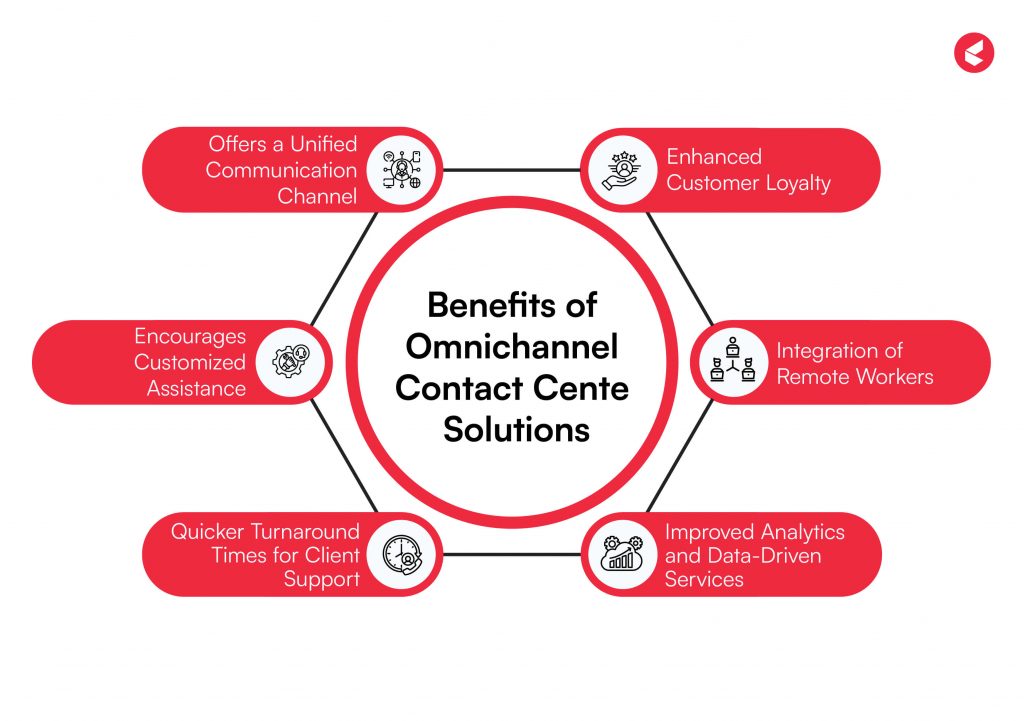
Here are the top benefits an omnichannel contact center software provides businesses for overall growth:
1. Offers a Unified Communication Channel
As per a report by Hyken, almost 90% of consumers would choose an alternative business if it offered a superior customer experience.
Omnichannel contact center software facilitates uninterrupted interaction by offering consumers the option to engage via the channel of their choice.
For instance, a client can:
- Start a conversation with the website’s chatbot.
- Initiate the email exchange with an agent.
- Speak to an agent over a call to conclude the query.
All of this is made possible with seamless integration that ensures uninterrupted connectivity between numerous channels. Additionally, it cuts down on waiting times and minimizes the ordeal for customers to repeat themselves.
Furthermore, omnichannel communication offers a uniform cross-platform interface that facilitates customers’ ability to locate the assistance they require more rapidly.
2. Encourages Customized Assistance
Omnichannel contact center software combines numerous avenues of communication into a single platform to obtain a comprehensive picture of each customer’s past purchases and contacts with the business.
Let’s say a consumer reaches out to the business through social media. Even if the interaction was over the phone or email, the agent can instantly examine the details and prior encounters. Thus, agents are equipped to provide a more individualized experience by customizing their replies to each consumer with this data at their disposal.
For example,
If a consumer has previously bought a certain kind of goods, the agent could recommend related items or special offers that they might find interesting.
or,
If a consumer has previously had an unpleasant encounter, the agent can mention it and try to promptly and efficiently address their problem.
As a result, an omnichannel contact center is an effective tool that helps companies offer customers tailored assistance.
3. Quicker Turnaround Times for Client Support
In addition to making it more likely that a consumer will speak with an agent during their initial interaction, omnichannel contact center software guarantees that the agent is the best equipped to help.
Better consumer self-service features are made possible by robust multi-level IVR features, which often allow customers to resolve issues without ever having to talk to a real person.
Additionally, this increases the efficiency of agents by freeing up employees to work on more urgent problems.
Moreover, comprehensive customer contact records facilitate the workflow of several agents collaborating on a single support ticket and save the laborious procedure of customers repeating their problems to each agent they talk to.
4. Improved Analytics and Data-Driven Services
Thanks to omnichannel contact centers, businesses can now make data-driven choices. These centers offer a thorough picture of how customers interact, and customer information can be gathered through a variety of methods. Omnichannel contact centers, therefore, offer superior data and intelligence.
This enables you to better understand your customers’ requirements and demands by monitoring their actions and preferences across channels.
Additionally, you can use real-time tracking and analysis to monitor KPIs across all of your channels. Businesses can use this data to pinpoint areas for development and streamline processes to boost customer satisfaction.
Improved data tracking also makes it possible to spot upselling and cross-selling potential, which boosts sales.
5. Integration of Remote Workers
Any company communication tool should be able to meet the demands of remote employees since more individuals are working from home now than ever.
Comprehensive omnichannel routing possibilities increase the likelihood that an agent is constantly accessible when a client contacts you, and integrated mobile applications allow agents to view past client information at any point in time from any location.
Call routing settings can redirect calls to the following competent agent in the right team, while options such as remote call redirection ensure that incoming calls get routed from an agent’s desk line to their mobile and then to their voice mailbox (or any additional specified call route).
While interfaces and APIs with tools for teamwork enable remote agents to track project progress, communicate among themselves, and even amend files at the moment, analytics enable remote workforce management.
6. Enhanced Customer Loyalty
Building a loyal client base is essential to the viability of any organization. Repeat business and brand recommendations are more likely to come from satisfied clients.
Omnichannel call center software can improve customer retention in several ways:
Despite the channel they utilize, the omnichannel contact center guarantees that consumers will always have a uniform brand experience. Enhanced confidence and allegiance will result from this constancy in upholding the brand’s principles.
According to a Salesforce report, 70% of customers believe that every employee of the company should possess relevant details about them.
Omnichannel contact center lets businesses gather information from several channels and customize customer experiences as per relevant data to make them feel appreciated. This leads to increased brand loyalty and customer satisfaction.
How Does an Omnichannel Contact Center Work?
Here is what happens behind the scenes in simple steps.
Step 1: Customer reaches out on any channel WhatsApp, phone, email, live chat. It does not matter which one they pick.
Step 2: The platform captures the interaction Every message or call gets pulled into a central system. The software recognizes the customer and connects the new interaction to their existing history.
Step 3: The agent gets the full picture When an agent picks up, they see everything. Past tickets. Previous conversations. Purchase history. Current issue. All on one screen.
Step 4: The conversation continues seamlessly If the customer switches channels, the thread follows them. The agent sees the full context. The customer never has to repeat themselves.
Step 5: Data flows back into the system After every interaction, everything gets logged. Resolution time, sentiment, channel used, agent performance. This data improves every future interaction.
The whole system works because of three things. A unified customer database, channel integrations that talk to each other, and a single agent interface that surfaces everything in real time.
3 Best Practices for Your Omnichannel Contact Center Software
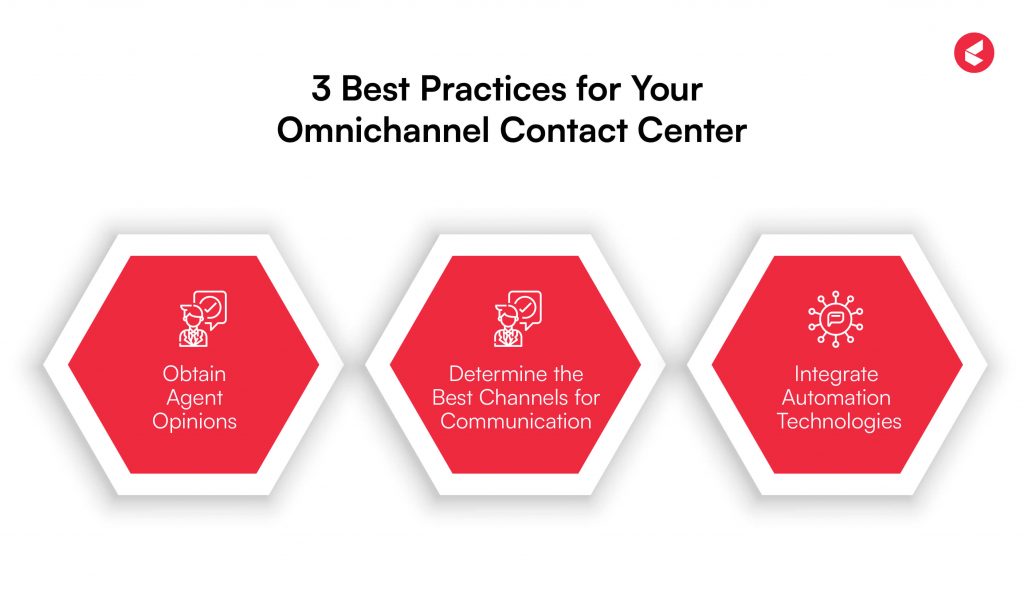
Scale up the performance of your omnichannel contact center platforms by using these three recommended procedures:
1. Obtain Agent Opinions
As agents transition to the new platform, take your time to find out what they think is working and what they think isn’t. Does your staff require further training?
Agents are your primary client contact; therefore, they’ll probably be the first to identify areas where they can be more efficient. They can point out, for example, a frequent cause of customer contact that might be resolved by automated procedures and self-service options.
2. Determine the Best Channels for Communication
Your particular client base will favor some channels over others, even if omnichannel contact centers aim to provide consumers with many ways to reach your customer service representatives.
Optimizing your customer service requires that you provide a suitable quantity of resources to each channel based on the demand of your customers. Use historical data to determine which channels appear to receive comparable requests and where your clients are most inclined to engage.
By doing so, you might discover instances where your live internet chat assistance is severely deficient while you’re allocating way more agents to phone assistance.
3. Integrate Automation Technologies
AI and automation can assist businesses reduce the expenses related to customer care while also saving a significant amount of time for both consumers and agents.
Natural language processing, or NLP, guarantees that calls are linked to the most qualified and appropriate agent present while also offering in-depth sentiment evaluation of customers.
For better labor efficiency, predictive analytics looks at historical data on consumer behavior to forecast upcoming patterns, such as peak hours of the day or year.
Call center automation and artificial intelligence (AI) also aid in safeguarding consumers and fraud prevention by immediately terminating user access in the wake of questionable activity. Implementing fraud detection can significantly reduce false positives and improve overall security by analyzing behavioral patterns and transaction anomalies.
How Kapture CX Powers Omnichannel Customer Support
Kapture CX is built for enterprise support teams that need omnichannel done properly.
One view for every agent Every agent sees the complete customer profile the moment an interaction lands. Purchase history, past tickets, channel preference, sentiment score, and open issues. One screen. No switching.
Native support for every major channel Phone, email, live chat, WhatsApp, Instagram, Facebook, SMS. All native integrations. No third party connectors that add lag or break during peak volumes.
AI that works in real time Kapture’s AI suggests the next best action during live interactions. It auto classifies tickets, routes them to the right agent, and flags conversations where sentiment is trending negative before they escalate.
Industry specific workflows Purpose built for BFSI, travel, retail, ecommerce, and consumer durables. Regulatory compliance, data masking, and industry specific routing logic are built in. Not bolted on.
Results that show up in the numbers 72% first call resolution rate. 91% agent utilization. 225% ROI over three years. Average payback period of 8 to 9 months.
These are not feature claims. They are outcomes from real enterprise deployments.
Book a demo to see how Kapture powers omnichannel support for enterprises like yours.
FAQs
Modern technology and processes in omnichannel contact centers allow you to operate across all channels with ease. Streamlining operating procedures saves your team time while also offering excellent, individualized client service.
A business’s comprehensive approach to each consumer interaction spanning channels is referred to as an omnichannel strategy. Companies use omnichannel tactics to try to provide consumers with a unified, continuous service.
Client information, interactions, and account oversight are all tracked by a CRM system. A successful CRM is a crucial component of the omnichannel journey as it allows for the customization of client interactions across all channels, which requires a 360-degree view of the consumer.