

Agentic AI in Customer Experience: Beyond Automation to Orchestration

Agentic AI in Customer Experience: Beyond Automation to Orchestration

Table of Contents

Request a demo

See how Kapture can work for you

Join the 1000+ Enterprises who transformed their CX while reducing support costs.

Request Demo

Customer experience (CX) is evolving at a significant pace. Over the past decade, we’ve moved from rule-based chatbots to generative AI copilots that can draft responses and summarize conversations. But while these advances save time, they still stop short of true autonomy.

Enter Agentic AI—the next wave of AI built not just to assist, but to act. Unlike generative models that create content or copilots that offer suggestions, Agentic AI can execute multi-step tasks, make decisions, and orchestrate workflows across systems. For CX leaders, the implications are massive: faster resolutions, proactive customer engagement, and leaner support operations that scale without breaking.

In this long-form guide, we’ll explore the most pressing questions CX leaders ask about Agentic AI—and why it’s quickly becoming the backbone of future-ready support.


Can Agentic AI really handle customer issues end-to-end?

Traditional AI has been strong at handling fragments of customer support—drafting an email reply, suggesting a help doc, or routing a ticket. But CX leaders often ask: Can it actually close the loop?

With Agentic AI, the answer is yes. These systems aren’t just text predictors; they can trigger actions across platforms, coordinate steps, and resolve an issue without constant human intervention.

Examples in action:

  • Retail: A delayed delivery triggers an AI agent to check order status, issue a refund, and notify the customer—all without waiting for an agent to intervene.
  • BFSI: When a card is reported lost, an AI agent blocks the card, initiates a replacement request, and sends fraud-prevention guidance to the customer.
  • Travel: A flight cancellation prompts the AI agent to rebook the traveler on the next best option, apply loyalty vouchers, and update itineraries.

The shift is from “AI as an assistant” to “AI as a problem-solver.” That’s what makes Agentic AI different: it doesn’t just prepare humans to act; it acts itself.


How can Agentic AI reduce backlogs in high-volume support teams?

One of the biggest struggles in CX is the ticket backlog. Enterprises in retail, BFSI, and travel often process tens of thousands of tickets monthly. Even small delays cascade into missed SLAs and frustrated customers.

Agentic AI helps shrink backlogs by:

  • Automating triage: Every ticket is categorized and prioritized instantly.
  • Direct resolution: Repetitive cases—refunds, balance lookups, address changes—are solved automatically.
  • Workflow orchestration: Tickets that need escalation are enriched with context before reaching humans.

Vertical snapshots:

  • Retail: Holiday surges create 3× the normal volume of order inquiries. AI handles delivery updates directly, leaving only exceptions for agents.
  • BFSI: Fraud alerts spike during shopping seasons. Agentic AI detects, categorizes, and escalates urgent cases to fraud prevention teams instantly.
  • Travel: Flight disruptions create floods of refund requests. AI pre-fills claims and rebooking options before agents pick them up.

Instead of backlogs ballooning, AI deflates them at the source.


Can Agentic AI work alongside human agents instead of replacing them?

This is the elephant in the room: Will Agentic AI replace humans? The reality is more nuanced.

Agentic AI thrives at handling repetitive, structured, and rules-driven tasks. Human agents thrive at empathetic, complex, or sensitive conversations.

Together, they create a hybrid model:

  • AI deflects repetitive cases before they reach agents.
  • AI copilots inside tickets accelerate triage, drafting, and context gathering.
  • Agents focus on high-value interactions—relationship-building, escalations, and emotional support.

For employees, this means less drudgery and more meaningful work. Gartner research shows that organizations investing in employee experience (EX) outperform peers in CX metrics 2:1—because happy agents make for happier customers.


How does Agentic AI improve productivity without sacrificing quality?

Efficiency gains are clear: McKinsey and Gartner both estimate that AI augmentation reduces handle time by 20–40% on average. But leaders often ask: Does faster mean sloppier?

Not with Agentic AI. By orchestrating workflows across systems, it ensures consistency and compliance while saving time.

Impacts on core CX metrics:

  • AHT (Average Handle Time): Drops because AI pre-fills responses and enriches tickets with data.
  • FCR (First Contact Resolution): Improves because AI guides agents to the right solution upfront.
  • SLA adherence: AI ensures urgent tickets are prioritized and deadlines aren’t missed.

Hidden ROI:

  • Fewer misrouted tickets and escalations.
  • Lower compliance risk with AI-enforced policies.
  • Consistent tone and messaging across agents.

The net effect isn’t just speed—it’s better service delivered faster.


Can Agentic AI personalize customer experiences at scale?

Personalization is a holy grail in CX. Customers expect brands to know their history, preferences, and context in every interaction. But scaling this has always been a challenge.

Agentic AI helps by:

  • Using context across channels: Pulling together CRM data, past interactions, and purchase history.
  • Delivering proactive updates: For example, alerting a customer about a delayed shipment before they even raise a ticket.
  • Tailoring resolutions: Offering loyalty rewards, tier-based refunds, or custom recommendations based on customer profile.

For enterprises, this means personalization without exponential human effort. Customers get the feeling of one-to-one service, even at massive scale.


How can CX leaders roll out Agentic AI step by step?

Like any powerful technology, adoption needs structure. Leaders often ask: Where do we start?

A phased approach works best:

  1. Start small: Target repetitive use cases like refunds, balance checks, or password resets.
  2. Train agents as partners: Reinforce that AI is a copilot, not a competitor.
  3. Expand scope gradually: Move from ticket triage → resolution → QA automation.
  4. Monitor closely: Track AHT, FCR, CSAT, SLA adherence, and agent EX.
  5. Put guardrails in place: Governance, observability, and explainability are critical.

This way, AI adoption feels less like disruption and more like evolution.


Can Agentic AI deflect tickets before they ever reach an agent?

Yes—and this is where ROI becomes exponential.

With AI Self-Serve, customers resolve queries themselves via voice or chatbots. But unlike legacy bots, Agentic AI can act. That means not just answering “Where is my order?” but checking logistics systems, updating status, and sending confirmation.

Examples:

  • Utilities: Outage reports are logged and linked to repair updates automatically.
  • Healthcare: Appointment reschedules are handled end-to-end, including slot booking and insurance validation.
  • Travel: Customers can rebook flights directly via chat without agent intervention.

This reduces inbound ticket volume while improving customer satisfaction.


How do we make sure Agentic AI is safe and compliant?

CX leaders in regulated industries (BFSI, healthcare, utilities) know that compliance is non-negotiable. AI without guardrails creates risk.

To deploy Agentic AI responsibly:

  • Audit trails: Every AI-driven action should be logged and reviewable.
  • Explainability: AI should provide reasoning for its choices (e.g., why it refunded an order).
  • Human-in-the-loop: Sensitive actions should still require human approval.
  • Data governance: Knowledge bases and CRMs must be up to date to avoid errors.

PwC and Deloitte emphasize that governance frameworks are as important as the AI itself. Trust is earned not just through speed, but through accountability.


How will Agentic AI shape the future of customer support?

Analysts predict Agentic AI adoption will accelerate rapidly. Gartner forecasts that by 2026, 80% of customer service organizations will use AI-driven assistants.

The future is moving toward:

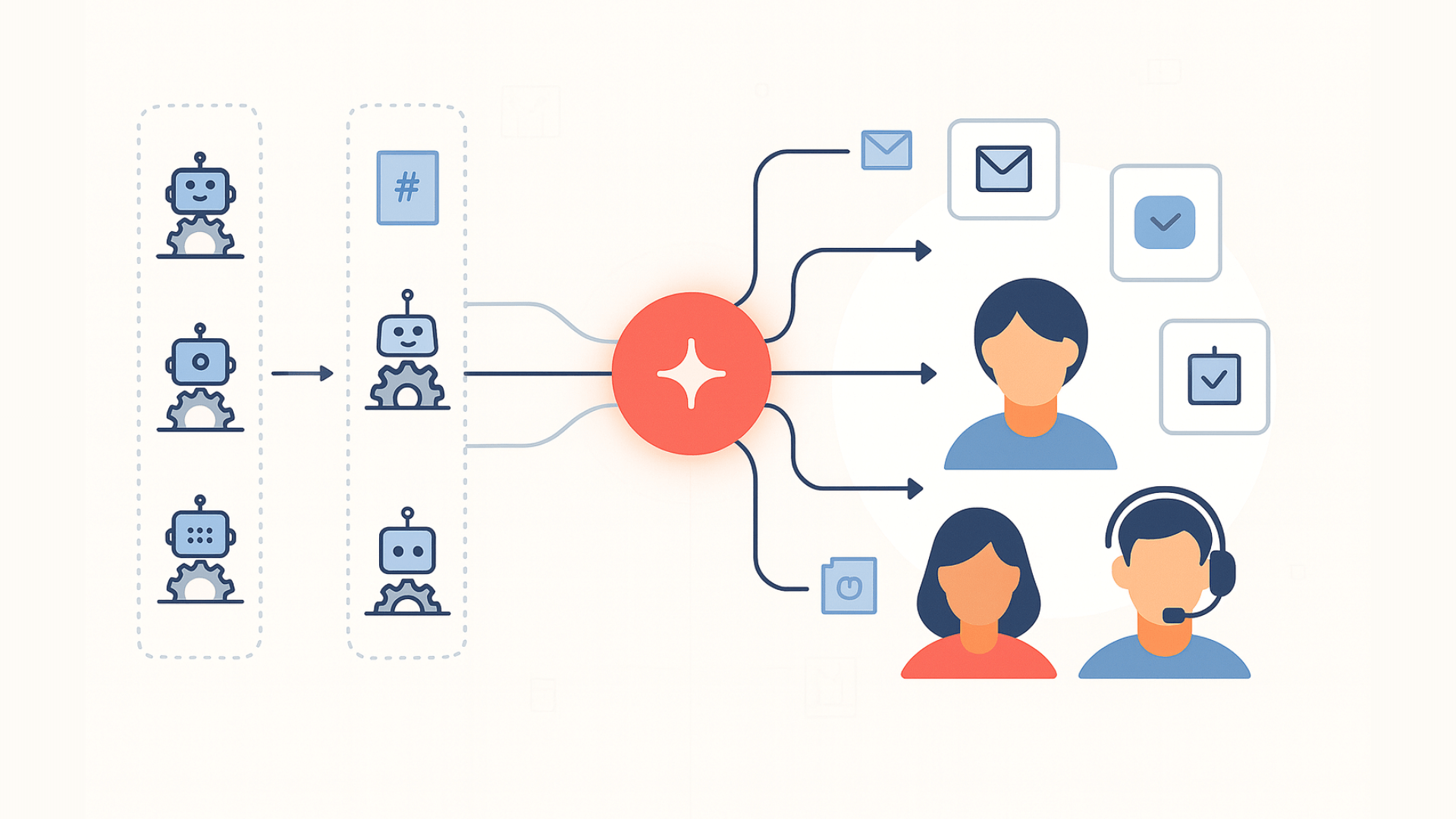
  • Agentic orchestration: Multiple AI agents (self-serve, triage, QA) working in harmony.
  • Proactive CX: Predicting issues (like billing errors or shipping delays) before customers raise them.
  • Voice-native experiences: Conversational AI handling complex calls with human-like fluency.
  • Continuous learning loops: AI evolving with every interaction to improve accuracy.

In other words, Agentic AI won’t just be support’s backbone—it will be its nervous system, predicting, acting, and learning at scale.


Final takeaway: Can your support ops keep pace with Agentic AI?

Agentic AI is no longer theory. It’s already reshaping how enterprises deliver CX, moving from assistance to orchestration.

At Kapture, we’ve built an AI Agent Suite designed to unlock this shift:

  • AI Self-Serve → deflects repetitive queries at the source.
  • AI Agent Assist → copilots for faster, smarter resolutions.
  • AI Post-Interaction Intelligence → QA and coaching at scale.

The orchestration is the differentiator: multiple AI agents working together to streamline workflows across industries.

For CX leaders, the question isn’t “Should we explore Agentic AI?” but “How fast can we integrate it to transform both customer and agent experiences?”

The future of CX is not just automated—it’s agentic.

Your Plan. Your Value. Your Growth.

Your business is different – and the pricing should reflect that.
Let’s build a plan that matches your goals, maximizes ROI, and scales with your success.

Get Demo

Working Smarter, Not Harder: How AI Assistants Boost CX Efficiency

Working Smarter, Not Harder: How AI Assistants Boost CX Efficiency

Table of Contents

Request a demo

See how Kapture can work for you

Join the 1000+ Enterprises who transformed their CX while reducing support costs.

Request Demo

Customer support leaders today face a daunting double challenge: ticket volumes are skyrocketing, and customer expectations for speed and personalization have never been higher. Human agents remain at the heart of support, but even the best teams hit limits when repetitive, manual, and time-intensive tasks pile up.

This is where AI Assistants come in. Far from replacing agents, they act as copilots—removing bottlenecks, accelerating resolutions, and giving support teams the bandwidth to focus on meaningful, high-value interactions.

In this long-form guide, we’ll address the most common questions CX leaders ask about AI Assistants—backed by real-world examples, vertical insights, and analyst perspectives.


Customer service teams struggle with ticket backlogs

The average enterprise contact center processes tens of thousands of tickets monthly, spanning email, chat, voice, and social. Gartner reports that 65% of CX leaders identify volume growth as their #1 scaling challenge.

The drivers of backlog are consistent across industries:

  • Repetitive queries: Password resets, order tracking, refund requests. In Retail, up to 40% of incoming queries fall into this category. In BFSI, card-blocking and balance checks dominate.
  • Context switching: Agents juggle between CRMs, knowledge bases, spreadsheets, and messaging platforms—slowing focus and increasing handle time.
  • Manual triage: Many support setups still rely on humans to tag, sort, and route tickets. Even 1–2 minutes of manual routing per ticket compounds into hours lost daily.
  • Lack of real-time guidance: Newer agents often lack instant support, relying on peer escalations or browsing long policy documents. This increases FRT (First Response Time) and reduces accuracy.

Industry snapshots:

  • Retail: A holiday surge triples order inquiries, stretching teams beyond capacity.
  • BFSI: Fraud alerts spike during seasonal shopping festivals, leading to customer anxiety if response times lag.
  • Travel: Flight disruptions generate sudden waves of refund and rebooking requests, overwhelming traditional queues.
  • Utilities: Storm-related power outages generate massive spikes in outage tickets.
  • Healthcare: Appointment cancellations or rescheduling requests overwhelm hospital front offices.

The outcome is predictable: backlogs, SLA breaches, and frustrated customers.


AI Assistants – Copilots for agents

Think of AI Assistants as copilots in a cockpit. They don’t replace pilots; they optimize the flight path and keep everything within reach.

AI supports agents by:

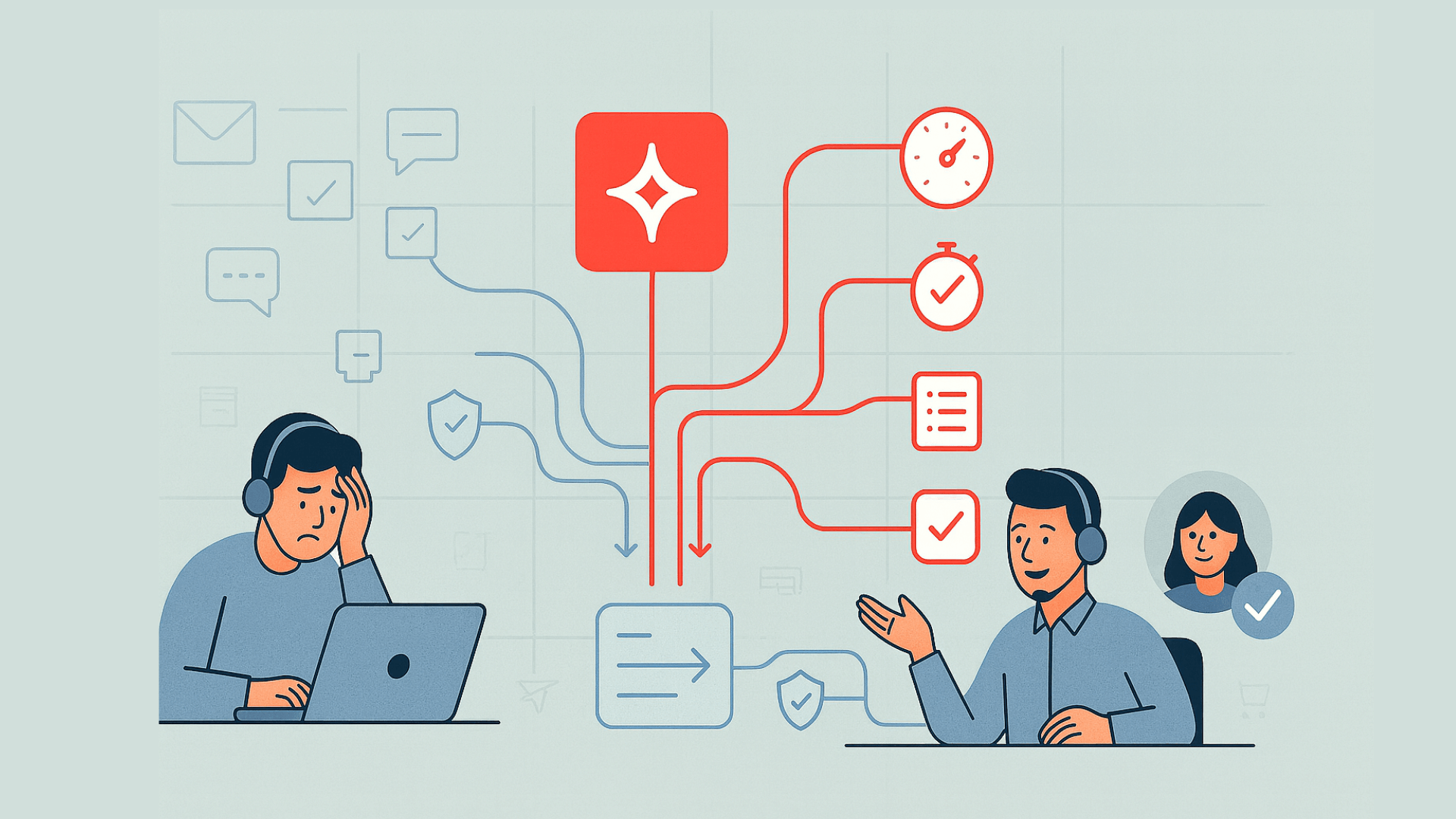
  • Instant classification & routing: Every ticket is auto-labeled and routed to the right team, shaving minutes off manual triage.
  • Suggested responses: Draft replies appear instantly, saving typing time and ensuring brand-consistent tone.
  • Knowledge retrieval: AI pinpoints the exact policy, help doc, or past case relevant to the customer query.
  • Context stitching: Information from CRM, transaction history, and knowledge bases is pulled into one unified view.

What’s the impact of this support in real workflows?

  • In Retail, a ticket about a delayed shipment is instantly tagged as “delivery issue,” routed to logistics, and paired with the latest carrier updates.
  • In BFSI, a lost-card report is automatically routed to fraud prevention, with the AI surfacing the customer’s account verification steps.
  • In Travel, a rebooking query is enriched with passenger details, flight schedules, and compensation policies before the agent responds.
  • In Healthcare, a patient rescheduling request is routed to scheduling, with AI surfacing available slots and insurance eligibility checks.

The result: Agents no longer start tickets blind—they begin with context, guidance, and a draft in hand.


How fast is a fast resolution?

Here’s a typical AI-assisted flow:

  1. Ticket arrives → AI auto-tags as “refund request” and routes directly to billing.
  2. Agent opens ticket → A draft response appears with the customer’s order details prefilled.
  3. AI nudges agent → A knowledge card pops up with the latest refund policy and escalation rules.
  4. Agent personalizes & sends → Resolution takes under 3 minutes instead of 10.

Vertical case studies:

  • Retail: An apparel brand reduced return-related ticket times from 12 minutes to 4 by combining AI drafts with real-time inventory checks.
  • BFSI: A bank slashed fraud claim resolution times by 45% when AI copilots pulled in transaction histories and compliance scripts instantly.
  • Travel: An airline reduced call times by 35% during weather disruptions when AI surfaced rebooking rules and voucher policies mid-conversation.
  • Utilities: A power company improved outage communication by auto-generating personalized SMS updates, reducing inbound calls by 30%.
  • Healthcare: A clinic reduced call center queues by integrating AI that prefilled patient details for agents handling insurance claims.

When multiplied across thousands of tickets, the impact is transformative.


Can AI Assistants really reduce AHT and improve SLA compliance?

Yes. Studies from McKinsey and Gartner suggest that AI augmentation reduces handle times by 20–40% on average, depending on maturity of integration.

Key metrics improved by AI Assistants:

  • AHT (Average Handle Time): Reduced through faster triage, contextual data, and drafted responses.
  • FCR (First Contact Resolution): Higher because agents are guided to the right solution first time.
  • SLA adherence: AI-driven workflows ensure urgent or VIP tickets are prioritized correctly.

Hidden ROI beyond AHT:

  • Fewer escalations to supervisors.
  • Lower rework on wrongly tagged tickets.
  • Improved consistency in tone and compliance adherence.
  • Better morale from reduced repetitive work.

The business impact extends far beyond efficiency—it drives better customer trust and brand reputation.


What risks or challenges come with adopting AI Assistants?

Like any technology, there are adoption challenges:

  • Over-reliance: Agents may over-trust AI drafts. Training must reinforce review and personalization.
  • Data quality issues: Outdated or siloed knowledge bases reduce AI accuracy. Governance and regular audits are essential.
  • Integration complexity: AI needs to flow seamlessly into CRMs, ticketing platforms, and chat/voice systems.
  • Compliance: In BFSI or healthcare, AI must operate within GDPR, PCI, or HIPAA constraints.

PwC research highlights that governance and explainability are critical in scaling AI responsibly. The solution isn’t avoiding AI, but ensuring feedback loops, observability, and agent guardrails are in place.


How AI Assistants improve agent experience

Faster resolutions are often framed as customer benefits—but agents benefit just as much.

  • Reduced burnout: Less copy-paste, fewer manual lookups.
  • Faster onboarding: Guided suggestions help new agents ramp up in weeks instead of months.
  • Deeper engagement: Senior agents can spend time solving complex, strategic issues.

This has direct Employee Experience (EX) benefits. Gartner notes that companies investing in EX outperform peers in CX metrics by 2:1, as engaged agents deliver better service.

Tie-in: A frustrated customer is often the result of a frustrated agent. By giving agents better tools, AI prevents frustration from cascading across the interaction.


Is there a right strategy for rolling out AI Assistants?

A phased approach ensures smoother adoption:

  1. Start with repetitive queries: Password resets, balance checks, refund lookups.
  2. Train and align agents: Reinforce that AI is a copilot, not a replacement.
  3. Expand scope gradually: Introduce routing, knowledge retrieval, then advanced features like QA automation.
  4. Measure the right metrics: Track AHT, FCR, CSAT, SLA, and EX surveys to evaluate impact.
  5. Close the loop: Use AI-powered QA to feed back learnings into workflows.

Checklist:

  • Governance framework
  • Feedback loop with human QA
  • Clear integration roadmap
  • Training programs for agents

Can AI Assistants deflect tickets before they reach agents?

Yes. The best implementations integrate AI across the entire lifecycle:

  • AI Self-Serve (voice and chatbots) → Handles FAQs, order checks, balance lookups before human involvement.
  • AI Agent Assist → Accelerates triage, drafting, and contextual nudges.
  • AI QA & Insights → Post-interaction analysis identifies gaps and continuously improves workflows.

This reduces ticket inflow and speeds up the ones that remain.


What is the future of AI Assistants in CX?

The trajectory of AI in CX is moving from copilots to colleagues. Analysts predict that by 2026, 80% of customer service organizations will deploy AI-driven support assistants (Gartner). The future will see:

  • Agentic AI orchestration: Multiple AI agents working together—self-serve bots, triage bots, and QA bots feeding into one ecosystem.
  • Proactive support: AI predicting issues (e.g., shipment delays, billing errors) and alerting customers before they even raise a ticket.
  • Voice-native experiences: Conversational AI handling complex voice queries with human-like fluency.
  • Continuous learning loops: AI assistants that evolve with every interaction, improving accuracy over time.

This evolution transforms AI Assistants from reactive tools into proactive partners in customer experience.


How Kapture helps organizations with their CX

At Kapture, we’ve built an AI Agent Suite designed to orchestrate this entire lifecycle:

  • AI Self-Serve → Deflect repetitive tickets at the source.
  • AI Agent Assist → Co-pilot for agents inside the ticket desk.
  • AI Post-Interaction Intelligence → Automated QA and coaching insights.

The orchestration is the differentiator: agents aren’t just working faster, they’re working smarter, in an ecosystem built for their industry.


Final takeaway: Will your team be ready?

AI Assistants are no longer “nice-to-have” add-ons—they’re becoming the backbone of modern support operations.

For CX leaders, the real question is not whether to adopt AI Assistants, but:
How quickly can they be integrated to unlock speed, consistency, and better experiences for both customers and agents?

With thoughtful rollout, governance, and orchestration, AI Assistants don’t just handle tickets faster—they transform the way support is delivered.

Your Plan. Your Value. Your Growth.

Your business is different – and the pricing should reflect that.
Let’s build a plan that matches your goals, maximizes ROI, and scales with your success.
Get Demo

Lifecell Boosts Customer Experience with Kapture CX

Lifecell Transforms Healthcare Support with Kapture CX

50%

boost in agent efficiency

30%

drop in repeat customer queries

1-week

onboarding completed across divisions

Situation Overview:

As Lifecell diversified its offerings across diagnostics, biologics, stem cell banking, and wound care, the company faced the challenge of managing customer queries from multiple segments.

Customer service operations were fragmented, with different teams handling queries in silos. This created inefficiencies, delayed responses, and limited visibility across customer touchpoints.

Recognizing the need for a unified and scalable customer support platform, Lifecell partnered with Kapture CX to modernize its customer experience operations.

Initially, we onboarded Kapture for one of our divisions and the results were immediate and impressive. We saw a 50% boost in efficiency and a 30% drop in repeat queries. Encouraged by this success, we extended Kapture across all our divisions. The onboarding was seamless, and our agents now feel empowered with unified data and tools to deliver exceptional customer experiences.

– Shirley Matilda
Product Tech Lead, Lifecell

Challenges

  • Fragmented Service Across Divisions
    With multiple business units and customer segments, agents lacked a single source of truth, leading to disconnected interactions and inconsistencies.
  • Slow Response Times & Repeat Queries
    Without centralized systems and automation, agents had difficulty resolving issues quickly, resulting in a higher volume of repeat queries and longer resolution cycles.
  • Scaling Across Multiple Business Units
    As Lifecell continued to grow, it needed a solution that could unify support operations across diagnostics, biologics, stem cell banking, and wound care without disrupting ongoing operations.

Solution

  • Seamless Omnichannel Integration
    Kapture CX consolidated customer interactions into one unified dashboard, giving agents complete visibility and enabling consistent, efficient support across all divisions.
  • Fast & Efficient Onboarding
    Within just one week, Kapture CX was integrated into Lifecell’s systems. Dedicated project managers ensured quick adoption by understanding Lifecell’s complex business structure and providing tailored implementation.
  • Empowering Agents with Unified Data
    By integrating all customer information into a single platform, agents were able to access data instantly, resolve queries faster, and adopt a more customer-centric, data-driven approach.

The onboarding with Kapture was seamless—we were up and running within a week. Our agents now feel more empowered with all data in one place, helping them resolve queries faster and deliver better customer satisfaction. With Kapture, we are building a unified support platform across all our divisions to scale with confidence.

– Shirley Matilda
Product Tech Lead, Lifecell

Impact

  • Efficiency Boost
    Operational efficiency improved by 50% as agents could manage and resolve queries faster with unified data access.
  • Reduction in Repeat Queries
    With better visibility and faster resolutions, the number of repeat customer issues dropped by 30%, improving overall satisfaction.
  • Seamless Scaling Across Divisions
    From diagnostics to wound care, every division now operates on Kapture CX –  ensuring consistent and connected customer experiences.
  • Empowered Agents, Happier Customers
    Agents now feel more confident, data-driven, and customer-focused, which has translated into better customer satisfaction and stakeholder confidence.

Unifying Healthcare Experiences with Kapture CX

Lifecell’s partnership with Kapture CX reflects its vision to unify customer experiences across all healthcare verticals. By empowering agents, integrating operations, and delivering faster, smarter service, Lifecell continues to strengthen its leadership in healthcare innovation – while putting customers at the heart of every interaction.

Elevate your customer experience with Kapture CX. Book a personalized demo and discover how modern customer service automation can transform your business.

About

Lifecell is a leading player in the healthcare and biotechnology space, offering advanced services in stem cell banking, diagnostics, biologics, and wound care. With over a decade of innovation and a commitment to providing cutting-edge healthcare solutions, Lifecell has become a trusted partner for millions of families.

Industry

Healthcare & Biotechnology

Region

India

Website

https://www.lifecell.in/

Related Stories

Hamilton

Hamilton Integrates Kapture CX to Streamline Customer Support and Elevate Customer Experience

Akshayakalpa

Akshayakalpa Transforms Customer Engagement and Service Operations with Kapture CX

Giva

Giva Shines Bright with Streamlined Customer Support Powered by Kapture CX

Witness the next level of customer experience with Kapture CX

Join 1,000+ forward-thinking enterprises that have transformed employee experience, while optimizing their ops.

Get Demo

Hamilton Integrates Kapture CX to Boost Customer Support

Hamilton Integrates Kapture CX to Streamline Customer Support and Elevate Customer Experience

68%

Reduction in Average Handling Time

99%

Ticket Resolution Rate Across Channels

72%

Support Traffic Handled via Call Automation

Hamilton’s rapid growth and product diversity meant that customer queries poured in from multiple touchpoints calls, emails, chats, mobile apps, and web portals. Prior to integrating Kapture CX, these interactions were fragmented and hard to track, often requiring manual updates and repetitive tasks that slowed down the team. As customer expectations around speed, personalization, and service consistency continue to evolve, Hamilton prioritized the modernization of its support infrastructure. Aiming to unify its operations and automate key processes, the company partnered with Kapture CX to deliver faster, smarter, and more connected customer service.

Partnering with Kapture has enabled us to streamline our support operations and deliver faster, more consistent service across all touchpoints. The improved ticket resolution rate and AHT shows the strength of this collaboration and our commitment to elevating the CX game.

– Uday Bhosale
Head of CX, Hamilton

Challenges

  • Disjointed Systems Across Channels
    Customer interactions were spread across various platforms with no unified view. This made it difficult for support teams to manage workloads or deliver seamless service, especially when switching between tools.
  • Manual Workflows Delaying Responses
    Ticket creation, call tracking, and query resolution were managed through separate systems, often relying on manual input. This not only slowed down support but created the risk of missed follow-ups.
  • Low Automation & Limited Visibility
    Without automation or real-time dashboards, agents were burdened with repetitive tasks and supervisors lacked data to plan resources or monitor SLA adherence effectively.

Solution

  • Unified Ticketing Across Channels
    Kapture CX centralized all customer queries including calls, WhatsApp, emails, apps, and web forms into a single omnichannel dashboard. This ensured that every interaction created a ticket, with tracking and categorization built-in.
  • Automated Call Support Integration
    Every inbound and outbound call is now logged and linked to a ticket in real-time. Agents receive relevant customer context as soon as they pick up a call, allowing them to respond efficiently and accurately.
  • WhatsApp Bot and Self-Service Options
    Hamilton deployed a branded WhatsApp bot for quick access to support services like warranty registration, product selection, status tracking, and complaint resolution. This reduced agent load while improving the user experience.
  • Complaints Management Portal
    Customers can now raise and monitor complaints, register warranties, and check updates through a digital portal, improving transparency and support accessibility.

While Hamilton boasts a long history as a leading homeware manufacturer, we recognize the critical importance of automation and customer experience in today’s world. We’ve been proactive in our approach to modernization, and the past year has marked a truly transformative 365 days for our company. Kapture has been an invaluable partner.

– Uday Bhosale
Head of CX, Hamilton

Results and Benefits

Kapture CX brought in automation, agent assist tools, and omnichannel consolidation — resulting in a remarkable improvement in Hamilton’s support operations.

  • Higher Ticket Resolution Rates
    Hamilton now resolves nearly 99% of tickets across channels, with 93% of them resolved well within SLA timelines.
  • Better First-Time Resolution
    First-time resolution improved substantially, with 47% of tickets closed during the initial interaction, indicating better systems and empowered agents.
  • Optimized Channel Usage
    A deeper look into channel usage revealed that 72.5% of all support traffic comes via phone calls, which now run on automated routing, ticketing, and context-aware tools. While email represents 15% of volume, it continues to handle complex and structured queries.

By integrating Kapture CX, Hamilton has redefined what scalable, modern support looks like in the consumer goods space. The platform now powers Hamilton’s end-to-end service ecosystem driving efficiency, accelerating resolutions, and ensuring customers receive support that’s as innovative and reliable as the products themselves.

About

Hamilton is one of India’s leading homeware manufacturers and distributors, with a celebrated portfolio that includes brands like Milton, Spotzero, Treo, Milton Procook, Milton Appliances, and Claro. With over 5 decades of experience through its predecessors and a presence in multiple countries, Hamilton delivers more than 6,800 products designed to bring innovation and convenience into everyday life.

Industry

Consumer Goods / Homeware

Region

India & Global Markets

Website

https://www.hamiltonindia.in/

Related Stories

Lifecell

Lifecell Transforms Healthcare Support with Kapture CX

Akshayakalpa

Akshayakalpa Transforms Customer Engagement and Service Operations with Kapture CX

Giva

Giva Shines Bright with Streamlined Customer Support Powered by Kapture CX

Witness the next level of customer experience with Kapture CX

Join 1,000+ forward-thinking enterprises that have transformed employee experience, while optimizing their ops.

Get Demo
Request a Demo